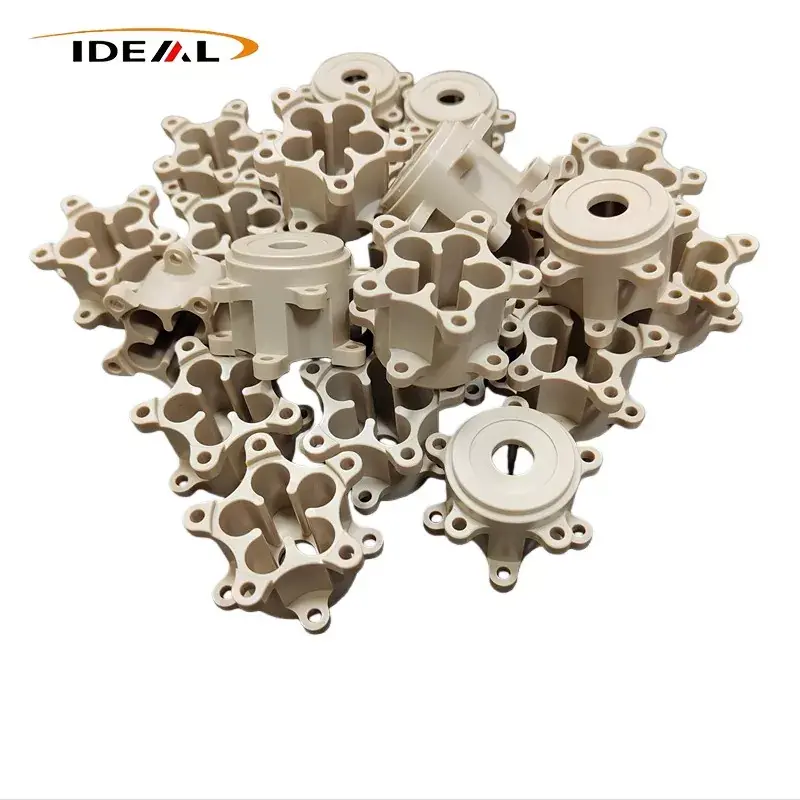
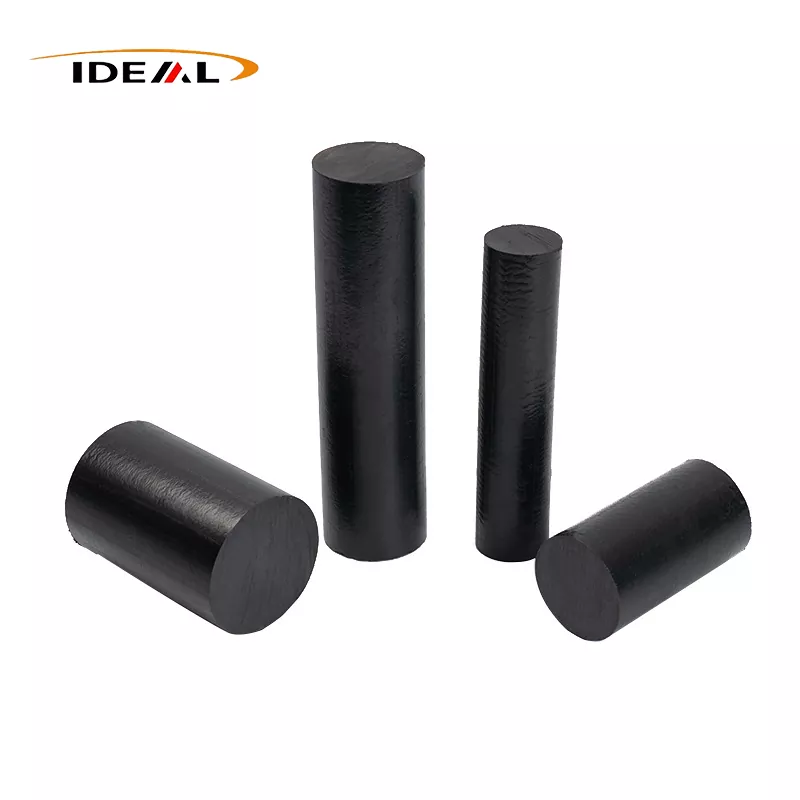
GuangZhou Ideal has some professional gear that can handle Machining PEEK product. So, PEEK—that's short for polyether ether ketone—is a special kind of high-performance plastic. It comes from a family called PAEK. To make it, you basically need to put together two chemical ingredients: 4,4'-difluorobenzophenone and hydroquinone.What makes PEEK really special is its molecular setup. It’s got rigid benzene rings, flexible ether bonds (–O–), and strong carbonyl groups (–C(=O)–). That’s why it’s not only tough and long-lasting, but also really good at handling high temperatures.
Alright, let’s talk about Machining PEEK product. Machining this stuff isn’t exactly a walk in the park. PEEK has a high melting point and it’s seriously hard—so your cutting tools? They’ll wear out in a heartbeat. That means you can’t just use any regular machine. You need equipment that’s powerful, super precise, and you’ve gotta really watch things like temperature and what kind of tools you’re running. Oh, and because the material’s so tough, your tools wear down even faster—so you better check them often and swap them out before they cause trouble. All of this slows things down, and yeah, it adds to the cost.
If you’re new to machining Machined PEEK product, you’ll probably run into a few classic issues that can ruin your parts:
Surface burning or discoloration: PEEK really doesn’t like heat. If things get too hot during cutting, you might notice some ugly burning or discoloration on the surface. It’s not just a looks thing—it can mess with how the part works. How to avoid it? Keep your cutting settings in check and make sure your cooling game is strong.
Size inaccuracy: PEEK is super sensitive to temperature—it expands and contracts more than you’d think. If the temp isn’t stable while you’re machining, your parts can end up the wrong size. To nail those specs, you need a steady environment and sometimes even a heat treatment after machining.
Cracking: PEEK is pretty rigid, so if stress builds up in one spot during machining—crack. The key is to keep your tool path smooth, no jerky moves. Pay attention to your cutting depth and intensity so you don’t push the material too hard.
Now, here’s the good part: GuangZhou Ideal has every kind of pro machine you could need, and we’ve been making Machining PEEK part parts for over ten years. Our tech team has pretty much seen it all and solved it all, so our process is solid. Over the years, we’ve worked with tons of customers, both here and overseas, and honestly, the feedback is always top-notch.
|
Product name |
Machining PEEK product |
|
Material |
Pure PEEK, CF30 PEEK, GF30 PEEK,HPV PEEK |
|
Color |
Nature,black and custom color |
|
Size |
ODM/OEM/Drawing |
|
Tolerance |
According to customer requirements |
|
Forming method |
according to product shape and order quantity |
|
Minimum order quantity |
negotiation |
|
Lead time |
7-15 days |
1.Hardly any creep
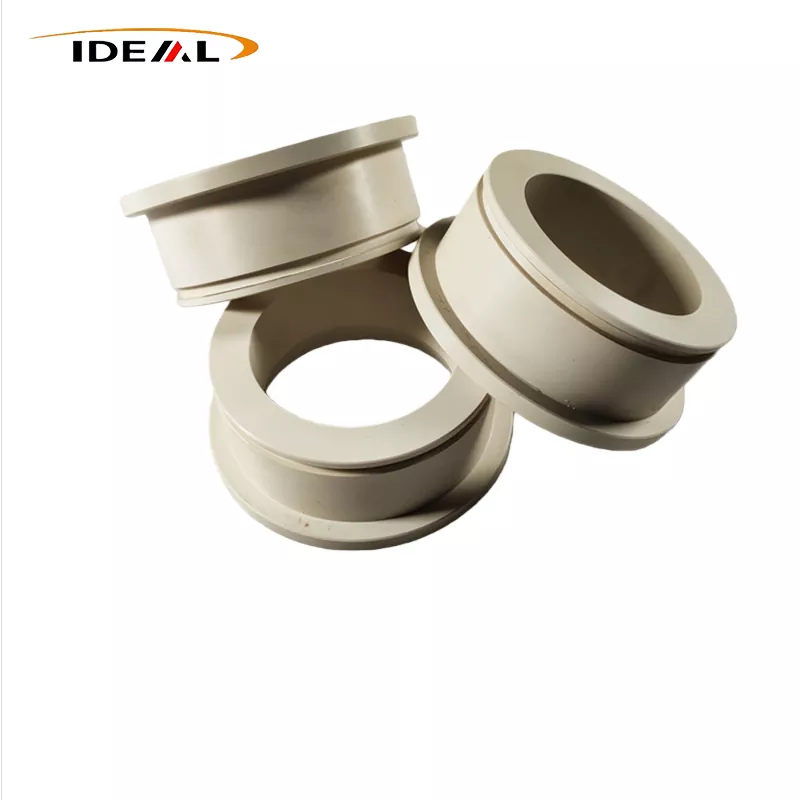
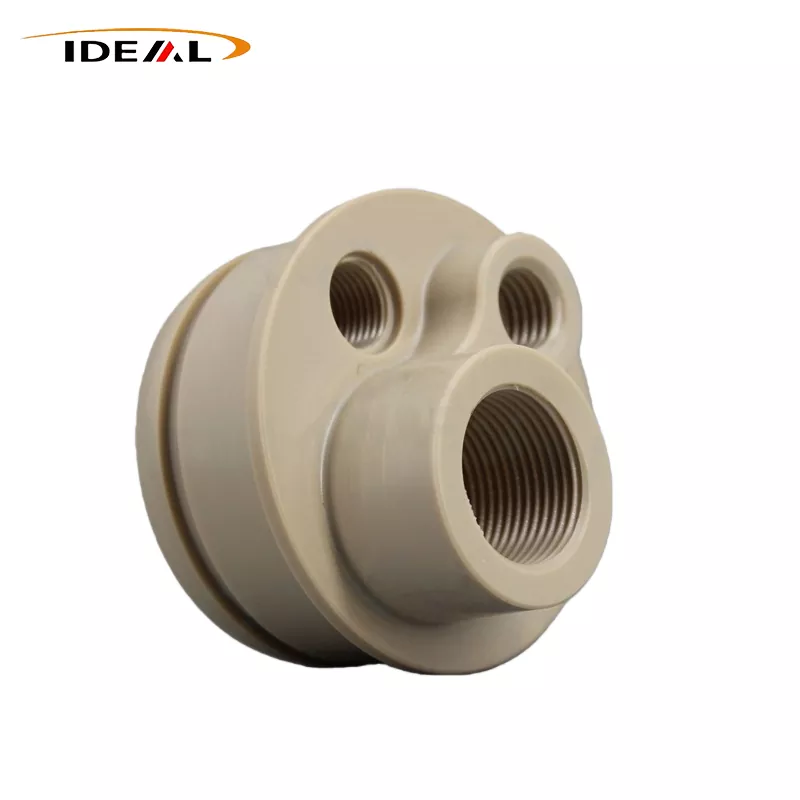
Machining PEEK product barely creeps—it just doesn’t change shape much over time, even when under constant pressure. PEEK is the same way: at 200°C and high stress, it holds up way better than stuff like nylon, POM, or polyetherimide. That’s why both are solid picks for precision parts, seals, pumps, and valves—where staying put under load really counts.
2.Solid strength all around
A. At room temp, plain PEEK has a tensile strength around 90–110 MPa. That means you can really tug on it, and it’ll hold up. It’s trusted in machines and aircraft where you need something you can count on.
B. It’s also seriously flexible without snapping. With a bending strength of 150 MPa, you can bend it back and forth without it cracking. Honestly, it gives some metals real competition in toughness.
C. And when you press down on it? No sweat. With 118 MPa compressive strength, it keeps its shape under a serious squeeze.
3.Handles the heat like a champ
Thanks to its rock-solid structure, Machined PEEK product laughs at high temps. It stays strong and keeps its form even when things heat up. It’s not just heat-resistant—it also fights off oxidation, so it won’t puff up or crack, even after hanging out for ages in hot, oxygen-heavy places.
4.Chemicals? No big deal
Unless you throw really nasty stuff like concentrated sulfuric acid at it, PEEK isn’t bothered by most chemicals. Even when things get hot, it stays chemically steady. That makes it a go-to for harsh settings or anything that needs regular sterilization.
5.Easy to shape and machine
You can pretty much make PEEK into whatever you want. Need a bunch of complicated parts? Injection molding makes it fast and simple. Or if you're making something one-off, just grab your usual workshop tools—lathes, mills, drills—it’s all good. That kind of flexibility makes it fit right into all sorts of industries and products.
6.Won’t easily go up in flames
Machining PEEK part can even hit the UL94 5-V rating. And if it does catch fire, it barely smokes and releases far less toxic gas compared to other plastics.

Aviation sector

Chemical engineering field

Energy sector

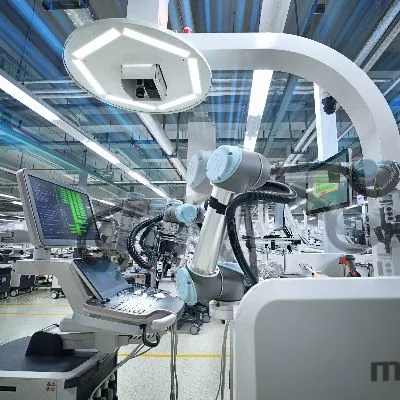
In the field of artificial intelligence
Medical field

Semiconductor field
1. What certifications do your products have?
We're proud to hold the ISO9001:2008 certification for our quality management system. On top of that, our products come with SGS, CE, and RoHS certifications. They also meet environmental standards such as REACH, EN71, and others.
2. Can I return or exchange the goods?
Sure! If you run into any quality issues, sizing problems, or anything else that affects how you use the product—whether it’s a semi-finished or custom order—just get in touch with us as soon as possible. If it’s clearly our fault, we’ll handle the return or exchange and cover both ways for shipping.
If you ordered the wrong thing or want to return for personal reasons (especially profile blanks), that’s usually okay too—as long as the product is still in resalable condition. In that case, you’ll just need to cover the shipping cost.
3. How long until delivery?
For items we have in stock, we can ship them out as soon as your payment comes through. Custom orders depend on the quantity and process, so just let us know what you need, and we’ll give you a clear timeline.
4. Can products be customized? How does that work?
Yes, definitely! You can send us your 2D or 3D drawings—we accept common formats like STEP, STP, STL, or IGS. If you have a physical sample, just mail it to us and we’ll take measurements. And if you have special requests, we can also help with design or tweaking the specs.
5. Can we customize products?
Absolutely! We accept 2D or 3D drawings in formats like STEP, STP, STL, and IGS. If you’ve got a sample, that works too—just send it over and we’ll work from there. We can also help with design or adjust things based on your specific needs.