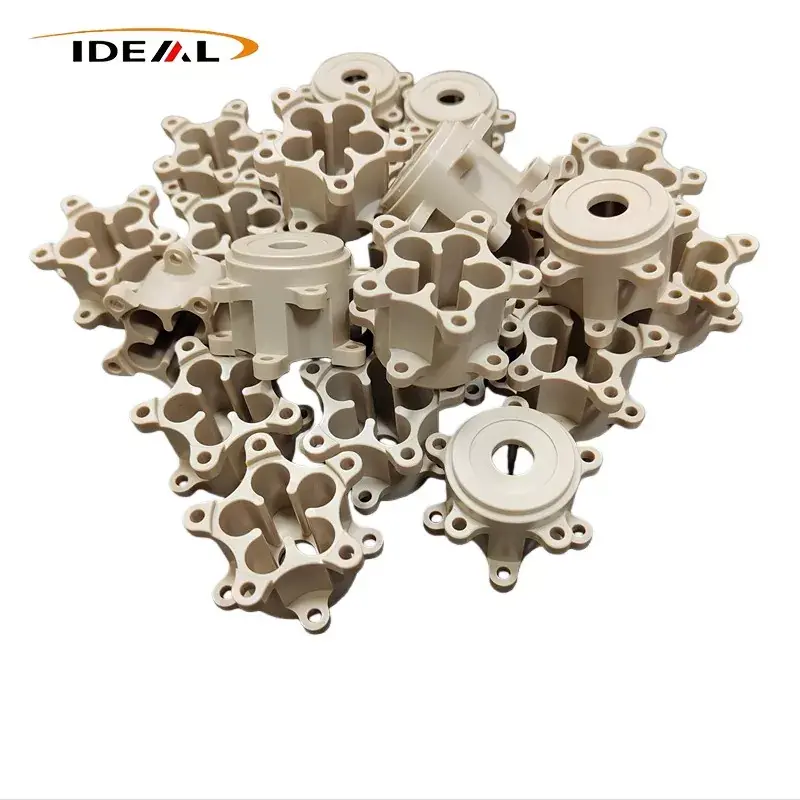
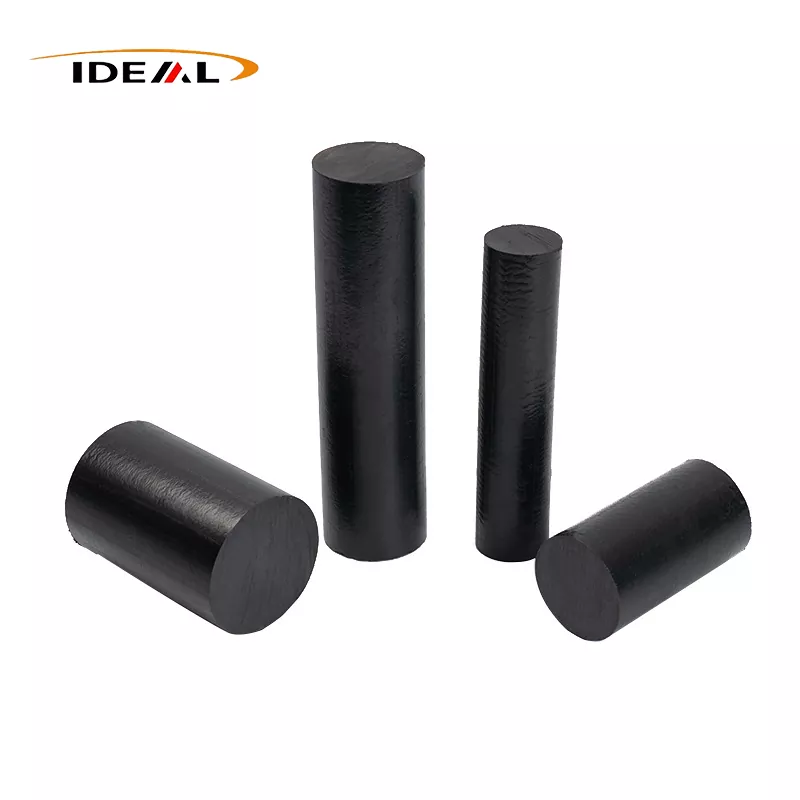
Our polyetheretherketone products product is made from PEEK plastic, which comes as semi-finished profiles or can be custom-made into parts as needed. So, PEEK itself is a special kind of engineering plastic—it’s what’s called an aromatic crystalline thermoplastic polymer. It has a really high melting point, up to 334°C, and its glass transition temperature (Tg) is around 143°C. This material can reach a crystallinity level as high as 48%, though it usually sits between 20% and 30%. Also, in its amorphous state, its density is about 1.265 g/cm³, but when crystallinity is at the max, the density can go up to 1.32 g/cm³.
So, how do we process polyetheretherketone products? Here are the main ways:
1.Injection molding – this is the most common method. You need a special high-temperature injection molding machine, with the barrel temperature set around 360 to 400°C. The mold also has to be heated, usually kept between 160 and 180°C, sometimes even higher. During the process, you have to carefully control the melt temperature, injection pressure, holding pressure, and cooling rate—all of these affect the crystallinity, internal stress, and the final performance of the part.
2.Extrusion molding – this is good for making things like pipes, rods, plates, films, or wire coatings. Again, a high-temperature extruder is needed, with the barrel temperature between 350 and 400°C. The die and cooling system need smart design to make sure the shaping turns out well.
3.Compression molding – usually used for bigger or more complex parts, especially when injection molding isn’t the best fit. This method involves placing PEEK pellets or powder into a heated mold and pressing it into shape.
4.Machining – if we already have PEEK rods or plates, we can use traditional machining like turning, milling, or drilling to make the final parts. But you have to be careful with the tool selection—it’s best to use carbide or diamond-coated tools. While cutting, keep the speed high, feed rate low, and make sure there’s enough cooling so the material doesn’t overheat, melt, or start to separate.
5.Laser cutting – works well for high-precision cutting of thin sheets, and it’s pretty flexible.
6.3D printing – you can use PEEK filament to build parts layer by layer, which is great for prototypes or small custom batches. The printing temperature usually runs between 380 and 450°C, and the print bed should be heated to somewhere between 120 and 180°C. It’s even better if you have a closed chamber to keep the temperature steady—that helps prevent warping. But if the process isn’t set up right, the final part’s performance might not be ideal.
Here at GuangZhou Ideal, we’ve put a lot of investment into this area. We’ve got all kinds of professional equipment and can produce various polyetheretherketone PEEK part products on our own to meet different customer needs.
|
Product nam |
polyetheretherketone PEEK product |
|
Material |
Pure PEEK, fiber-reinforced PEEK, abrasion-resistant PEEK |
|
Color |
Nature,black and custom color |
|
Size |
ODM/OEM/Drawing |
|
Tolerance |
According to customer requirements |
|
Forming method |
according to product shape and order quantity |
|
Minimum order quantity |
negotiation |
|
Lead time |
10-15 days |
Heat Resistance:
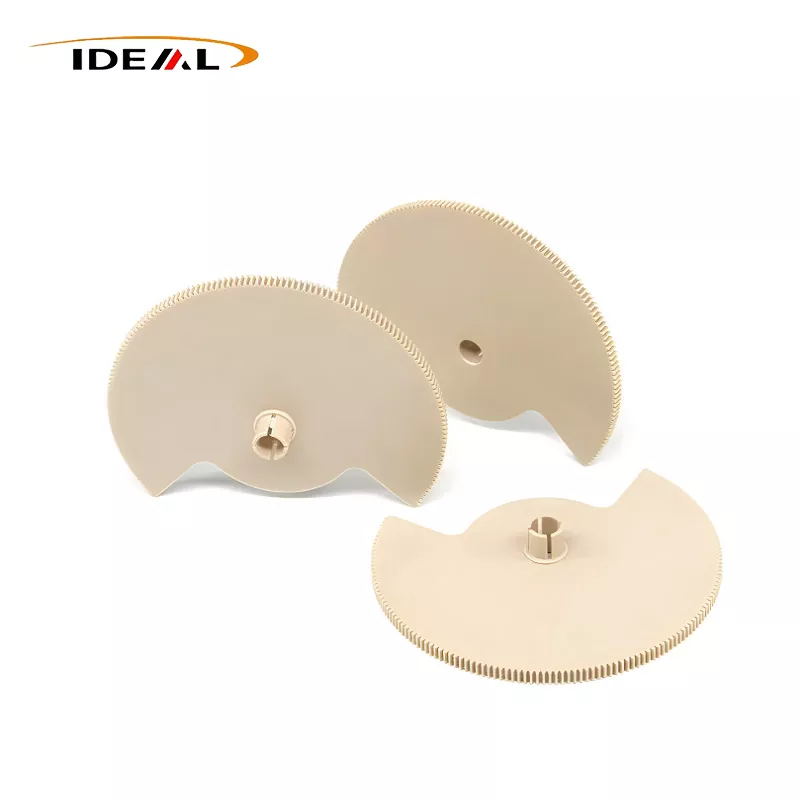
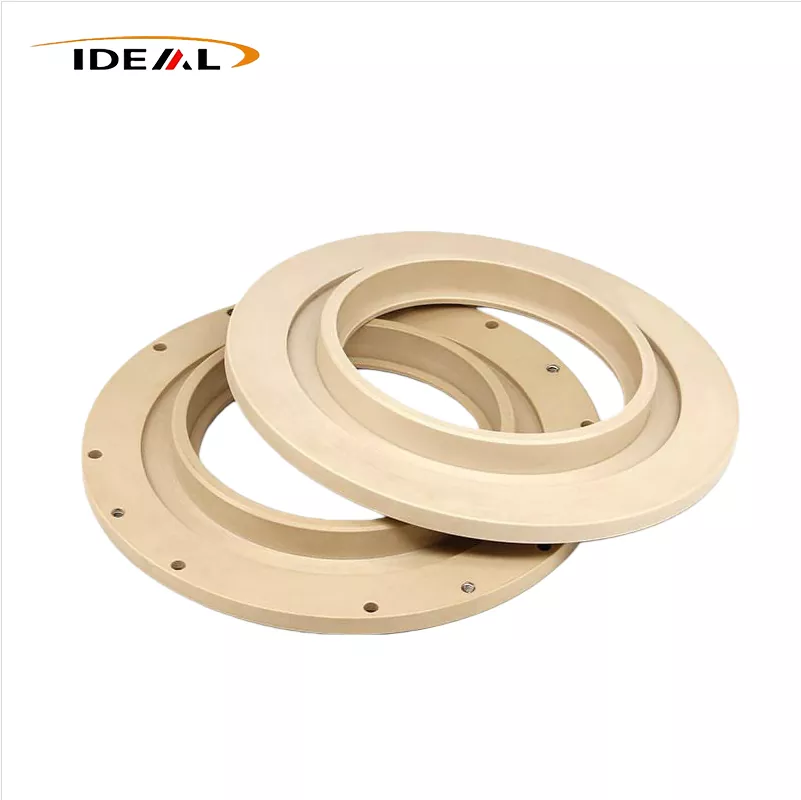
PEEK is seriously heat-resistant, all thanks to the special aromatic ring structure in its molecules. This setup lets it stay stable even when things get really hot, without warping or losing its properties. It can handle long-term use at 260°C no problem, and even short bursts up to 300°C. If that’s not enough, its thermal decomposition temperature is a whopping 560°C—it can sit at 400°C for a full hour and be totally fine. On top of that, its glass transition temperature is 143°C, and it melts at 343°C, which is way higher than your average engineering plastic.
Self-Lubrication:
polyetheretherketone products has a built-in lubrication effect. It’s got a low friction coefficient and is super wear-resistant, making it a great fit for things like mechanical transmission parts and bearings where friction and wear really matter. And if you mix in carbon fiber, graphite, or PTFE, it gets even tougher against wear.
Solid Mechanical Properties:
Thanks to the ether bonds and ketone groups in its makeup, PEEK brings some great mechanical strengths to the table. The ketone groups make the material sturdier—boosting tensile strength and rigidity—while the ether bonds add a bit of flexibility. That means it’s less likely to snap under pressure and is easier to work with.
Fatigue Resistance:
PEEK is a champ when it comes to handling repeated stress. Even under long-term cyclic loading, it holds up really well and doesn’t wear out easily. That makes it perfect for parts like transmission components or sports gear that are constantly under motion and stress.
Radiation Resistance:
polyetheretherketone part is excellent at standing up to radiation—it even beats materials like polystyrene. In fact, it’s one of the top performers among common resins out there. Products made from it keep their insulation properties strong, even in high-radiation settings.
Easy to Process:
PEEK flows nicely at high temperatures and doesn’t break down easily, so you can process it in all sorts of ways: injection molding, extrusion, compression molding, and even 3D printing. No matter how complex your part’s shape is, chances are you can make it with PEEK. And if you tweak the formula a bit, it gets even easier to work with.
Industrial Manufacturing:
polyetheretherketone PEEK product is a go-to material in the industry because it’s super strong, wears well, and can handle really high temperatures. We often use it for critical parts like valve plates, piston rings, and compressor seals. You’ll also find it in everyday mechanical pieces like bearings, shaft sleeves, and gears—it’s pretty much everywhere.
Aerospace:
The aerospace field is super picky about materials, and PEEK fits the bill perfectly. It stands up to high heat, radiation, and is flame-retardant, which makes it a top choice for aircraft engine components. It’s even used in some crucial rocket engine parts—yeah, it’s that reliable.
Medical Equipment:
In the medical world, PEEK is mostly used for implants and surgical tools. You’ll often see it in things like skull repair implants, artificial joints, and bone screws. One of its best features? Its flexibility is super close to our actual bones. That helps reduce stress on the bone and makes it way more body-friendly.
Electronics & Electrical:
polyetheretherketone part has another big plus—it’s an excellent electrical insulator. Even when things get hot, under high pressure, or in damp conditions, its electrical performance stays consistent. That’s why it’s widely used in stuff like chip carriers, insulating films, and printed circuit boards.
Robotics & Automation:
A lot of robot parts—like joints and housings—are made from PEEK. It’s tough, resists corrosion, and won’t call it quits even when things get rough. That helps keep everything running smoothly and prevents breakdowns.
Transportation:
In the auto industry, polyetheretherketone products is commonly used for engine covers, brake pads, and seals. And it’s not just cars—you’ll find PEEK in trains and subways too, where it’s used to make all kinds of high-performance components that need to last.
GuangZhou Ideal has been around for years, and we’ve built our name on solid technology, reliable equipment, and plenty of hands-on experience. Our product range is super wide—pretty much whatever you need, we’ve got you covered.
We start by really listening to you before anything gets made, so we know exactly what you're looking for. Then, we keep a close eye on every step of production to make sure things are done right. And it doesn’t stop there—we’re always working to improve our after-sales support, too.
Bottom line: we focus on quality so that you get a dependable polyetheretherketone products product—without overpaying. Good value。
1.how your products perform?
We work with well-known brands from both here and abroad for our materials. Every batch comes with a quality report so you can trace everything back. Right now, our products are considered some of the best in the business. We’ve also got a detailed Product Physical Property Table—happy to send it over anytime you like.
2.Can you customize products? How does that work?
Absolutely! We accept common 2D and 3D file formats like STEP, STL, and IGES. If you’ve got a sample, just send it over and we’ll take measurements. If you have special design needs, we’re flexible—we can tweak an existing design or create something totally new based on your ideas.
3.What’s the smallest order you can take?
For semi-finished profiles, we can do even a single piece. For custom parts, it really depends on the processing method and product size—let’s talk details so we can figure it out together.
4.How long does delivery usually take?
If it’s a stock profile product, we can ship it out as soon as payment comes through. For custom orders, the timeline depends on the quantity and how complex the process is—let’s discuss what works for you.
5.How do you handle shipping?
We usually work with trusted logistics partners like DHL and FedEx, shipping by air or sea—it’s fast and reliable. If you have your own freight forwarder, that’s fine too. Shipping costs will be on your side and are calculated based on the size, weight, and destination of your order.