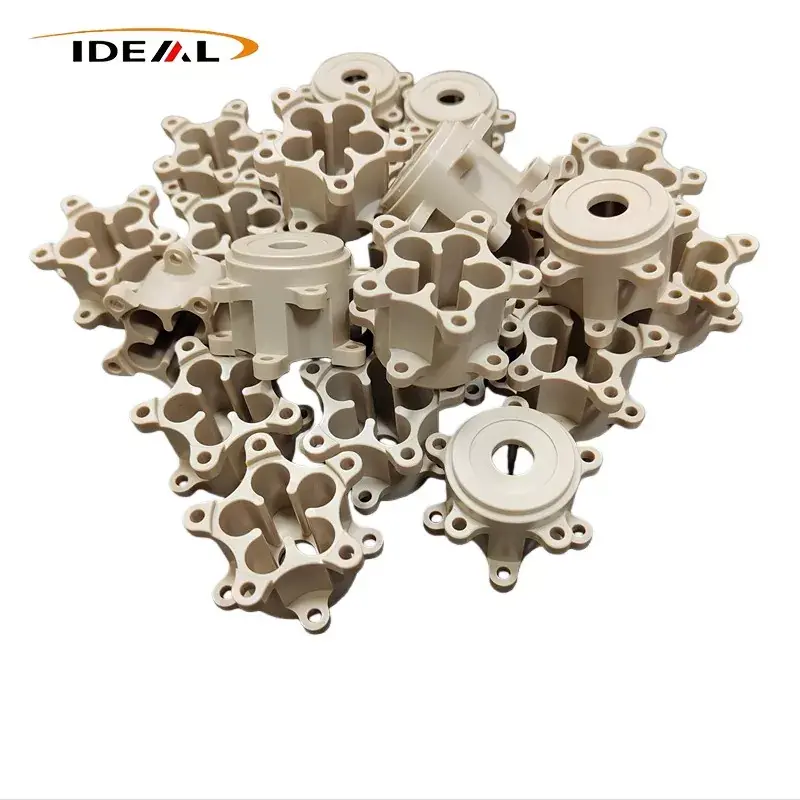
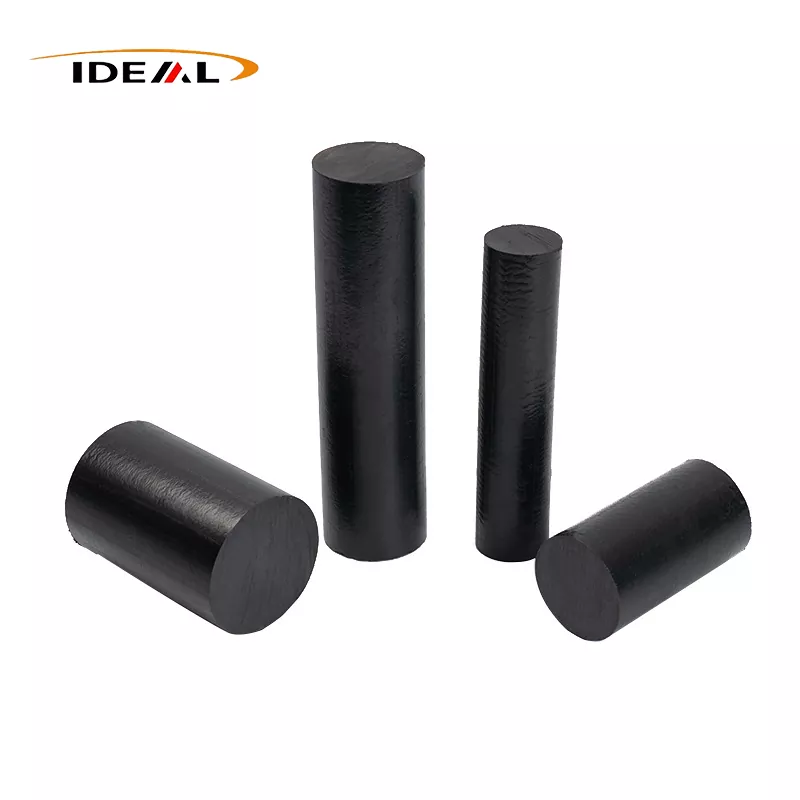
Torlon tubes is a bit of a specialty plastic profile, usually made by extruding PAI resin pellets. PAI stands for polyamide-imide. Thanks to a really stable aromatic heterocyclic structure in its molecules, it handles heat and cold much better than most common plastics. Even at high temperatures, it keeps its strength and shape stable, and can work long-term in air at 250°C with very little change in size. It’s also wear-resistant, low-friction, UV and radiation resistant, doesn’t burn easily, and has high strength, good insulation, corrosion resistance, and a self-lubricating effect. Its thermal expansion is really low too.
Torlon tubes is considered a high-performance engineering plastic. Even with all these pluses, it can still run into some common issues in real-world use:
1. High-temperature resistance has its limits: Under a load of 1.8MPa, PAI can handle a heat deflection temperature of 274°C, putting it among the best unreinforced plastics for heat resistance. But if things get really hot—say over 300°C—its performance will still drop. Long-term exposure to high heat can slowly age the material, lowering its mechanical strength and dimensional stability.
2. Mechanical properties aren’t perfectly balanced: PAI has a tensile strength of 190MPa and a flexural strength of 250MPa, which is really strong, but its elongation at break is relatively low, usually between 3% and 8%. That means it can act a bit brittle under impact. Its high rigidity also limits how much it can cushion under stress.
3. Sensitive to extreme electromagnetic conditions: PAI holds up well electrically and magnetically at high temperatures and frequencies, but in really extreme high-frequency or strong magnetic environments, you might need extra shielding or a modified material.
The Torlon pipe sold by GuangZhou Ideal company is usually made in two ways: extrusion molding and mold compression molding.
Extrusion works best for making straight pipes with smaller dimensions, thin walls, lower precision needs, and less demanding mechanical properties—and it can be done continuously. Mold compression molding involves putting dried PAI resin pellets into a mold of the right size, then placing the mold into a press. Heat and pressure (axial or radial) are gradually increased, melting the PAI so it flows and fills the mold while pushing out air bubbles. The temperature and pressure are held for a while so the PAI molecules can cross-link and solidify. After that, it’s cooled slowly to room temperature—to avoid stress from cooling too fast—then taken out of the press, removed from the mold, and trimmed. This method makes denser Torlon PAI tube with better mechanical properties and higher dimensional accuracy, and it can also make shaped pipes with complex cross-sections. The downside is it’s slower to produce.
|
Product name |
Torlon tubes |
|
Material |
Unfilled series, fiber reinforced series, wear-resistant series |
|
Color |
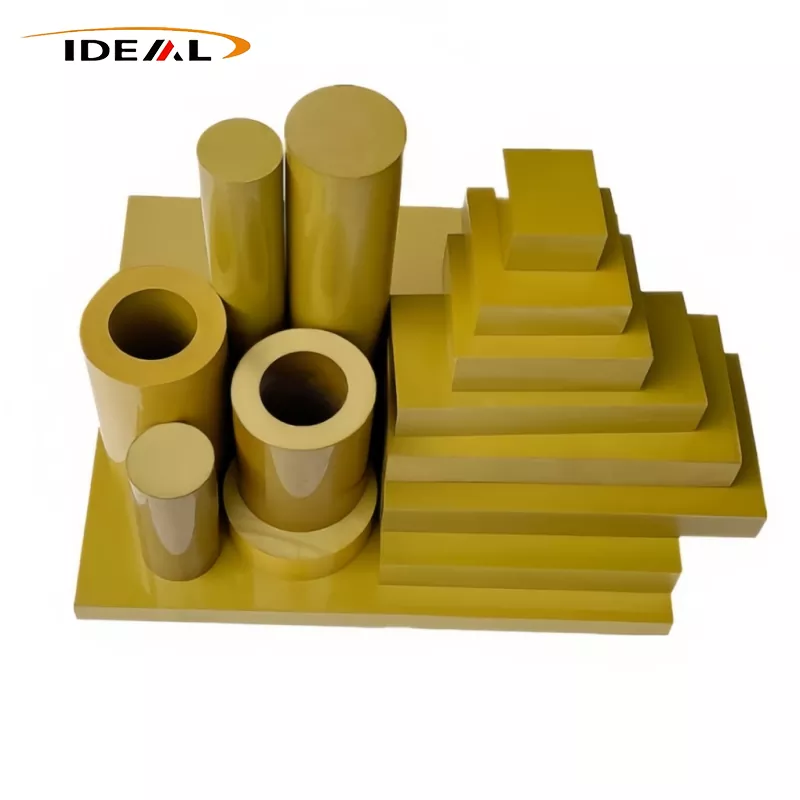
Yellowish-brown, military green, dark green, black |
|
Size |
customization |
|
Tolerance |
Depends on the sizes |
|
sample |
Free |
|
Minimum order quantity |
1 piece |
|
Certificates |
ISO9001:2008, REACH, ROHS |
1. High Temperature Resistance
Torlon tubes holds up really well under heat. After sitting at 200°C for 1000 hours, it still keeps 75% of its strength. If you add glass fiber, that goes up to 85%, and with carbon fiber reinforcement, it stays at 90%. You can use it long-term up to 250°C. But if things get hotter than 450°C, the material starts breaking down and won’t hold its structure anymore.
2. Flame Retardancy
When PAI plastic gets hot, the imide groups in it break down and release nitrogen gas. This lowers the oxygen around it. At the same time, its aromatic ring structure turns into a kind of char, which creates a tough, protective layer that traps anything flammable inside. Used below 250°C long-term, it keeps its flame-retardant ability steady, with a peak heat release below 60 kW/m²—this really helps stop flames from spreading.
3. Mechanical Properties
As temperatures rise, Torlon pipe’s mechanical performance goes down, but not at the same rate. Below 250°C, the drop is pretty gradual because the molecular chains stay locked and the structure stays stable. Between 250°C and 300°C, things start changing faster—the molecules begin to loosen up and move more noticeably. Once you go past the glass transition temperature, the properties fall off quickly and the material gets soft.
4. Creep Resistance
Creep resistance means how well a material can handle slow, steady deformation when it’s under constant stress. PAI is packed with aromatic heterocyclic structures that form a tight, cross-linked network of molecules. This rigid framework locks the chains in place, so they can’t slide or stretch easily. That’s what cuts down the chance of creep in the first place.
5. Electrical Performance
At room temperature and 1 MHz frequency, PAI plastic has a dielectric constant around 3.0 to 4.0—lower than most engineering plastics, which helps cut down on signal delay. Its dielectric loss usually falls between 0.004 and 0.007. For insulation, it meets F to H class standards.
6. Corrosion Resistance
Torlon PAI tube is pretty tough against a lot of chemicals. It doesn’t corrode easily when exposed to acids, alkalis, and similar stuff. It holds onto its original structure and properties even in different chemical settings. That chemical stability makes it handy in areas like chemical engineering and pharmaceuticals—think reactor linings or drug pipelines. PAI plastic can take chemical wear and keep equipment running longer.
1. Industrial machinery: This stuff is used in things like non-lubricated bearings, seals, bearing isolation rings, and parts for reciprocating compressors. These parts are rubbing against each other every single day, so the material has to be super wear-resistant and keep its shape. It can’t warp or change size easily, and it needs to hold up under constant friction over time.
2. Aerospace: Torlon tubes goes into making aircraft components, fuel system parts for jet engines, and materials that fight erosion on planes. In these harsh conditions, the material has to be tough against wear, handle high heat, and still be lightweight.
3. Microelectronics: Think of electronic semiconductor chipsets, sockets, soldering cup holders, and all kinds of tiny, precise electronic components. Because everything is so small and exact, the material’s wear resistance and dimensional accuracy really need to be spot-on.
4. Automotive manufacturing: Torlon pipe can be turned into specialized materials for car clutches, transmission system parts, and seals. With new energy vehicles taking off these days, there’s a bigger and bigger need for materials that are both light and wear-resistant.
5. Energy industry: It’s used in energy equipment, oil drilling gear, and parts that operate in high-temperature or vacuum environments. In these settings, the material has to bring together wear resistance, corrosion resistance, and the ability to take the heat—all at once.
6. Precision manufacturing: Torlon PAI tube is a great fit for making high-precision parts in high-tech equipment, and for any application where you need extreme wear resistance—like non-lubricated bearings, seals, bearing isolation rings, and compressor parts in reciprocating systems.
GuangZhou Ideal offers real one-on-one support, and their customer service team is seriously professional—they really get what Torlon tubes is dealing with and can actually come up with solid solutions. Whenever you have a question or need something, they’re quick to respond, totally accurate, and give you clear answers and helpful advice. It just makes the whole buying process way smoother.
1.Can I return or exchange items?
If you're dealing with semi-finished or custom products and find any quality issues, sizing problems, or anything else that affects how you can use them, please reach out to us as soon as you can. If it’s really our fault, we’ll handle the return or exchange and cover the shipping costs both ways. If you ordered the wrong thing or want to return/exchange for personal reasons (especially with profile blanks), we can usually arrange it as long as we can still resell the item—but you’ll need to pay for shipping.
2.What’s your minimum order size?
For semi-finished profiles, we can do small orders to get you started. If you need custom parts, just tell us the details—like how they should be made and what size—and we’ll work with you to find a workable solution.
3.How do I pay?
We’ll ask for a partial deposit before production begins. Once everything’s ready, you pay the remaining balance. As soon as we receive the final payment, we’ll schedule shipment. You can pay into our HSBC Hong Kong bank account or through your preferred freight forwarder.
4.What certifications do your products hold?
We’re ISO9001:2008 certified for our quality management system. Our products also come with SGS, CE, and RoHS certifications, and meet environmental standards like REACH, EN71, and others.
5.Can I get samples?
Sure! If we have the semi-finished profiles in stock, we’ll send samples at no cost—you just cover the shipping. And yes, the samples will be exactly the same as what you’ll receive in your actual order.