Article Summary
When buyers look for engineering plastics that can keep working under heat, pressure, friction, chemicals, and repeated machining, ordinary materials often fall short. PEEK Rods stand out because they combine mechanical strength, dimensional stability, wear resistance, and broad chemical tolerance in one material family. They are often selected for components that need to perform reliably where metal may be too heavy, where standard plastics may deform, or where service conditions are simply too aggressive for low-grade alternatives.
In this article, we explain what makes PEEK Rods practical, where buyers usually run into trouble when selecting them, how reinforced grades differ from pure material, and what purchasing teams should check before placing an order. We also introduce how Guangzhou Ideal Plastic Technology Co., Ltd. supports customers looking for dependable rod solutions for machining and industrial manufacturing.
Table of Contents
Article Outline

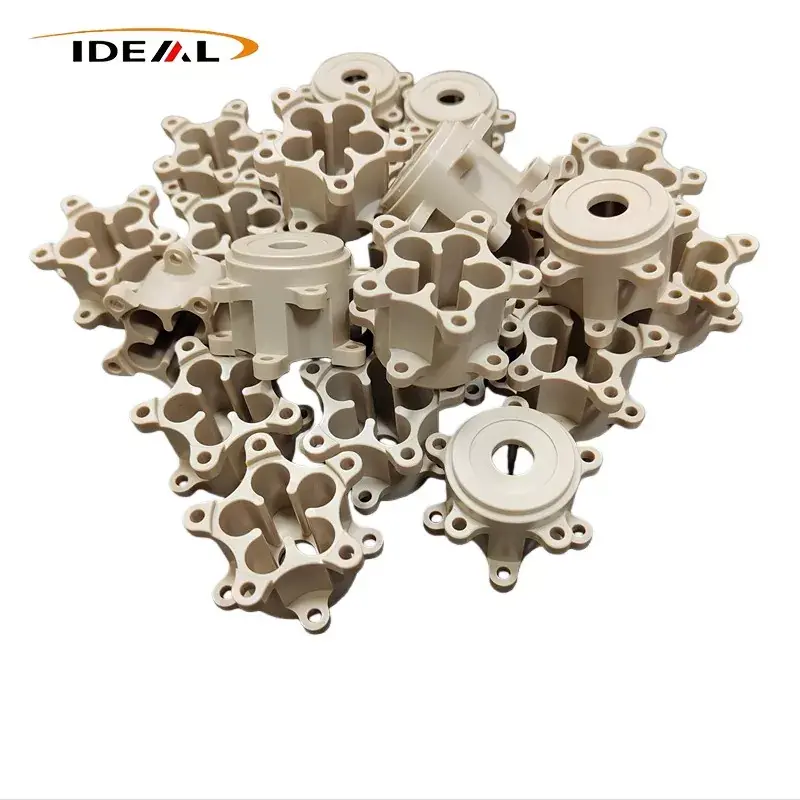
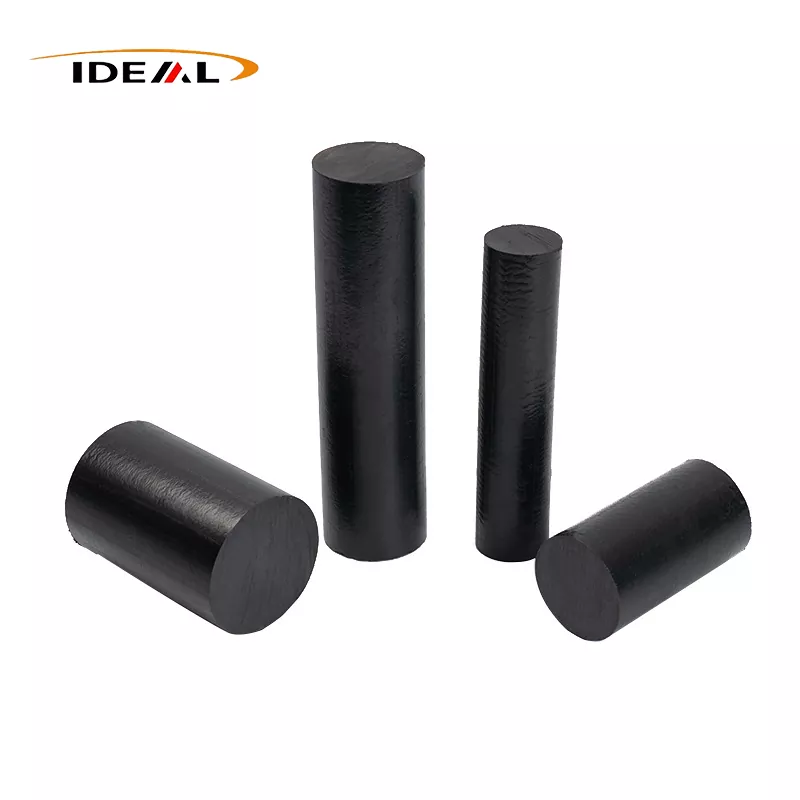
PEEK Rods are stock shapes made from polyether ether ketone, a high-performance thermoplastic known for balancing heat resistance, mechanical strength, wear behavior, and chemical durability. In practical terms, they are often purchased as semi-finished material and then machined into bushings, seals, insulators, structural parts, valve components, guides, medical components, and many other precision parts.
One reason engineers value PEEK Rods is that they help simplify difficult design decisions. Instead of juggling separate materials for heat, stiffness, corrosion resistance, and service life, designers can often use one carefully selected PEEK grade to cover several requirements at once. That can reduce maintenance risks, improve consistency in demanding operating conditions, and support more stable long-term performance.
For buyers, rods are especially attractive because they are flexible from a manufacturing perspective. A rod format can be cut and machined into custom geometries without forcing the customer into expensive tooling at the early stage of development. That makes PEEK Rods a practical option not only for mass production, but also for prototypes, pilot runs, and high-value small batches.
Buyers rarely struggle because they do not know the material name. They struggle because the working conditions are harsh and the wrong material choice becomes expensive very quickly. A failed component can mean downtime, contamination, unstable tolerances, repeated replacement, or even a complete redesign. This is where PEEK Rods usually enter the conversation.
Some of the most common pain points include:
Many customers also face a second problem that is less obvious but just as important: they are not always sure whether they need pure PEEK or a reinforced version. That uncertainty can slow purchasing decisions, increase waste, or result in paying for a grade that does not actually match the application.
The real value of PEEK Rods is not just that the material sounds advanced. It is that the material solves several industrial headaches at the same time. When a component is expected to survive heat, friction, chemicals, and stress, there are not many plastic materials that remain dependable. PEEK earns attention because it performs in conditions where ordinary materials start losing shape or reliability.
Here are the advantages buyers care about most:
A buyer choosing PEEK Rods is often trying to reduce risk, not just buy plastic. The right grade can lower failure rates, extend service intervals, improve machining output, and help the final component behave more predictably in use. That is why this material is frequently treated as a performance solution rather than a commodity.
| Performance Factor | Why It Matters to Buyers | How PEEK Rods Help |
|---|---|---|
| Heat resistance | Parts may soften, distort, or lose accuracy at elevated temperatures | PEEK remains reliable in demanding thermal environments |
| Wear resistance | Frequent friction can shorten service life and raise maintenance costs | PEEK supports longer use in moving-contact applications |
| Chemical stability | Aggressive media can damage lower-grade materials | PEEK performs well in many chemically challenging settings |
| Machinability | Production teams need efficient conversion from stock shape to finished part | Rod form is practical for precision machining and custom fabrication |
| Design flexibility | Projects may need lightweight but strong alternatives to metal | PEEK offers a high-value balance of strength and reduced weight |
Not every job calls for the same formulation. This is where many buyers either overspend or underspecify. The best approach is to start with the working condition, then match the grade to the real demand. In general, PEEK Rods can be grouped into pure and reinforced categories.
Pure PEEK Rods are often selected when a clean, balanced performance profile is needed. They are suitable for many machined parts that need heat resistance, toughness, chemical stability, and overall reliability without the additional stiffness or specialty behavior created by fillers.
Carbon fiber filled PEEK Rods are popular when applications need greater strength, higher modulus, improved dimensional behavior, or better thermal conductivity characteristics. They are often chosen in demanding mechanical or structural settings.
Glass fiber filled PEEK Rods are useful when buyers want to improve mechanical performance and stiffness while also balancing cost considerations. This option is often practical for industrial components that need reinforcement but not necessarily the same profile as carbon-filled grades.
Bearing-grade or wear-modified PEEK Rods typically include combinations such as PTFE, graphite, and carbon fiber. These are considered when lower friction and stronger wear behavior are important, especially in parts exposed to repeated contact and motion.
ESD PEEK Rods are relevant in environments where static control matters. For sensitive electronics or controlled manufacturing systems, this type helps address electrostatic concerns that standard grades may not solve.
| PEEK Rod Type | Best For | Main Advantage |
|---|---|---|
| Pure PEEK Rod | General high-performance machined parts | Balanced overall properties |
| Carbon Fiber Filled PEEK Rod | High-load or stiffness-sensitive applications | Improved strength and reduced expansion tendency |
| Glass Fiber Filled PEEK Rod | Reinforced industrial parts with cost-awareness | Enhanced mechanical behavior |
| Bearing Grade PEEK Rod | Wear and friction-critical components | Better sliding and wear performance |
| ESD PEEK Rod | Electronics and static-sensitive environments | Controlled electrostatic behavior |
PEEK Rods are widely considered for industries where failure is costly and process stability matters. The final application may vary, but the reason for selection is usually the same: the part needs to keep performing where other materials become unreliable.
In many of these sectors, material choice affects more than just one part number. It influences maintenance planning, replacement frequency, dimensional consistency, and even customer confidence in the end product. That is why sourcing quality PEEK Rods from a capable supplier matters so much.

Buyers often compare PEEK Rods with standard engineering plastics, fluoropolymers, nylons, acetal, or even metals. There is no universal winner for every situation, but PEEK is often chosen when the application combines multiple difficult requirements instead of just one.
| Material Option | Typical Strength | Heat Capability | Wear Behavior | Weight | Best Use Logic |
|---|---|---|---|---|---|
| Standard engineering plastics | Moderate | Moderate | Application-dependent | Light | Suitable for less severe conditions |
| Metal | High | High | Good but can need lubrication | Heavy | Useful where weight is less critical |
| PEEK Rods | High for a thermoplastic | High | Strong, especially in modified grades | Lighter than metal | Ideal when multiple demanding factors must be balanced |
In other words, PEEK Rods tend to make the most sense when your application is not simple. If the environment includes heat plus friction, chemicals plus tight tolerances, or long service cycles plus machining accuracy, this material starts to justify its value very quickly.
A good material can still become a poor purchase if the specification is vague. Before ordering PEEK Rods, buyers should ask a few practical questions:
This is also where supplier capability matters. A serious supplier should be able to discuss grade selection, available sizes, machining suitability, and application fit without forcing the customer into a generic answer. Guangzhou Ideal Plastic Technology Co., Ltd. serves customers who need dependable PEEK Rods for industrial use and customized project demands, making it easier to match product type with actual working conditions.
If your project is still at the evaluation stage, it is often smarter to discuss the end-use condition first rather than just request a quote by diameter. That simple step can save time, reduce wrong-grade purchases, and increase the chance that your finished component performs as expected.
Can PEEK Rods be machined into custom parts?
Yes. One of the biggest advantages of PEEK Rods is that they are highly practical as semi-finished stock for machining. They are widely used to produce custom industrial parts in both development and production settings.
Are reinforced PEEK Rods always better than pure PEEK Rods?
Not always. Reinforced grades are better for certain performance targets, such as increased stiffness, improved wear behavior, or static control. Pure PEEK may be the better choice when a more balanced general-purpose profile is needed.
Why do buyers choose PEEK Rods instead of metal?
Buyers often choose PEEK Rods when they want to reduce weight, avoid corrosion concerns, simplify machining of certain designs, or gain a high-performance plastic solution for difficult environments.
Are PEEK Rods suitable for harsh industrial environments?
Yes. They are commonly considered for applications involving heat, friction, chemicals, and mechanical stress, which is why they are used across demanding sectors.
How do I know which PEEK rod grade I need?
Start with your actual service condition: temperature, load, motion, chemical exposure, electrical requirements, and dimensional expectations. Then work with a knowledgeable supplier to match the grade accordingly.
Choosing the right PEEK Rods is not just about buying material with a premium label. It is about selecting a rod grade that can truly solve your operating problem, protect your machining investment, and support the performance of your final product. When your parts must handle pressure, temperature, friction, or chemically aggressive conditions, the difference between an adequate material and the right one becomes very expensive.
Guangzhou Ideal Plastic Technology Co., Ltd. understands that buyers need more than a catalog description. They need practical support, consistent product quality, and a supplier that can respond to real application requirements. Whether you are sourcing standard sizes or evaluating a customized requirement, choosing the right partner can make the whole process faster and more reliable.
Looking for dependable PEEK Rods for your next project or production line? Tell us your size, grade, and application requirements, and let our team help you find a more suitable solution. Contact us today to discuss your project, request product details, and get support tailored to your industrial needs.