




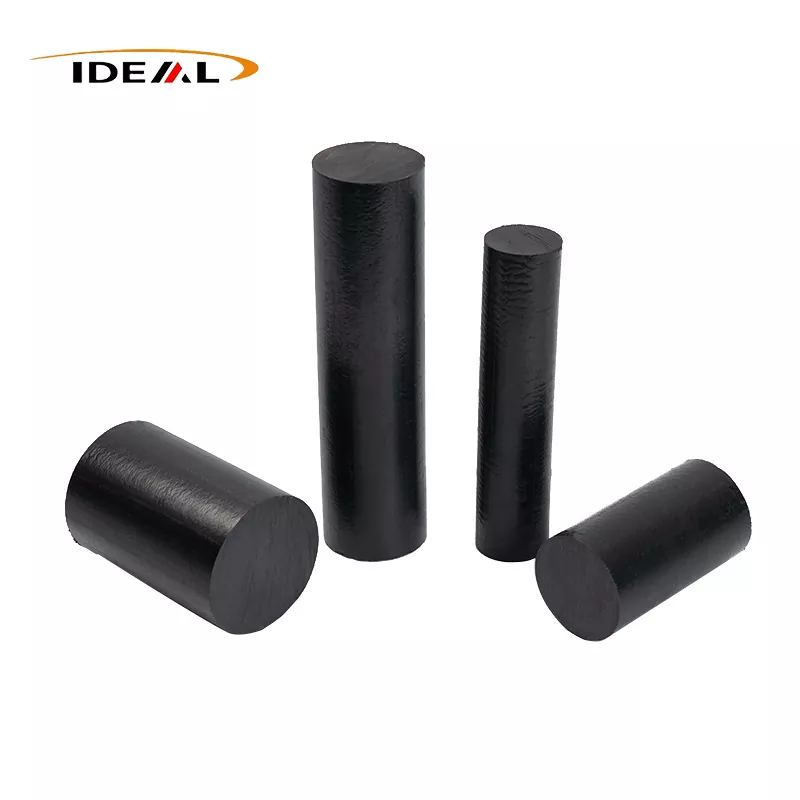
Before requesting a quote, decide what you are actually buying: tubular stock that will be machined into a component, or pressure-rated pipe intended to carry fluid. Then specify the OD, ID, length, finished-part envelope, service conditions, quantity, inspection requirements and documentation. That distinction prevents the most expensive RFQ error—treating a semi-finished engineering-plastic profile as though it were a certified piping-system component.
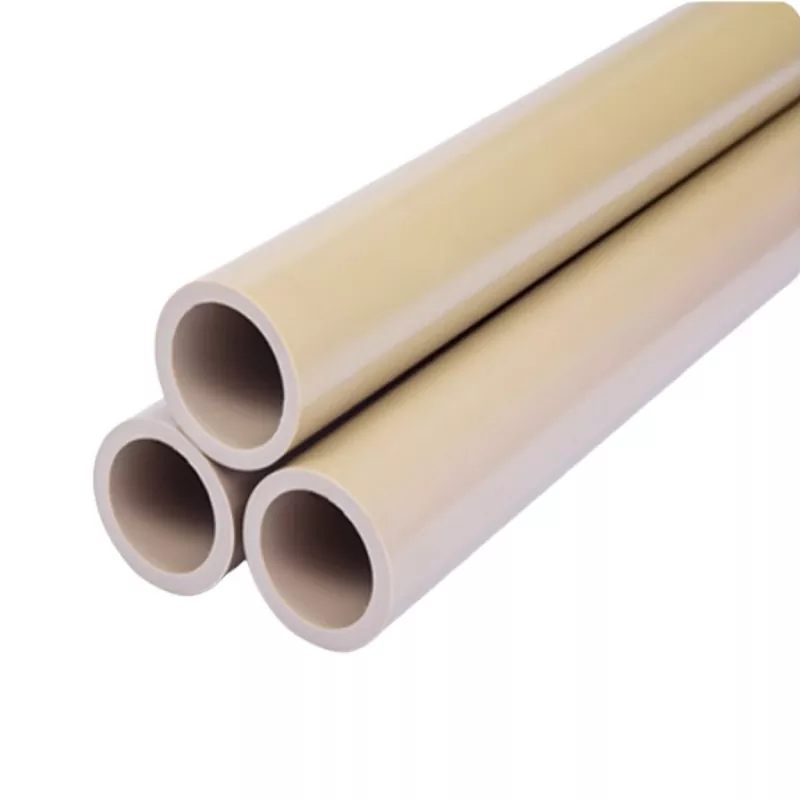
First decide whether the application needs semi-finished tubular stock or pressure-rated process pipe
Most PEEK GF30 pipes sold as semi-finished profiles are thick-wall tubes used to machine bushings, sleeves, insulating bodies, wear components and structural parts. The word “pipe” describes the geometry; it doesn’t automatically establish a pressure rating.
If the product will contain pressurized gas or liquid, your inquiry needs more than dimensions. State the medium, operating and upset temperatures, normal pressure, pressure cycles, joint design, required design code and acceptance test. Ask whether the supplier can provide pressure-rating data for the exact grade, size and temperature. Without that evidence, treat the material as PEEK GF30 tubular stock, not as approved process piping. This matters particularly in chemical service, where permeation, stress, temperature and connection design can govern failure even when the polymer itself resists the fluid.
Translate the drawing into an unambiguous OD, ID, wall, length and finished-part envelope
Send a controlled drawing rather than a marked-up screenshot. It should identify units, drawing number, revision, projection method and every critical surface. State outside diameter and inside diameter directly; don’t expect the supplier to derive one from a nominal wall. Include cut length, straightness or concentricity requirements where functional, and identify which surfaces will remain as supplied.
The finished-part envelope is just as important. Show the largest finished OD, smallest finished ID, shoulders, grooves, threads and datum surfaces that must fit inside the ordered blank. A tube can match the nominal dimensions yet leave too little material to clean up runout, surface irregularity or saw-cut ends.
Normalize available sizes as OD × ID, from Φ20 × Φ15 to Φ458 × Φ404, with 1000 mm and 3000 mm stock lengths
Ideal Plastic lists OD × ID combinations spanning Φ20 × Φ15 through Φ458 × Φ404, with 1000 mm and 3000 mm lengths. Use that same convention in the RFQ and label the units as millimeters. The endpoints describe the published range; they don’t mean every possible OD and ID pairing is standard stock. Confirm the exact combination through the published PEEK GF30 pipe size range.
| RFQ field | What to state |
|---|---|
| Blank dimensions | OD × ID × cut length, all with units |
| Finished envelope | Maximum finished OD, minimum finished ID and critical features |
| Stock length | 1000 mm, 3000 mm or supplier-cut pieces |
| Quantity | Number of full lengths, blanks or finished parts |
| Critical geometry | Concentricity, straightness, end squareness and datum scheme where required |
Separate stock tolerance from finished-part tolerance and confirm machining allowance before ordering
The product page states a tolerance of ±0.02 mm, but an RFQ should never repeat that figure without defining its scope. Ask which dimension it covers, whether it applies to standard stock or machined parts, and under what measurement conditions. OD tolerance, ID tolerance, wall variation, ovality and straightness are different controls.
For a machined component, specify the finished tolerances separately and let the supplier confirm an adequate machining allowance. Don’t order a near-net tube based only on nominal dimensions. Glass-filled PEEK is stiff, but residual stress, tool pressure and heat generated during machining can still move a thin section after material is removed.
Match 30% glass-filled PEEK to temperature, load direction, chemical exposure and electrical duty
PEEK GF30 is PEEK compounded with 30% glass fiber. The reinforcement is generally selected to increase structural stiffness, improve creep control and reduce dimensional movement compared with unfilled PEEK. Those advantages don’t remove the need to define the application.
Tell the supplier the continuous and short-duration temperatures, load direction, load duration, cycling, mating materials and expected wear. For chemical exposure, name the actual fluid, concentration, temperature, exposure time and whether mechanical stress is present. “Chemical resistant” is too broad for design approval. For electrical parts, identify the required dielectric, insulation and tracking properties rather than assuming the base polymer’s behavior carries over unchanged to the filled compound.
Compare GF30 with unfilled PEEK when stiffness, thermal expansion and dimensional control drive the decision
Choose GF30 when stiffness, creep resistance and dimensional control under heat are central to the design. Consider unfilled PEEK when ductility, purity, surface finish or less abrasive machining behavior matters more. Glass fiber increases tool wear and can produce a different machined surface than unfilled material. It may also create direction-dependent properties based on how the tubular stock was processed.
Don’t select between them from a generic PEEK property sheet. Compare data for the actual grades and, for tight assemblies, ask whether the thermal-expansion value is reported in a direction relevant to the pipe and finished component.
Validate tensile strength, flexural modulus, thermal expansion and chemical resistance on the grade-specific datasheet
A useful quotation identifies the exact compound and attaches its datasheet. Review tensile strength, flexural modulus, elongation, thermal behavior, density and coefficient of thermal expansion, but also check the test method, specimen orientation and conditioning. A single headline value may come from a molded specimen that doesn’t represent a machined tube wall.
Chemical compatibility needs similar discipline. Ask for grade-specific evidence at a temperature and concentration close to your service conditions. If failure would create a safety or shutdown risk, plan application testing on production-representative material. Published resistance tables are screening tools; they don’t account for every combination of stress, fluid, temperature and exposure time.
Require grade identification, test methods, lot traceability, inspection records and applicable compliance documents
Write the documentation package into the RFQ so it’s priced and prepared before shipment. At minimum, request the manufacturer and grade designation, lot or batch traceability, certificate of conformity, applicable test methods and an inspection report for agreed dimensions.
If your project requires environmental, quality, aerospace, automotive or customer-specific compliance, name the document or standard and required revision. A general statement that material complies with international requirements isn’t a substitute for the certificate your receiving inspector needs. Also clarify whether records must trace each cut blank back to the parent length and whether packaging labels must carry the lot number, drawing revision and purchase-order line.
Send Ideal Plastic a quote-ready package with the drawing revision, service conditions, quantity, inspection level, machining scope, packaging and delivery destination
Your package should contain one current drawing, not several conflicting versions. Include the requested grade, OD × ID × length, finished envelope, quantity, service environment, critical tolerances, inspection level and required records. Define whether Ideal Plastic is supplying full-length tube, cut blanks or finished machined components. Packaging instructions should address clean wrapping, end protection, part separation and lot segregation where needed.
Provide the destination country, postal code, delivery terms and requested date. Large-diameter or 3000 mm profiles can create freight and handling constraints that aren’t visible in the piece price. Sending those details with the custom PEEK GF30 pipe inquiry gives the supplier enough information to quote material, machining, inspection and logistics on the same basis.
Buyer FAQs: standard-stock availability, stated lead times, samples, machining and dust control, packaging, and international delivery risk
- Are all listed sizes available for immediate shipment?
- Ideal Plastic states same-day shipment for standard sizes, but availability should be confirmed for the exact OD × ID, length, quantity and grade at the time of order.
- What is the stated lead time for custom material?
- The stated custom lead time is 7 to 10 days. Confirm whether that covers production only or also machining, inspection, documentation and transit.
- Should you request a sample?
- Yes, if surface finish, color, machining response or fit is sensitive. Make sure the sample is the same grade and, where possible, representative of the intended production route.
- Who should control machining and glass-fiber dust?
- Assign machining scope in writing. The machine shop should use suitable carbide or other wear-resistant tooling, control heat and burrs, and capture glass-filled polymer dust with appropriate extraction and workplace procedures. Exact machining parameters depend on geometry, tooling, setup and finish requirements.
- How should parts be packed?
- Specify clean wrapping, protected ends, separation of finished surfaces, lot labels and moisture or contamination controls required by your receiving process.
- What creates international delivery risk?
- Long profiles, customs documents, dimensional-weight charges and unclear delivery terms are common trouble spots. Send the destination and required paperwork with the drawing, then ask Ideal Plastic to confirm availability, scope and shipment terms in its written quotation.