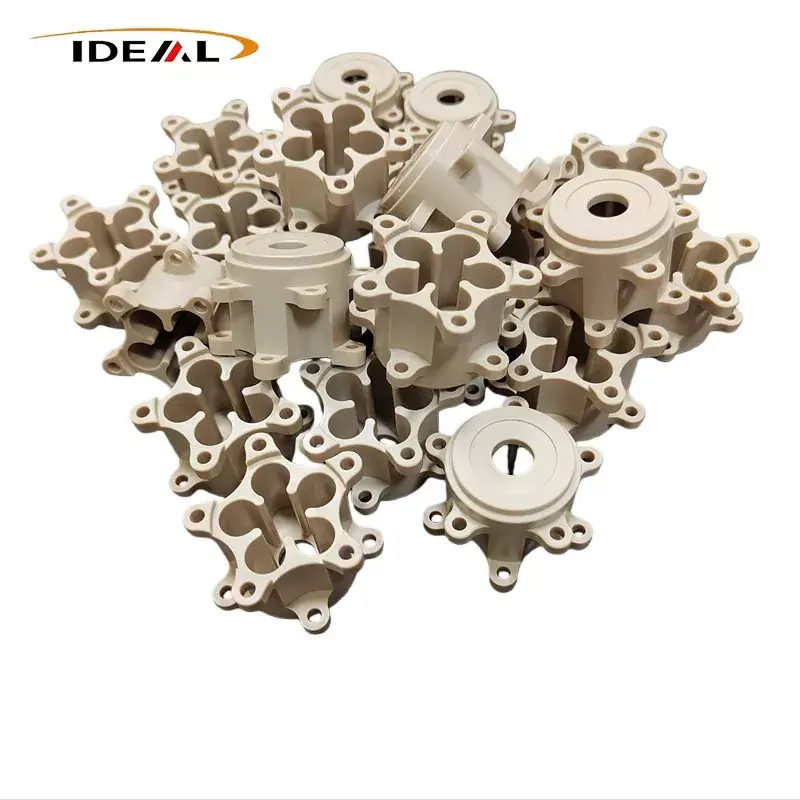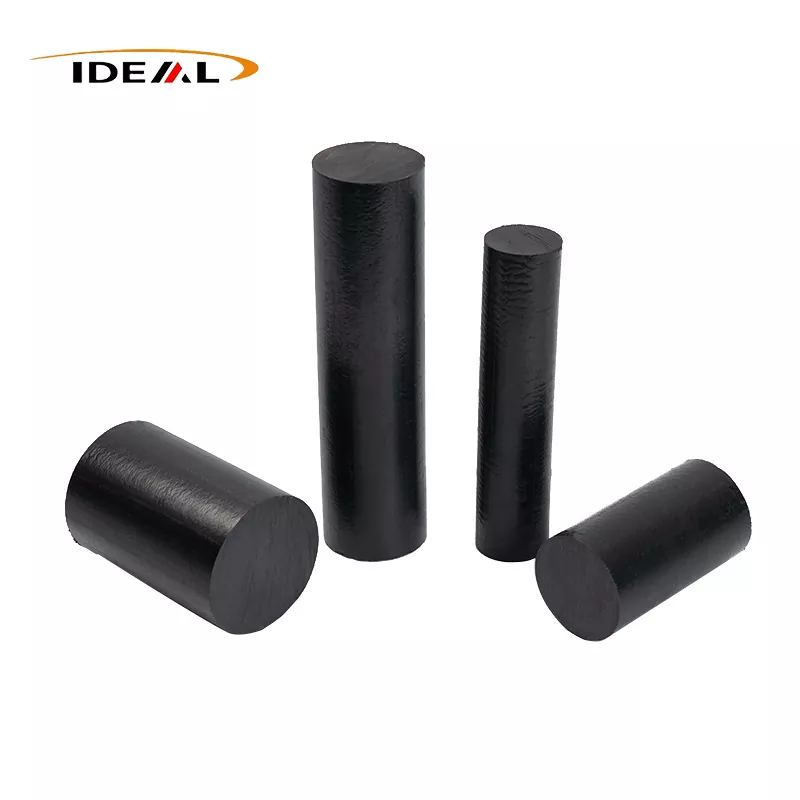
Polyetheretherketone reinforced with 30% carbon fiber produces a structural tube that survives mechanical loads at temperatures where standard thermoplastics soften, warp, and fail. Ideal Plastic compounds pure PEEK with milled carbon fiber to manufacture PEEK CF30 pipes that deliver extreme stiffness, low thermal expansion, and natural electrical conductivity. You specify this material when virgin PEEK lacks the compressive strength for high-load bearings, or when you require strict static dissipation in dynamic aerospace assemblies.
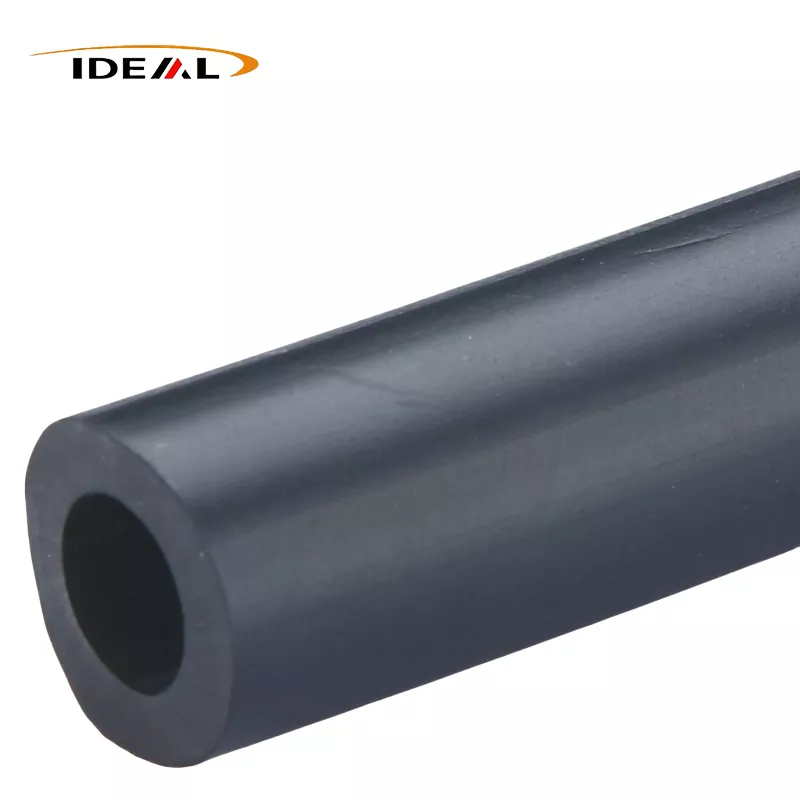
Engineers replace heavy metal alloys with carbon-filled PEEK to cut weight without sacrificing dimensional stability. The core advantage lies in the physical reinforcement. The 30% carbon fiber matrix dramatically alters how the polymer behaves under stress, heat, and high-velocity friction.
Adding a 30% carbon fiber load essentially doubles the tensile modulus of pure PEEK. The material handles continuous operating temperatures up to 260°C (500°F) while resisting creep under heavy, sustained loads. But for dynamic, moving parts, the most critical shift is the dry-running friction coefficient.
Virgin PEEK can gall when subjected to high-speed friction. The carbon matrix transforms the pipe into a self-lubricating wear surface. It resists fatigue. It withstands harsh chemical washdowns. Carbon fiber reinforced PEEK tubes exhibit superior tribological properties, making them ideal for high PV (pressure-velocity) applications where external fluid lubrication is impossible or prone to failure.
The immediate trade-off is tool wear. Carbon fiber is exceptionally abrasive. CF30 will destroy standard high-speed steel (HSS) tooling during secondary machining within minutes. Processing these pipes requires polycrystalline diamond (PCD) or specialized coated carbide tools, along with highly rigid workholding to prevent chatter and localized overheating during turning operations.
| Material Property | Pure PEEK (Unfilled) | PEEK CF30 (30% Carbon) | Engineering Impact |
|---|---|---|---|
| Tensile Modulus & Stiffness | Baseline | Approx. 2x higher | Prevents structural deflection under heavy mechanical loads. |
| Dry-Running Friction | Moderate (Risk of galling) | Very Low | Allows gears and bearings to run dry without seizing. |
| Thermal Expansion (CLTE) | Standard polymer expansion | Significantly reduced | Maintains tight bearing clearances across wide temperature swings. |
| Electrical Conductivity | Insulator | Static Dissipative | Prevents dangerous spark hazards in volatile environments. |
Supply chains stall when specialty polymers require custom extrusion dies and long moisture-conditioning cycles. Ideal Plastic operates as a direct source factory with dedicated extrusion lines. We maintain standard profiles to support immediate machining requirements and rapid prototyping cycles.
When a project demands non-standard wall thicknesses, custom extrusion bridges the gap. Standard stock ships quickly. Custom runs require lead times dictated by die fabrication, raw material moisture extraction, and strict post-extrusion annealing cycles. PEEK must be thoroughly dried before extrusion; any residual moisture causes internal voids and destroys the pipe's hoop strength. We control this entire thermal and drying process in-house.
Sizing specialty engineering plastics rarely follows standard steel pipe schedules. Ideal Plastic manufactures outer diameters starting at 15mm and scaling up to 404mm. Inner diameters range from 20mm up to 458mm to accommodate large-scale custom production runs.
Producing massive hollow formats requires exact thermal control. Thick-walled polymer tubes are notoriously difficult to cool evenly. If the exterior surface cools much faster than the interior wall, the resulting residual stress will cause the pipe to warp—or even crack—the moment a CNC cutting tool breaches the surface. We utilize controlled cooling baths and extended post-extrusion annealing to relieve these internal stresses before the material ever reaches a lathe.
If you require tight-tolerance custom PEEK CF30 tubing, our CNC machining division takes over where raw extrusion stops. Extrusion provides the near-net shape. CNC turning and milling achieve the strict concentricity, precise runout limits, and smooth surface finishes required for aerospace actuators and automotive assemblies.
Thermal expansion ruins tight clearances. Unfilled PEEK expands predictably, but in high-speed rotors or precision aerospace housings, that expansion often causes mechanical binding. The carbon fibers act as a physical constraint at the molecular level. This drops the coefficient of linear thermal expansion (CLTE) significantly, matching it closer to the thermal behavior of the aluminum or steel mating parts it interacts with.
The matrix also conducts heat away from friction zones. Most plastics are natural thermal insulators. A spinning bearing machined from virgin PEEK traps friction heat until the polymer softens and yields. The carbon fibers create microscopic thermal pathways, dissipating heat outward into the surrounding housing. This same conductive network allows the material to dissipate static electricity safely. High temperature conductive PEEK pipe prevents dangerous static buildup in highly volatile environments like jet fuel handling systems or semiconductor manufacturing cleanrooms.
Aerospace engineering is rapidly moving from reactive replacement schedules toward predictive digital modeling. For aircraft programs launching in 2026, engineers are feeding live operational data into AI-driven wear rate predictions to establish exact, zero-fail maintenance intervals.
These algorithms demand highly consistent material inputs. Unpredictable materials yield dangerous predictions. Because aerospace grade PEEK carbon fiber tubes exhibit strictly predictable fatigue limits and highly stable k-factors (wear coefficients), they feed perfectly into digital twin simulations. The AI models can accurately forecast when a CF30 bushing, conduit, or standoff will reach its dimensional tolerance limit, allowing maintenance crews to swap parts long before catastrophic failure occurs in critical flight control mechanisms.
You do not specify CF30 for low-pressure static fluid transfer. The raw material costs are too high. You specify this engineered grade when parts move constantly, carry heavy loads, and operate in punishing environments that destroy softer plastics.
Buying semi-finished engineering plastics through third-party distributors adds unnecessary markup and separates you from technical machining expertise. Ideal Plastic operates extrusion lines, injection molding presses, and a full CNC machining facility under one roof. We control the thermal history of the billet, which directly dictates the dimensional stability of your final machined part.
Every batch meets strict international compliance standards. As a direct machined PEEK CF30 parts supplier, we provide ISO9001:2008, REACH, and RoHS certified materials directly to the aerospace, automotive, and industrial manufacturing sectors.
Whether you are prototyping a single high-temperature gear or require high-volume extruded PEEK CF30 hollow rods for a heavy production run, you deal directly with the factory. Send us your drawings, specify your continuous operating temperatures, and our engineering team will verify tolerances, mechanical limits, and exact lead times for your custom components.