Standard unfilled polyetheretherketone (PEEK) survives extreme heat better than almost any other engineering plastic. That changes the moment you apply a mechanical load. At sustained temperatures above 150°C, an unfilled PEEK component subjected to continuous physical pressure will begin to creep, warp, and eventually lose its dimensional tolerances. You fix this by altering the polymer's structural matrix.
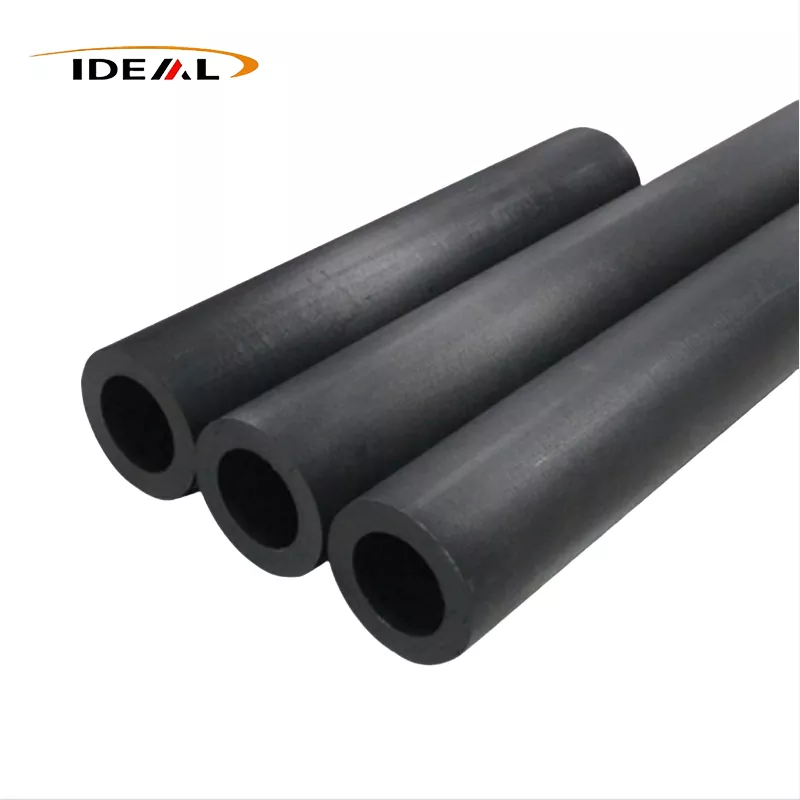
By compounding the base resin with 30% short carbon fiber, the material's physical limitations shift dramatically. The internal carbon network acts as a rigid skeleton that resists polymer chain movement. This pushes the heat distortion temperature (HDT) beyond 315°C. It multiplies the elastic modulus, drastically reduces the coefficient of thermal expansion, and creates a wear surface that outlasts standard PEEK by orders of magnitude. If your application involves high friction, mechanical stress, and aggressive heat, Carbon Fiber Reinforced PEEK Tubes offer the structural stability that pure polymers lack.
Engineering failures in high-temperature environments rarely happen because a material suddenly melts. They happen because a material slowly yields. Thermal deformation is a gradual, creeping process where a combination of heat and pressure forces a polymer out of its intended shape. In precision applications, a dimensional shift of just a few hundredths of a millimeter is indistinguishable from total component failure.
Consider a standard PEEK sleeve bearing operating in a high-speed pump at 200°C. The ambient temperature is well below PEEK's melting point of 343°C, but the localized friction heat pushes the surface temperature higher. As the material softens slightly, the mechanical load of the rotating shaft compresses the bearing wall. The inner diameter expands. The shaft begins to vibrate. The vibration increases friction, which generates more heat, accelerating the deformation until the system seizes entirely.
This exact failure mode plagues fluid routing lines, insulating sleeves, and load-bearing cylinders across heavy industry. Buyers often mistake the root cause, assuming the plastic simply couldn't handle the temperature. The actual problem is a lack of compressive strength at that specific temperature. When you specify a tube for a high-load, high-heat environment, relying on a material's base melting point is a costly error. You must evaluate the heat distortion temperature under load. Unfilled plastics expand isotropically—in all directions equally—when heated. Without a reinforcing agent to lock the geometry in place, keeping tight tolerances in a dynamic thermal environment is physically impossible.
Adding 30% short carbon fiber to a PEEK matrix fundamentally changes how the material absorbs and distributes mechanical energy. The carbon fibers are much stiffer and stronger than the surrounding polymer. When a load is applied to 30% carbon filled PEEK tubing, the stress transfers from the relatively soft plastic matrix directly into the rigid carbon fibers.
This stress transfer is what drives the material's superior elastic modulus and higher mechanical strength. The fibers physically block the polymer chains from sliding past one another. Because the carbon does not expand at the same rate as the plastic when heated, it acts as an internal constraint. The coefficient of linear thermal expansion drops significantly, meaning a machined sleeve will maintain its inner and outer diameters even as the operating temperature fluctuates wildly.
The addition of carbon also transforms the material's tribological properties. When comparing the CF PEEK vs standard PEEK wear rate, the reinforced variant performs exceptionally well under high pressure and velocity (PV) conditions. In a plain bearing or bushing application, the carbon fibers sit at the wear interface. They bear the brunt of the frictional load, preventing the softer polymer from tearing or adhering to the mating metal surface. This outstanding wear resistance makes it the default choice for high-friction moving parts.
However, this structural rigidity introduces necessary trade-offs in manufacturing. CF30 PEEK is substantially harder and more abrasive than standard PEEK. It requires specialized tooling and rigid CNC machining centers to process accurately. Because the material is stiffer, it is also more brittle; it will not tolerate high-impact shock loads as well as an unfilled polymer. Achieving precision geometries requires expert handling. GuangZhou Ideal manufactures these tubes with specific tolerances of ±0.02mm and offers wall thicknesses ranging from 3mm to 100mm, ensuring that even thick-walled, high compressive strength PEEK cylinders meet exact engineering specifications without internal voids or stress fractures.
Engineers do not specify carbon-reinforced PEEK by default. The material is expensive and requires precise machining. It is chosen specifically to replace materials that are failing, too heavy, or electromagnetically incompatible with the operating environment. The two most common substitution paths involve replacing heavy metals in flight hardware and replacing insulative plastics in sensitive electronics manufacturing.
Every gram of mass on an aircraft or spacecraft carries a fuel penalty. Aerospace engineers spend decades hunting for ways to pull weight out of a chassis without compromising structural integrity. Historically, components subjected to corrosive aviation fluids, high vibration, and engine heat were made from titanium or stainless steel. Today, aerospace grade carbon fiber PEEK is rapidly replacing metal in brackets, fluid lines, and structural sleeves.
The math driving this substitution is straightforward. Titanium has a specific gravity of roughly 4.5 g/cm³. Carbon-reinforced PEEK has a specific gravity of roughly 1.4 g/cm³. Swapping a metal tube for a carbon-reinforced plastic tube yields an immediate weight reduction of nearly 70%. While CF PEEK cannot match the absolute tensile strength of titanium, it often exceeds the specific strength requirements for the application. If a component is over-engineered in metal simply to survive the operating temperature, switching to a high-heat polymer removes unnecessary mass.
Beyond weight, CF PEEK eliminates galvanic corrosion entirely. When different metals touch in a humid environment, one will corrode the other. Plastic breaks this electrical circuit. This makes machined carbon fiber PEEK sleeves highly valuable as isolation standoffs and protective routing tubes in complex aerospace assemblies where multiple metal types interact.
The semiconductor industry operates under zero-tolerance policies for both particulate contamination and electrostatic discharge (ESD). Moving high-purity chemicals, deionized water, or process gases through a fab requires tubing that will not degrade, leach ions, or build up a static charge. Unfilled PEEK is a brilliant chemical insulator, but it is also a powerful electrical insulator. As fluids rush through an unfilled plastic tube, they generate triboelectric charge. Without a path to ground, that static electricity builds up until it arcs, instantly destroying thousands of dollars worth of microchips.
The 30% carbon fiber fill solves this problem. Because carbon is electrically conductive, a continuous network of fibers throughout the polymer matrix drops the material's surface resistivity. This transforms the tube from an insulator into a static-dissipative or conductive component. Using high temperature CF PEEK tubes allows manufacturers to safely ground their fluid routing systems.
Finding reliable antistatic PEEK tubing suppliers requires looking closely at their production environment. Contamination in the resin or dust in the extrusion process can introduce failure points in semiconductor equipment. GuangZhou Ideal operates a Class 100,000 dust-free injection molding workshop specifically to meet the cleanliness standards required by semiconductor and medical applications, ensuring the conductive PEEK pipe for semiconductors remains free of foreign particulates.
Buying carbon fiber reinforced PEEK is not like buying commodity PVC. The raw material costs demand exact specifications, and the abrasive nature of the carbon fill means not every machine shop can hold tight tolerances. If you are sourcing custom extruded CF30 PEEK tubes or machined cylinders, evaluate your supplier against this technical baseline to prevent costly re-runs.
Understanding the thermal and mechanical realities of your operating environment is the only way to spec the right polymer. When standard plastics warp under load and metals add unacceptable weight, switching to a carbon-reinforced matrix is the engineered solution. Review your required dimensions and order your custom carbon fiber reinforced PEEK tubes to lock in your high-temperature tolerances.