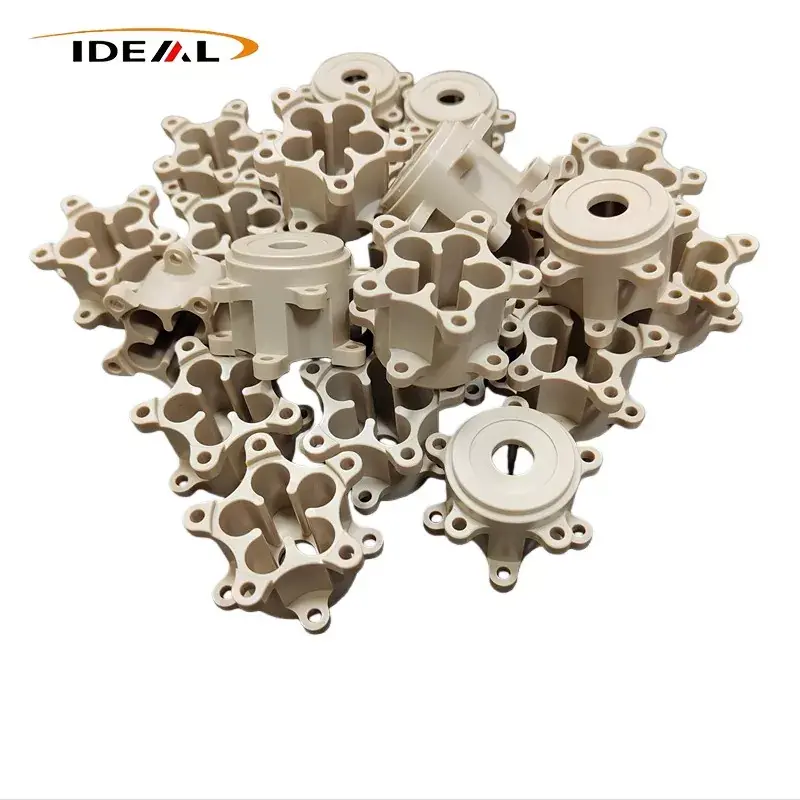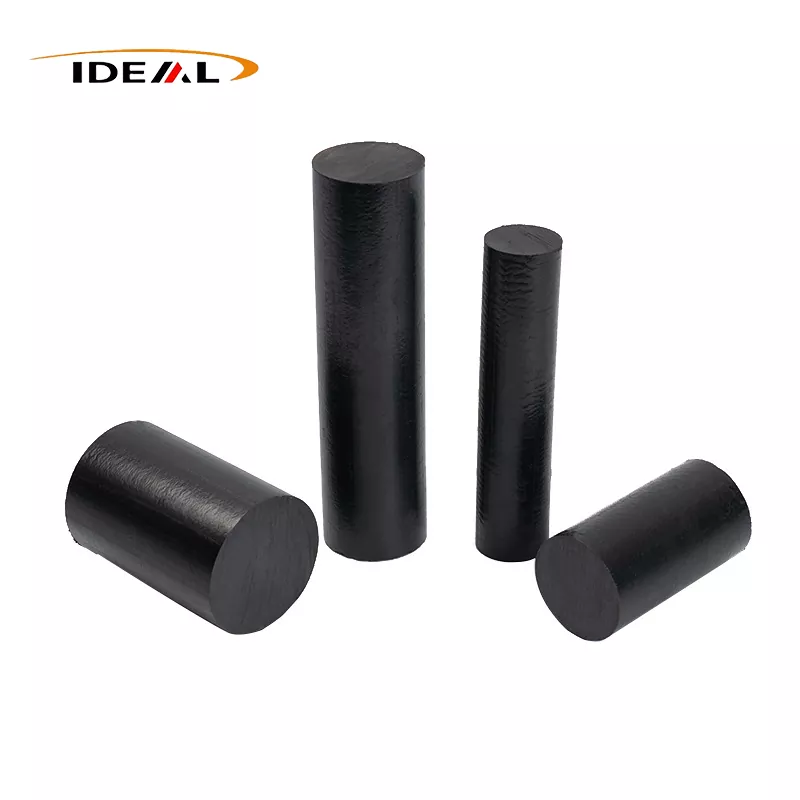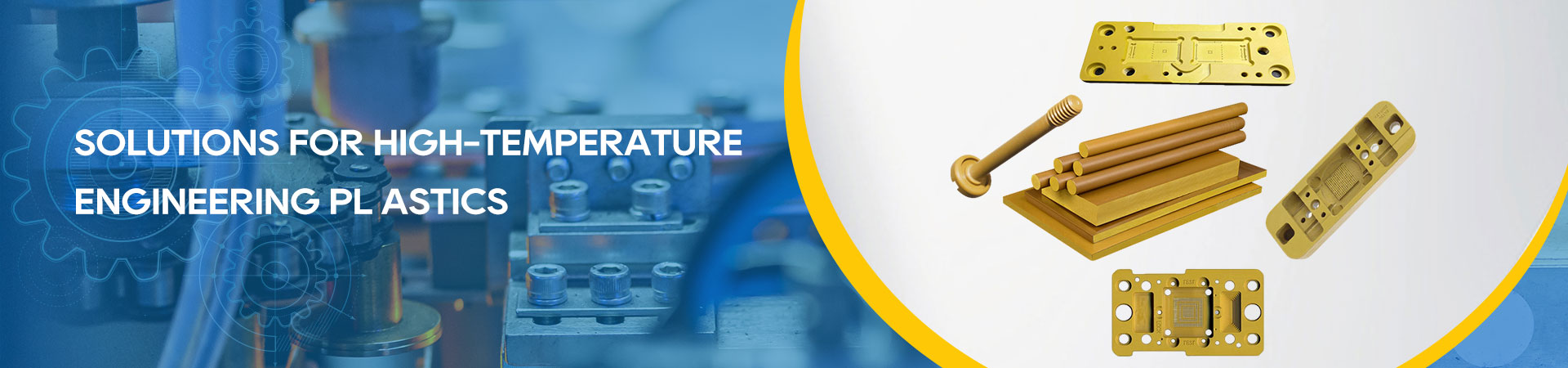
PEEK (Polyetheretherketone) milling parts have become a core material solution across aerospace, medical devices, semiconductors, automotive systems, and industrial automation. Known for their exceptional mechanical stability, chemical resistance, and high-temperature endurance, these parts address complex engineering demands where metal alternatives may fail or introduce performance limitations.

PEEK’s inherent properties make it ideal for milling into complex geometries while retaining dimensional integrity. These characteristics ensure its performance in demanding environments such as sterilization cycles, thermal fluctuations, dynamic load conditions, and exposure to corrosive substances.
| Specification Category | Technical Details |
|---|---|
| Material Type | 100% Virgin Polyetheretherketone (PEEK) |
| Melting Point | ~343°C |
| Continuous Use Temperature | Up to 260°C |
| Tensile Strength | 90–100 MPa |
| Flexural Strength | ~140 MPa |
| Hardness (Shore D) | 85 |
| Density | 1.3 g/cm³ |
| Chemical Resistance | Excellent against oils, acids, solvents, and salts |
| Wear Performance | Low friction coefficient, high abrasion resistance |
| Electrical Properties | Excellent insulation stability and dielectric strength |
| Machining Capability | Stable under high-speed milling, suitable for tight-tolerance parts |
| Common Surface Finish | Ra 0.4–1.6 µm depending on requirements |
| Customization | Available in GF/CF-reinforced PEEK, medical-grade PEEK, and ESD-PEEK |
These parameters make PEEK milling parts suitable for precision gears, medical implant guides, thermal insulation shields, semiconductor test sockets, aerospace structural components, and high-performance bushings.
PEEK demonstrates a unique balance of rigidity and thermal resistance, enabling components to remain stable from cryogenic temperatures to continuous operation conditions at 260°C. This makes the material ideal for systems requiring consistent precision—such as aerospace sensor housings or automotive under-hood components—where thermal deformation can compromise safety and functionality.
The precision of milling directly affects tolerance alignment, fatigue resistance, and surface smoothness. Controlled chip formation, stable clamp systems, and optimized spindle speeds help prevent micro-cracking and thermal stress. Skilled milling processes also ensure uniform load distribution, making the resulting part stronger and more reliable in dynamic applications.
PEEK’s low friction coefficient and self-lubricating characteristics minimize surface abrasion even in dry-running or high-speed scenarios. This property makes PEEK favorable for gears, pulleys, sliding plates, and thrust washers—all components traditionally manufactured from metal but now benefiting from longer service life and reduced maintenance requirements.
PEEK's dense polymer structure is naturally inert to oils, fuels, acids, weak bases, and cleaning solvents. While metals may oxidize or pit under chemical stress, PEEK maintains structural integrity, providing a more reliable solution for chemical processing equipment, medical sterilization cycles, and semiconductor fabrication tools.
Industries continue shifting toward lightweight materials to reduce operational energy consumption. PEEK offers high mechanical strength at a fraction of metal's weight, producing components that are easier to transport, assemble, and integrate into compact designs without compromising durability or performance.
The future evolution of PEEK milling parts is closely tied to advancements in machining technology, material science, automation, and energy-efficient engineering. Several trends are shaping the next decade of development:
CNC platforms are becoming smarter, integrating AI-assisted path planning, real-time vibration correction, and automated material compensation. These advancements allow PEEK machining to reach tighter tolerances, smoother surfaces, and faster production cycles.
Medical-grade PEEK offers biocompatibility and sterilization stability, promoting its use in instrument handles, implant guides, and radiolucent components. In semiconductors, ESD-controlled PEEK continues to replace metals, reducing contamination and improving performance in test sockets and wafer handling systems.
Carbon-fiber-reinforced PEEK and glass-fiber-reinforced PEEK provide improved rigidity and heat deflection, expanding usage in aircraft interiors, electric vehicle structures, and robotic systems.
Lightweight and durable materials like PEEK contribute directly to reduced energy consumption in transportation, automation, and high-speed machinery. The industry is expected to align PEEK components with circular economy initiatives by improving recycling and reprocessing capabilities.
These trends will continue to elevate PEEK milling parts across high-performance markets, reinforcing their role as a future-proof engineering solution.
Q1: How long can PEEK milling parts typically last in high-wear applications?
A1: Depending on load, speed, and environmental conditions, PEEK milling parts often outperform metals due to their resistance to abrasion, corrosion, and fatigue. In dry-running gear systems or sliding components, PEEK can extend service life by 30–50% compared to traditional metal parts.
Q2: How does PEEK handle repeated sterilization cycles in medical environments?
A2: PEEK withstands steam autoclaving, gamma radiation, and chemical sterilizers without losing mechanical properties or dimensional stability. This makes it a preferred material for surgical tools, dental devices, and diagnostic equipment requiring frequent sterilization.
As industries demand high-temperature resistance, mechanical stability, corrosion protection, and lightweight structural solutions, PEEK milling parts offer a clear performance advantage. They support long-term durability, enhance reliability across complex engineering systems, and align with future manufacturing trends such as automation, sustainability, and intelligent machining.
Ideal specializes in producing high-precision PEEK milling parts with strict quality control, advanced CNC capabilities, and a deep understanding of material behavior. The brand’s engineering team ensures accuracy, consistency, and custom solutions tailored to demanding applications in aerospace, medical devices, semiconductors, and industrial machinery.
For inquiries, custom project discussions, or technical consultation, contact us to discover how Ideal can support your next high-performance application.