As advanced equipment requires materials with better mechanical stability and heat management, Carbon Filled PEEK Film has attracted attention in aerospace components, semiconductor equipment and precision machinery. The key consideration is not simply how much carbon fiber is added, but how the filler ratio influences the entire manufacturing and application process.
PEEK, or polyetheretherketone, is a semi-crystalline high-performance thermoplastic known for its thermal resistance, chemical resistance, mechanical strength and wear behavior. These characteristics make it suitable for components used in demanding industrial environments.
Nevertheless, unfilled PEEK does not meet every application's requirements. Some components need greater rigidity, lower thermal expansion, improved heat transfer or better resistance to repeated sliding contact. Adding chopped carbon fiber modifies the material structure and helps address these requirements.
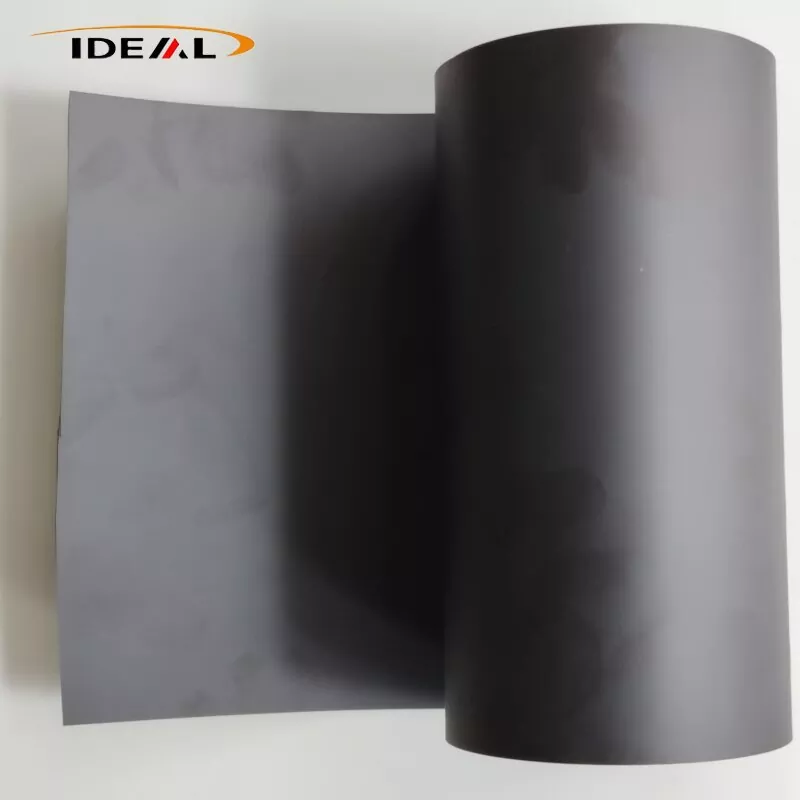
In cast-film production, carbon fiber is compounded with PEEK resin before being processed through a T-die flat-die casting and extrusion process. The resulting film has a black appearance and different mechanical and thermal characteristics from natural PEEK film.
The performance change depends on the carbon fiber content, fiber dispersion, retained fiber length, extrusion conditions and subsequent heat treatment. Therefore, filler percentage should be considered together with the intended application and processing method.
Different carbon fiber loading levels create different balances between reinforcement and processability. The CF10, CF20 and CF30 grades illustrate how increasing the filler ratio can change the behavior of cast PEEK film.
| Grade | Main Characteristics | Processing Considerations |
|---|---|---|
| CF10 | Lower filler content, better toughness and flowability, moderate reinforcement. | Suitable for relatively thin cast films, with fewer surface floating fibers and comparatively lower warpage risk. |
| CF20 | Balanced rigidity, wear resistance, thermal conductivity and dimensional stability. | Offers a balance between material performance and cast-film processability. |
| CF30 | Higher rigidity, wear resistance and thermal conductivity. | Higher melt viscosity and brittleness make thin-film casting and secondary processing more demanding. |
CF10 is generally easier to process into thinner film structures. Its lower melt viscosity supports better flow during casting, while the material retains comparatively more flexibility and toughness.
CF20 provides a more balanced combination of reinforcement and processing performance. It can be considered when an application needs improved stiffness and wear resistance without moving directly to the higher brittleness associated with CF30.
CF30 offers stronger reinforcement, but its higher carbon fiber loading increases melt viscosity and makes stable production of ultra-thin films more difficult. The product information identifies a practical production thickness of at least 0.25 mm for this grade.
For Carbon Filled PEEK Film, the appropriate grade should be selected according to the required thickness, bending conditions, mechanical load, thermal performance and secondary processing method.
Carbon fiber reinforcement changes not only the finished material properties but also the way PEEK behaves during extrusion and casting. As filler content increases, melt viscosity rises. This influences how evenly the material spreads through the die and how it responds to drawing tension and cooling.
During cast-film production, molten material passes through a flat die and is drawn across cooling rollers. A stable melt flow is important for maintaining consistent thickness and surface quality. Higher carbon fiber loading can make the process more sensitive to temperature, extrusion pressure and drawing conditions.
Uneven fiber dispersion may result in visible surface defects, fiber exposure or local variations in material properties. Excessive drawing tension can also contribute to cracks, pitting and other film defects, particularly when processing higher-filled formulations.
Extrusion and cooling can leave residual stress inside the film. When the material is subsequently die-cut, these stresses may be released unevenly, causing the cut part to curl or warp. Carbon fiber orientation can contribute to different shrinkage behavior in the machine direction and transverse direction.
Gradient cooling, controlled drawing tension and annealing are among the process measures used to reduce these risks. However, these treatments can mitigate inherent material anisotropy rather than eliminate it completely.
The main reason for adding carbon fiber is to modify the performance of the PEEK matrix. Several properties are particularly relevant when evaluating film for industrial use.
Carbon fiber reinforcement increases stiffness and helps restrict thermal deformation. This can be useful for precision spacers, thin structural components and sealing elements that need to maintain their geometry under mechanical or thermal loading.
Carbon fiber improves heat transfer compared with unfilled PEEK. According to the supplied material data, natural PEEK has a thermal conductivity of approximately 0.29 W/(m·K), while CF10 reaches 0.5–0.7 W/(m·K) and CF30 reaches 0.8–1.2 W/(m·K).
| Material | Thermal Conductivity |
|---|---|
| Natural PEEK | Approximately 0.29 W/(m·K) |
| CF10 PEEK | 0.5–0.7 W/(m·K) |
| CF30 PEEK | 0.8–1.2 W/(m·K) |
Carbon fiber reinforcement can improve wear resistance and reduce friction in suitable sliding applications. This makes the material relevant to industrial liners, friction-reducing layers and wear-resistant components. Actual performance depends on contact pressure, surface finish, counterface material and operating conditions.
Higher carbon fiber content generally reduces the flexibility of the film. CF30, in particular, is more brittle and may develop micro-cracks under slight bending. For applications involving repeated large bending or impact, a lower-filled grade or unfilled PEEK may be more appropriate.
The combination of thermal conductivity, wear resistance and dimensional stability makes carbon-fiber-filled PEEK film relevant to several specialized industrial environments.
Potential applications include lightweight shielding layers, high-temperature isolation components and wear-resistant sliding elements. Material selection should consider operating temperature, vibration, radiation exposure and the relevant qualification requirements.
Carbon-fiber-filled PEEK film may be used for non-wafer-contact insulating liners, isolation shims and selected wear-resistant components inside vacuum equipment. Its thermal and mechanical properties can be useful in equipment exposed to elevated temperatures and repeated mechanical movement.
Industrial applications include sliding liners, friction-reducing layers, sealing sheets and thermal isolation pads. The required thickness, flatness, friction behavior and dimensional tolerances should be confirmed according to the component design.
Material limitations are just as important as potential applications. Standard chopped-carbon-fiber-filled PEEK film should not be selected for every environment.
● It is not a substitute for dedicated ESD-controlled material where stable surface resistivity within a specified range is required.
● It is unsuitable for direct contact with high-purity semiconductor wafers where carbon particle contamination is unacceptable.
● Its relatively high brittleness makes it unsuitable for applications involving repeated large bending.
● Its opaque black appearance does not meet transparent-film requirements.
● It should not be used in environments involving strong oxidizing media that can attack the PEEK matrix.
For Carbon Filled PEEK Film, application suitability must be evaluated using actual operating conditions rather than material name or carbon fiber percentage alone.
Consistent material performance requires control throughout the production process. Carbon fiber content, moisture, fiber length, thickness and internal stress can all influence the quality of the finished film.
Incoming compounded pellets can be checked for moisture content, carbon fiber loading and retained fiber length. These inspections help identify material variations before extrusion begins.
Thickness monitoring and surface inspection help identify variations during casting. Optical inspection systems can detect visible defects such as black spots, pinholes, scratches and exposed floating fibers. Optional X-ray inspection can be used to screen for embedded metallic particles where specified.
Finished-product inspection may include dimensional measurement, surface examination, cross-sectional analysis, mechanical testing and thermal-property evaluation. Die-cut warpage tests can also help assess residual-stress behavior after secondary processing.
These controls are particularly important for precision applications where film flatness, thickness consistency and mechanical properties affect the performance of the finished component.
Guangzhou Ideal Plastic Technology Co., Ltd. reports that it began producing carbon fiber filled PEEK film in 2014. Its stated production controls cover incoming material inspection, online monitoring and finished-product laboratory testing. The company also provides slitting, laminating and die-cutting services for applicable film specifications.
A: The grades differ mainly in carbon fiber loading and the resulting balance of rigidity, wear resistance, thermal conductivity, toughness and processability. CF10 offers better flowability and toughness, CF20 provides a balanced combination of properties, and CF30 delivers higher reinforcement with more demanding processing requirements.
A: Warpage is associated with residual internal stress from extrusion and cooling, as well as anisotropic shrinkage caused by carbon fiber orientation. Annealing and controlled cooling can reduce the risk, although they cannot completely eliminate inherent material anisotropy.
A: Not necessarily. Standard chopped-carbon-fiber-filled PEEK film may have semiconductive characteristics, but its resistivity can fluctuate over a wide range. Applications requiring controlled ESD performance should use a dedicated ESD-grade material with verified electrical test data.
A: CF30 has higher melt viscosity and greater brittleness than lower-filled grades. The stated production guidance identifies reliable casting at thicknesses of 0.25 mm and above. Thinner applications should be evaluated with the manufacturer before specification.
A: Inspection may include moisture testing, carbon fiber content analysis, fiber-length examination, online thickness monitoring, surface inspection, dimensional measurement, mechanical testing, thermal testing and die-cut warpage evaluation.
A: Provide the required carbon fiber grade, film thickness, width, roll length or sheet dimensions, surface requirements, processing method and intended application. Operating temperature, mechanical loading and electrical requirements should also be specified where relevant.
Carbon fiber reinforcement creates new possibilities for PEEK film in applications that require greater stiffness, improved heat transfer and better wear behavior. At the same time, filler content changes the material's flexibility and manufacturing characteristics. A suitable grade should therefore be selected by balancing application performance with casting stability and downstream processing requirements.