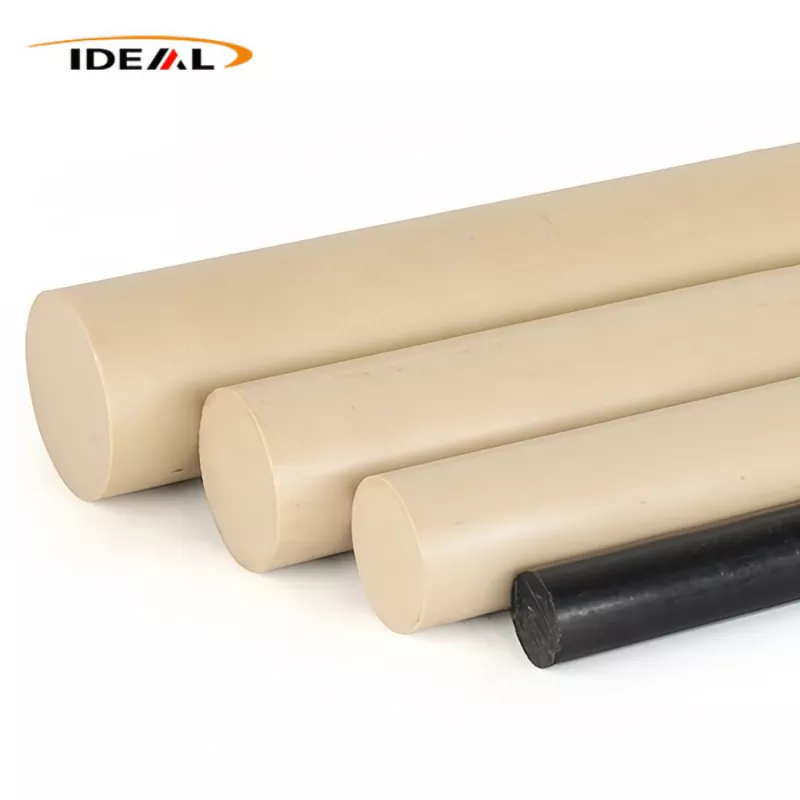
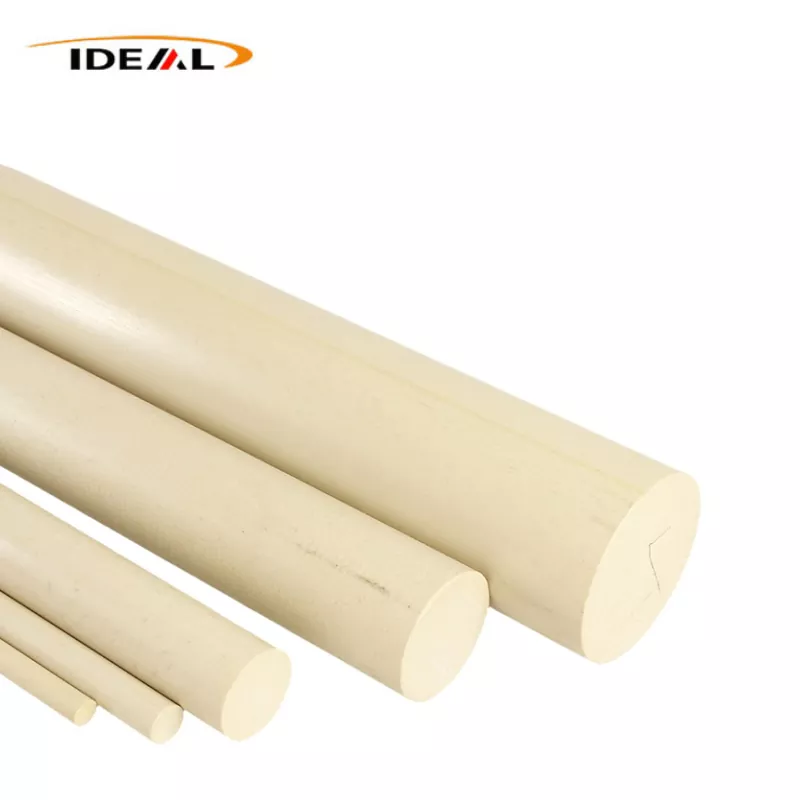
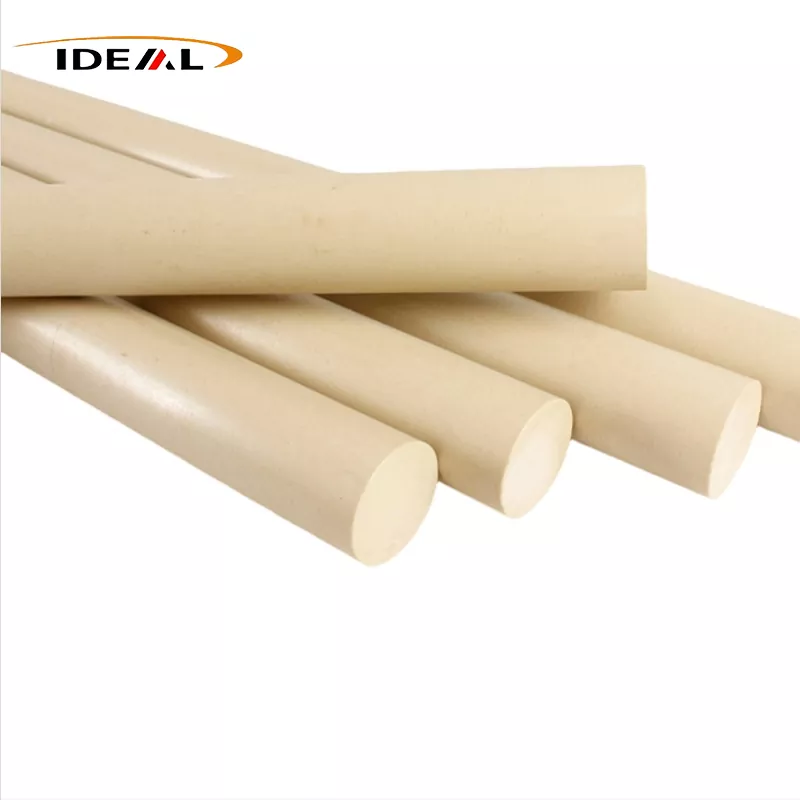
Basically, Carbon fiber Filled PEEK Rods is adding carbon fiber to PEEK resin to make it perform even better. PEEK on its own is already a high-performance engineering plastic. It has a crystalline structure—around 25% to 35%—which gives it great strength, stiffness, toughness, and resistance to fatigue, wear, and high temperatures. It also holds its shape well under stress, so it’s pretty versatile overall.
So how does Carbon fiber Filled PEEK Rods get stronger? Just by mixing in carbon fiber. Carbon fiber is seriously strong, lightweight, has a high modulus, conducts electricity and heat, doesn’t expand much with heat, and resists fatigue and corrosion. There are different kinds of carbon fiber too—standard, medium, and high modulus—and they come in different lengths like short, long, or continuous fibers. When you blend it into PEEK, it boosts stiffness and strength, reduces thermal expansion, and adds some electrical and thermal conductivity. That’s super helpful when you need anti-static properties or better heat dissipation.
Now, processing Carbon fiber Filled PEEK is trickier than working with glass-fiber reinforced materials. Temperature control is critical. For injection molding, the temp settings depend on how much carbon fiber is in there:For 15% carbon fiber, you’re looking at a barrel temperature around 380 °C to 400 °C.For 30% carbon fiber, you need to go higher—about 390 °C to 415 °C.The nozzle has to stay above 400 °C, otherwise the carbon fibers can clump up and cause blockages.Also, since carbon fiber moves heat fast and the plastic cools quickly, the mold temperature needs to be high too—somewhere between 180 °C and 210 °C. It’s best to use a multi-zone heating system to keep temperatures even across the mold. If not, you might end up with short shots or weld lines.One more thing: carbon fiber tends to build up static. So when you’re processing , make sure the barrel is properly grounded. Otherwise, static can mess with the temperature sensors and cause false readings.
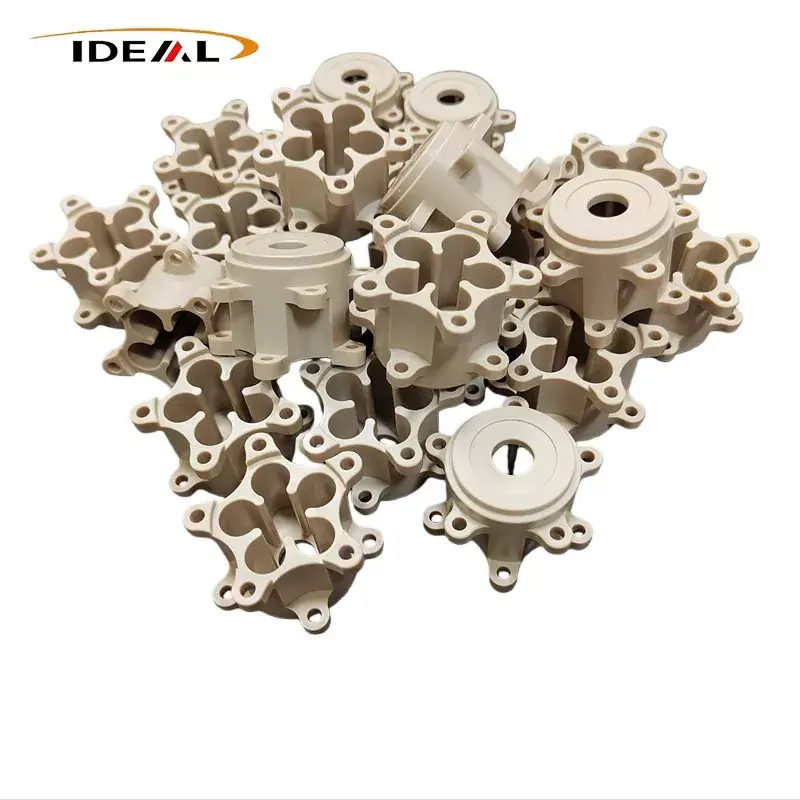
We’ve been researching and producing Carbon fiber reinforced PEEK rod for GuangZhou Ideal for over 14 years. We’ve seen pretty much every issue that can pop up during production, and we’ve got solutions for them. A lot of potential problems can be prevented early on. We source our PEEK resin from well-known suppliers, so quality is consistent. Plus, with our specialized equipment and production know-how, we can supply semi-finished profiles or custom parts to fit what you need.
|
Product name |
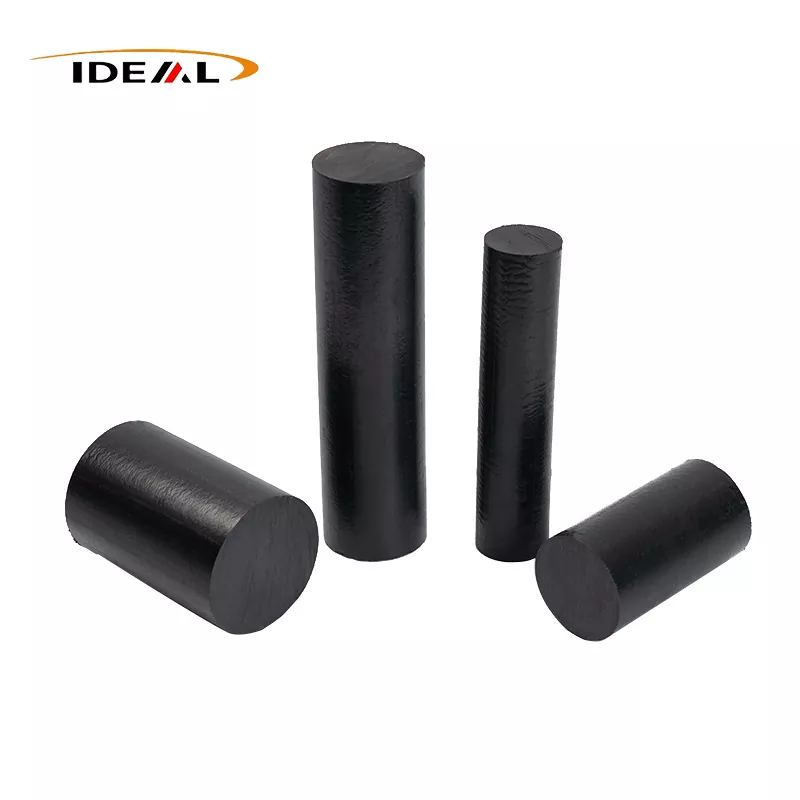
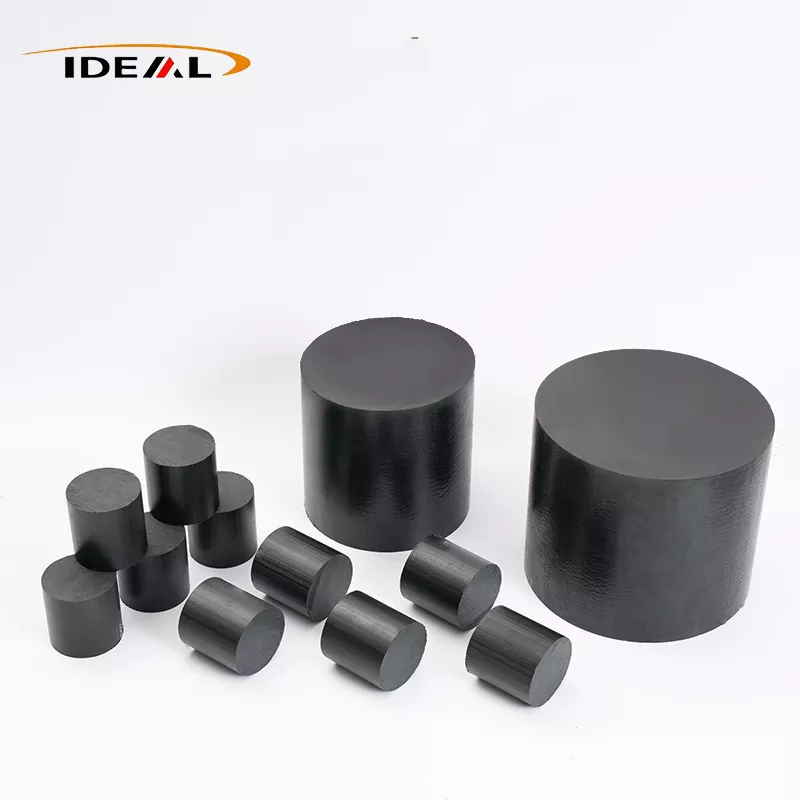
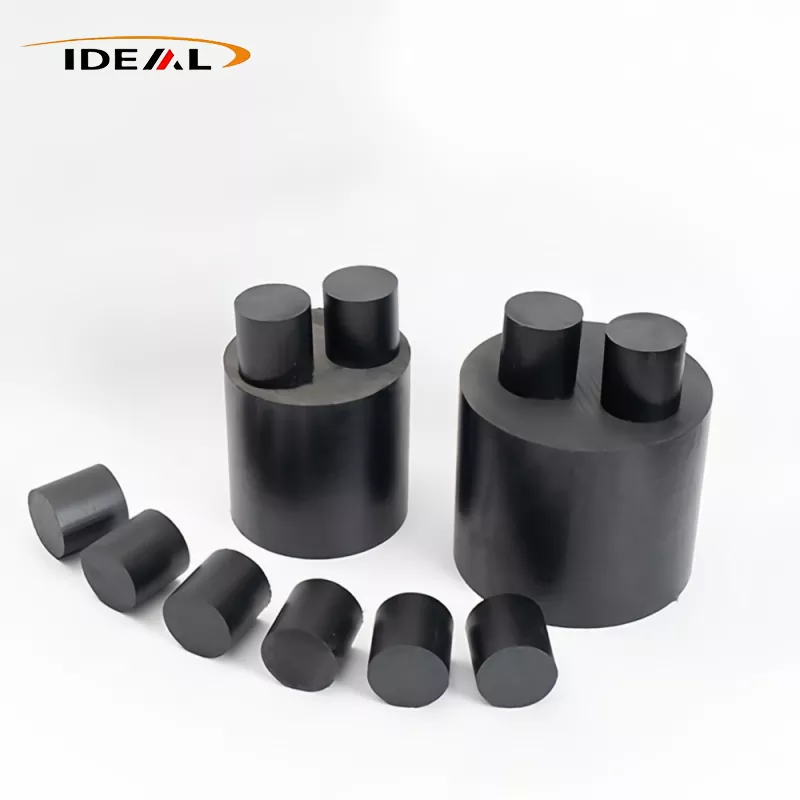
Carbon fiber Filled PEEK Rods |
|
Material |
15% -30% Glass Fiber Filled PEEK |
|
Color |
black |
|
Dia |
5mm-300mm |
|
Length |
1000mm or 3000mm |
|
Tolerance |
+/-0.02mm |
|
sample |
Free |
|
Minimum order quantity |
1 piece |
|
Certificates |
ISO9001:2008, REACH, ROHS |
1.Carbon fiber Filled PEEK Rods really holds up against creep when things get hot, meaning it doesn't easily lose its shape even at high temperatures.
2.When you add carbon fiber to PEEK, the material expands a lot less when heated.
3.Carbon fiber also helps heat move through PEEK more easily, so it dissipates heat better. That’s super helpful for situations where you need good cooling.
4.Plus, carbon fiber helps prevent PEEK from getting soft under heat, and it forms a tough protective layer on the surface that cuts down on wear. That’s why carbon fiber PEEK lasts longer than plain PEEK.
5.Since carbon fiber naturally conducts electricity, Carbon fiber Filled PEEK can carry away static electricity right away, giving it anti-static properties. And the good thing is, you don’t need to mix in a lot of carbon fiber to get solid anti-static performance.
6.In places where temperatures are high or humidity changes a lot, carbon fiber-reinforced PEEK keeps its size steady—it doesn’t shrink or swell much. That’s a big deal when you need parts to stay exactly the right size.
7.In general, materials reinforced with carbon fiber are more wear-resistant and handle friction better than those with glass fiber.
8.Adding carbon fiber to PEEK doesn’t just make it conductive—it also makes it stronger overall. Carbon fiber is tough and rigid on its own, so it boosts PEEK’s tensile strength, flexural strength, and stiffness by a noticeable amount. Carbon fiber reinforced PEEK rod, for example, can reach a tensile strength of 280–300 MPa and a modulus of elasticity of 18–22 GPa. At the same time, carbon fiber brings down PEEK’s thermal expansion and helps it transfer heat more effectively.
Mechanical Equipment:
Carbon fiber Filled PEEK Rods can oil itself, doesn’t mind the heat, and holds its shape really well without warping. That makes it a great fit for wear-resistant parts, high-temperature structural pieces, and precision components in machinery.
Automotive Seals:
EEK material seals are often used in car solenoid valves. They have a super low friction coefficient—just 0.15—and they lubricate themselves, so you don’t need to keep adding oil. They can also handle temperatures up to 260 ℃. This helps keep the fluid clean and stops metal scraps from causing breakdowns.
Coal & Steel:
Carbon fiber reinforced PEEK rod is a common pick in the coal and steel sectors for high-temperature parts. It stays stable and keeps its strength even when things heat up. You’ll see it in things like insulation parts, fire-resistant linings, and all sorts of seals inside steelmaking furnaces.
Military Uses:
PEEK material can stand up to radiation and is a great electrical insulator. That’s why it’s used in military gear—stuff like satellite frames, radar antenna covers, and even launch racks for jamming missiles.
Conveyor Systems:
Carbon fiber Filled PEEK is strong, resists wear and tear, and can handle harsh chemicals. That makes it ideal for conveyor equipment. You’ll often find it used in gears, chains, pipe seals, and parts of fluid transfer systems.
Precision Instruments:
PEEK plastic keeps its shape and doesn’t react with chemicals, which makes it a top choice for optical instruments, lab equipment, and different kinds of analyzers.
GuangZhou Ideal—the original makers of Carbon fiber Filled PEEK Rods. We sell directly to you, so there are no middlemen hiking up the price. That means you get a really competitive deal. Basically, you’ll end up paying less for the same top-quality product. And when your costs are lower, your own product automatically becomes more competitive out there in the market.
1. Can we sign an NDA?
Absolutely—if your designs or product images are confidential, we’re happy to sign a confidentiality agreement just for you. We won’t upload anything online or share it with anyone else. We take our promises seriously, and if we break them, we’re fully responsible under the law.
2. What certifications do your products carry?
We’re ISO9001:2008 certified for quality management. On top of that, our products have passed SGS, CE, and RoHS certifications. They also meet environmental standards like REACH and EN71, among others.
3. What kind of equipment do you use in production?
We’ve got a whole range of gear—large profile production lines, different CNC machines, CNC machining centers, plus 4-axis and 5-axis machining centers. There’s also engraving machines, laser cutting equipment, and a super clean 100,000-class dust-free injection molding workshop.
4. Can you customize products? How does that work?
Yes, we do custom jobs! Just send over your 2D or 3D drawings—STEP, STP, STL, or IGS files are all fine. If you’ve got a physical sample, we can work from that too. And if you need help tweaking the design or have special requests, we’re here to help with that as well.
5. What equipment is available at your factory?
Our factory’s got large plastic profile production lines, plus all sorts of CNC machines and machining centers—including 4-axis and 5-axis models. We also run engraving machines and laser cutting equipment. And yeah, our injection molding workshop is a 100,000-class cleanroom—really tidy and dust-free.
6. So, what does your company actually do?
We’re Guangzhou Ideal Plastic Technology Co., Ltd. Started out in Hong Kong in 2011, and our factory’s based in Huangpu, Guangzhou. We mainly produce semi-finished profiles using special engineering plastics—stuff like PEEK, PAI, PI, PPS, PPSU, PEI, and more. Besides that, we also handle CNC machining and injection molding, so we can help turn ideas into finished parts.