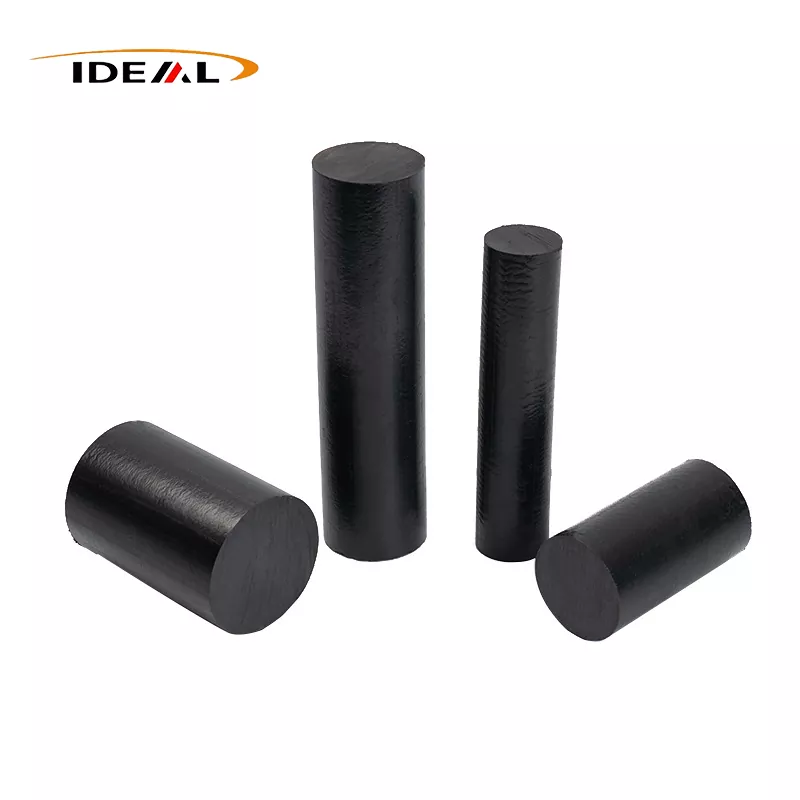
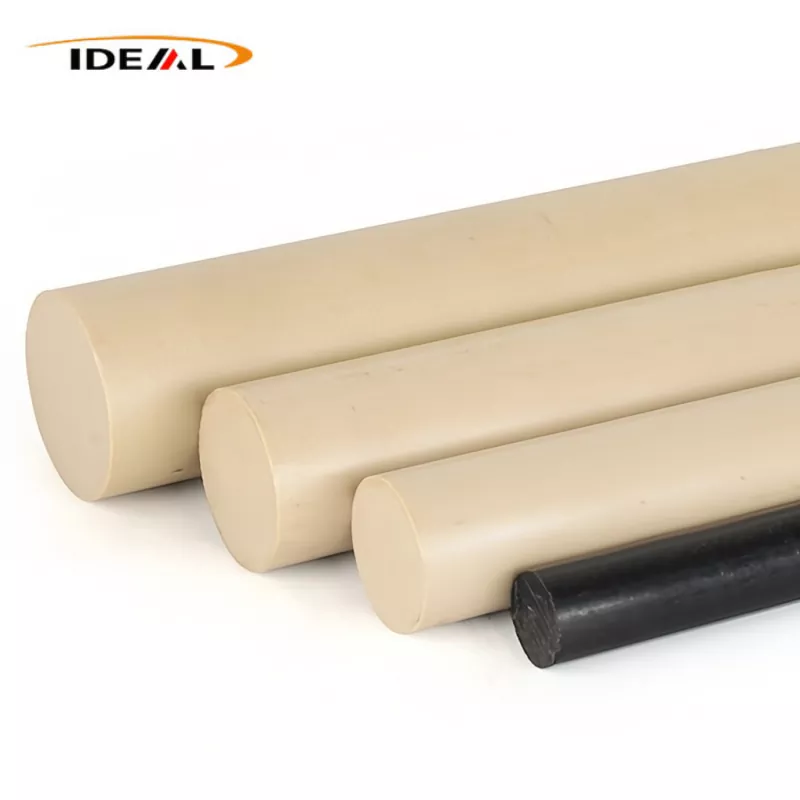
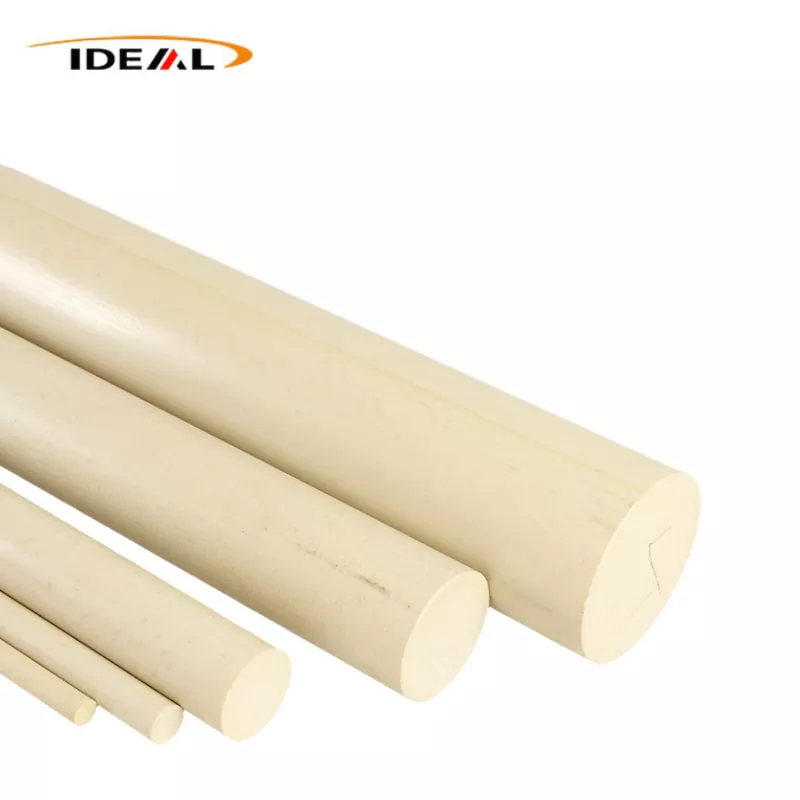
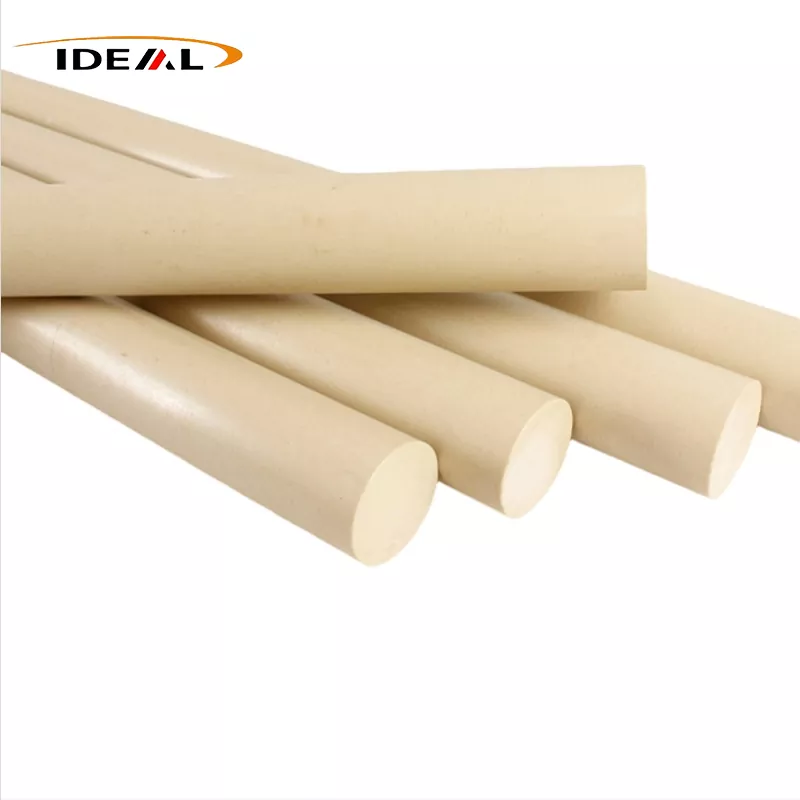
So basically, Glass Fiber Filled PEEK Rods is all about making PEEK even better by mixing in glass fiber. PEEK itself is already a high-performance engineering plastic with a special molecular structure—think alternating ether bonds, aromatic rings, and carbonyl groups. Since its molecular chain is made entirely of aromatic rings, it’s naturally super heat-resistant. It’s also really stiff and has great mechanical properties to begin with. When you add glass fiber into the mix, those properties get even stronger.
Compared to pure PEEK, Glass Fiber Filled PEEK Rods contains anywhere from 10% to 40% glass fiber. That means it’s stiffer, more resistant to creep (so it won’t deform easily under high heat), and it’s cheaper too. Pure PEEK has a heat deflection temperature between 135 and 160℃, but once you add 20% glass fiber, that number jumps to 286℃. Go up to 30% glass fiber, and it hits 316℃—so the heat resistance gets a major boost. At the same time, the material becomes stronger and stiffer, which makes it more durable, and its thermal expansion goes down.
PEEK GF30 is just PEEK with 30% glass fiber added. The biggest difference from pure PEEK is its modulus—it’s as high as 6300MPa, the highest in the PEEK family. High modulus means it’s extra hard and wear-resistant, but the downside is that it can get a bit brittle. GF30 has a fracture elongation of 5%, and its surface is really smooth. Since the glass fibers help carry some of the load, the friction coefficient of the composite goes down. Even without lubrication, PEEK composites still slide really well. Plus, with that low surface friction, this material is a great fit for uses where you need high stiffness and low wear, but not so much impact resistance.
ID123 have been working on Glass fiber reinforced PEEK rod for more than ten years now, so we really know our stuff when it comes to producing PEEK and blending in glass fiber. We can tweak the glass fiber content from 10% up to 40%, and the performance of our product is top-tier in the industry. We usually keep a good stock of standard sizes, so once you place your order, we can ship it out fast.
|
Product name |
Glass Fiber Filled PEEK Rods |
|
Material |
10% -40% Glass Fiber Filled PEEK |
|
Color |
Nature, |
|
Dia |
5mm-300mm |
|
Length |
1000mm or 3000mm |
|
Tolerance |
+/-0.02mm |
|
sample |
Free |
|
Minimum order quantity |
1 piece |
|
Certificates |
ISO9001:2008, REACH, ROHS |
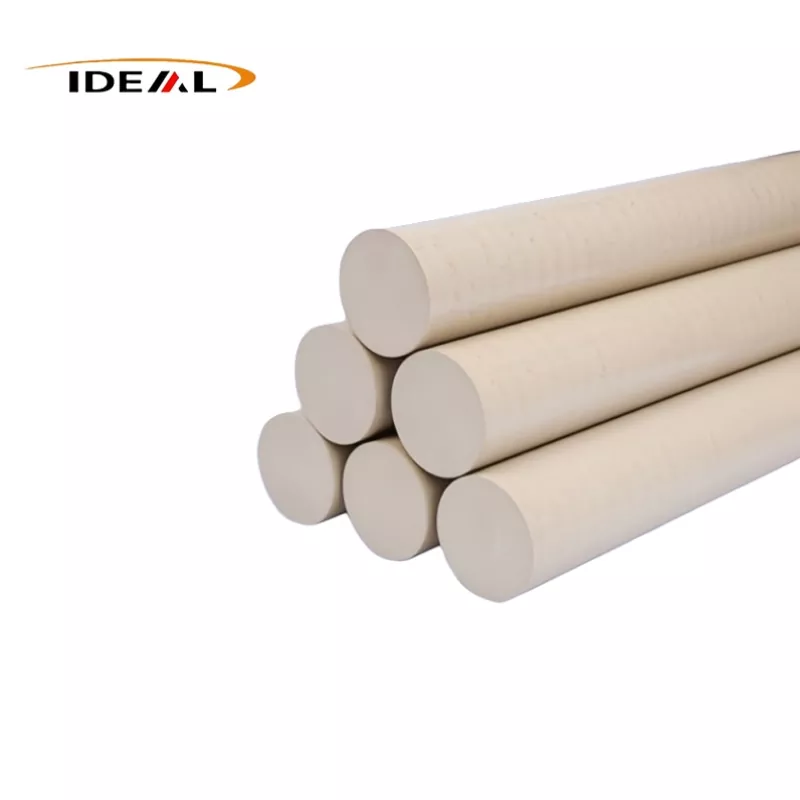
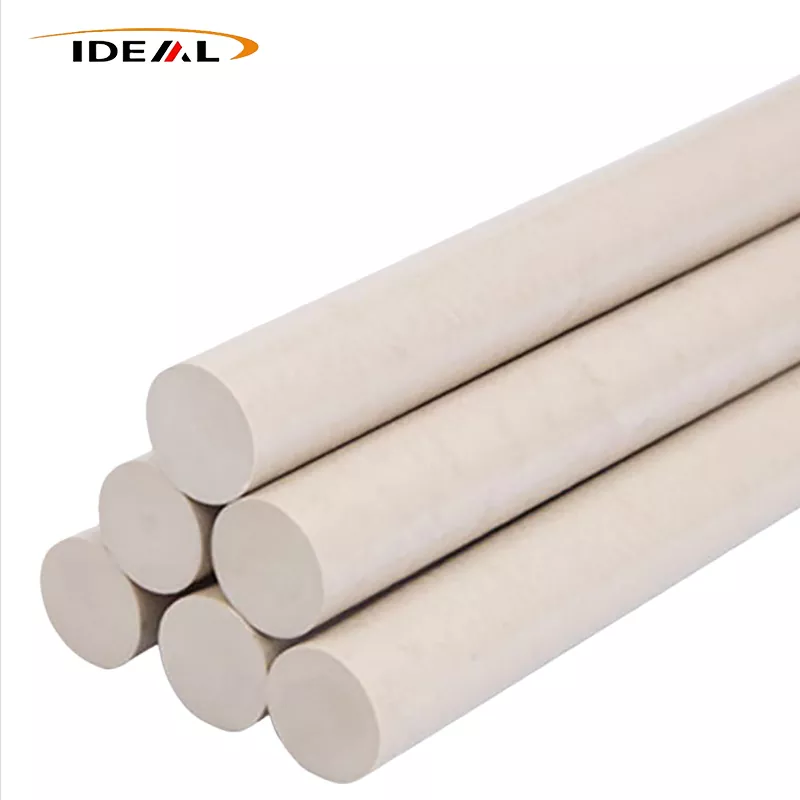
1.Strength and stiffness
PEEK GF30 has come a long way when it comes to tensile strength and hardness. It can handle pulling forces up to 150–200 megapascals, and its stiffness—what we call the elastic modulus—sits between 5 and 10 gigapascals.
2.Heat resistance
Plain PEEK starts to deform at 143 °C under 1.82 megapascals of pressure. But once you mix in 30% glass fiber, that number jumps past 316 °C. Glass fiber transfers heat quickly, so it helps get rid of excess heat. Plus, it hardly expands when things heat up—its thermal expansion is super low (just 5–10 × 10⁻⁶/°C). That means it keeps its shape under high temperatures, which is perfect for stuff like insulation parts in airplane engine bays.
3.Anti-aging ability
Glass fiber also helps PEEK last longer when things get hot. Tests show that after sitting at 200 °C for 1,000 hours, Glass Fiber Filled PEEK Rods still keeps 20–30% more of its original tensile strength compared to regular PEEK. The reason? Glass fibers block oxygen from getting in and causing damage.
4.Friction performance
Because glass fiber is pretty hard, it makes PEEK a lot slipperier—the friction coefficient drops from around 0.3–0.4 down to 0.15–0.2. It also becomes about ten times more resistant to wear. Just a heads-up: if you go overboard and add more than 40% glass fiber, it might start wearing down the parts it rubs against faster.
5.Dimensional stability
PEEK that’s reinforced with glass fiber holds its shape way better over time than plain PEEK. That means parts are less likely to warp or change size, so they stay accurate longer.
6.Self-lubrication effect
Glass fiber reinforced PEEK ro is naturally slippery, so it doesn’t need extra oil to run smoothly. That’s a nice perk—it helps cut down on noise and makes parts last longer.
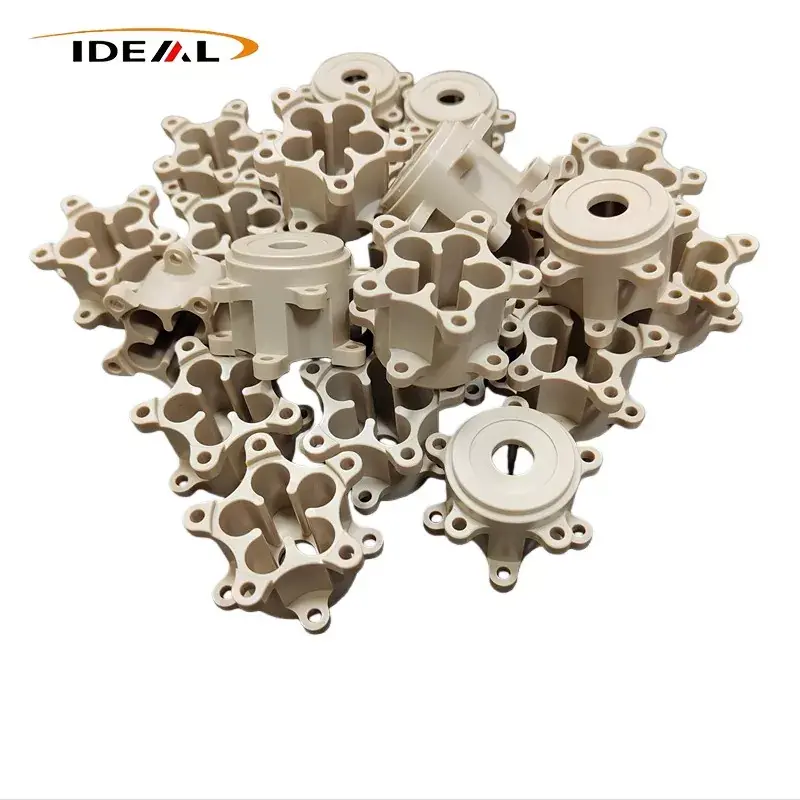
Parts that don't wear down easily and have low friction, even when they're moving fast under a lot of pressure;
Parts that are really good at handling creep or permanent deformation;
Parts that either lubricate themselves well or work smoothly with oil;
Parts that keep liquids sealed in, even when it's hot and the pressure is high;
Parts that can take bending, stretching, and impact without breaking;
Parts that can handle temperatures over 260°C for long periods, and even over 300°C for short bursts.
GuangZhou Ideal has been in the production game for over 14 years, and we really believe that good products start with good materials. You just can’t skip on quality.
Our Glass Fiber Filled PEEK Rods is well-stocked and ready to go—no waiting around. And the price? Super competitive. Even if you’re just ordering one piece, you’ll still get our wholesale rate.
We handle everything from picking the right materials to shipping—all in one go. Saves you time and hassle.
Plus, we’ve got experienced R&D and sales teams who know how to help companies like yours cut costs and work smarter. We’re here to make things easier for you.

Aerospace Technology

Artificial Intelligence

Automotive industry

Canned machinery

Electronics industry
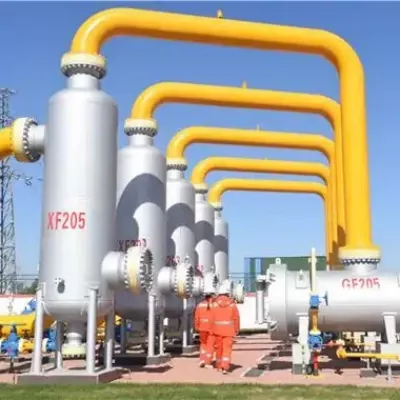
Energy device
1.How does customization work?
We're set up to handle all the common file types you're likely using—things like STEP, STP, STL, you name it. If that's easier, just send over a physical sample and we'll handle the rest. Got your own ideas or want to make some tweaks to the design? No problem—we can help design or adjust the product so it works for you.
2.What’s your return or exchange policy?
If you run into a quality issue, if we made a mistake, or if anything stops you from using the product, get in touch with us as soon as you can. Once we check and confirm what happened, we’ll sort out the return or exchange and cover the shipping costs. If you just ordered the wrong item or no longer need it (especially with raw profiles), as long as it's still in a sellable condition, we can still help—though you’ll need to pay for the return shipping.
3.What equipment do you use for production?
We’ve got a bunch of specialized gear—like large profile production lines, all sorts of CNC machines, CNC machining centers, plus 4-axis and 5-axis machining centers. We also have engraving machines, laser cutting equipment, and a 100,000-class dust-free injection molding workshop.
4.How do you make sure the quality is good?
We run a full quality control system and use high-end testing equipment and labs. Our team checks every step along the way—starting from the raw materials all through to the finished product—so you always get high-quality items.
5.Can you provide samples?
Yes, we offer free samples of semi-finished profiles so you can test how they perform, subject to what we have in stock. You’ll just need to cover the shipping cost. And rest assured—the sample you get will perform exactly the same as the products we deliver.
6.How do you handle shipping?
We usually team up with trusted logistics partners like DHL and FedEx, shipping by air or sea—it’s quick and reliable. If you’ve got your own freight forwarder, that’s totally fine too. Shipping costs will be on your side and are calculated based on your order’s size, weight, and where it’s headed.