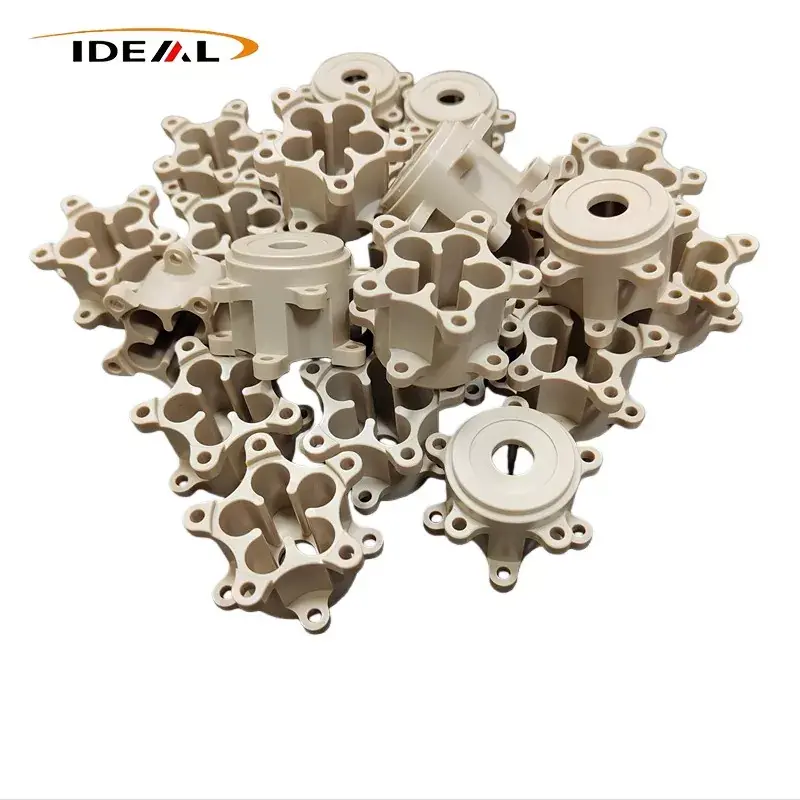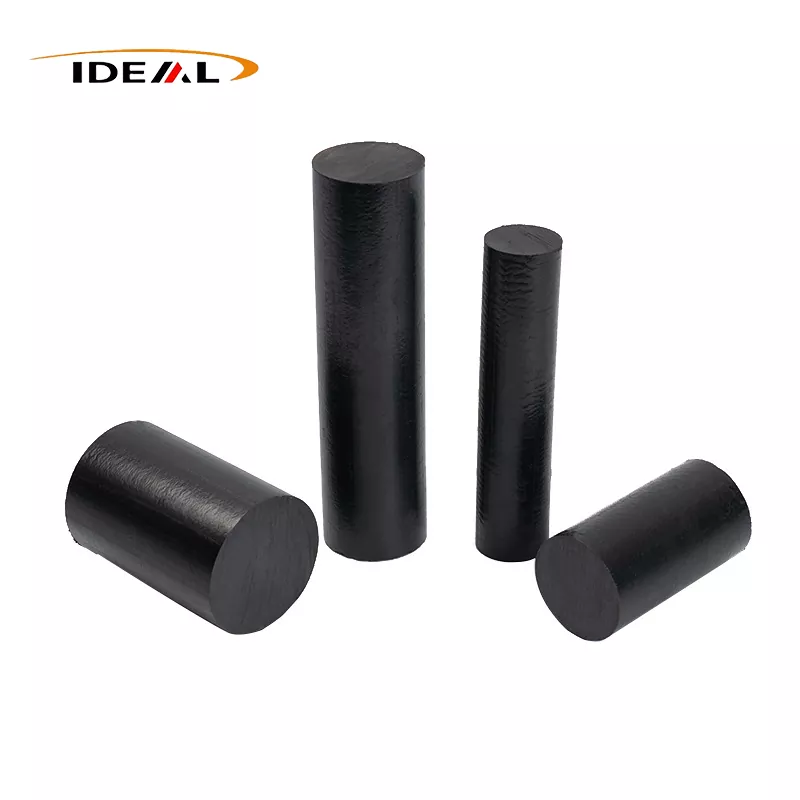
Glass Fiber Filled PEEK Rods have become a preferred material choice for engineers seeking enhanced mechanical strength, dimensional stability, and cost efficiency compared to unfilled PEEK. In this in-depth guide, we explore why Glass Fiber Filled PEEK Rods outperform standard PEEK in structural applications, how they behave under extreme conditions, and where they deliver the greatest value across industries such as aerospace, automotive, medical, and industrial manufacturing.
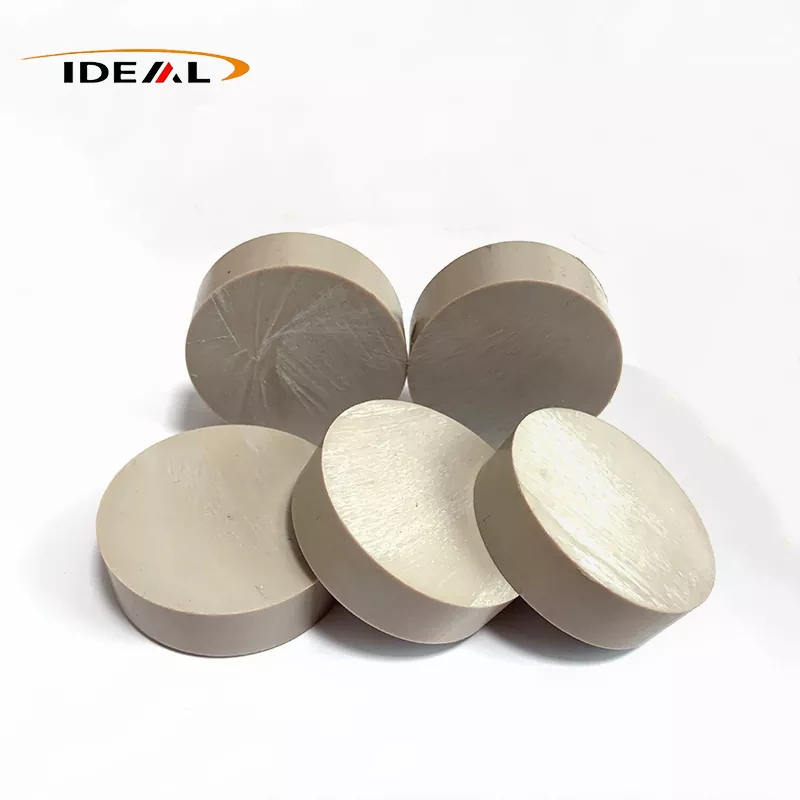
Glass Fiber Filled PEEK Rods are high-performance thermoplastic rods manufactured by reinforcing polyetheretherketone (PEEK) resin with a specific percentage of glass fibers, typically 10% to 30% by weight. This reinforcement significantly enhances stiffness, strength, and dimensional stability while maintaining PEEK’s inherent resistance to heat, chemicals, and fatigue.
Compared with unfilled PEEK, Glass Fiber Filled PEEK Rods are engineered for applications where structural integrity and load-bearing capability are critical. This makes them particularly suitable for components that must maintain tight tolerances under mechanical stress or elevated temperatures.
The addition of glass fibers fundamentally alters the internal structure of PEEK. These fibers act as load-bearing elements within the polymer matrix, distributing stress more evenly and reducing deformation.
Engineers choose Glass Fiber Filled PEEK Rods when component rigidity and dimensional accuracy are more important than impact resistance. The result is a material that behaves more like metal in structural applications while retaining the advantages of advanced polymers.
| Property | Standard PEEK | Glass Fiber Filled PEEK Rods |
|---|---|---|
| Tensile Strength | Moderate | Higher |
| Stiffness | Lower | Significantly Improved |
| Thermal Expansion | Higher | Reduced |
| Creep Resistance | Good | Excellent |
| Cost Efficiency | Higher Cost | More Cost-Effective |
This comparison highlights why Glass Fiber Filled PEEK Rods are often selected as a structural-grade alternative to standard PEEK in engineering designs.
One of the most compelling reasons engineers prefer Glass Fiber Filled PEEK Rods is their superior mechanical performance. The reinforcement dramatically increases load-bearing capacity without sacrificing long-term durability.
These rods exhibit outstanding flexural modulus and compressive strength, making them ideal for bushings, supports, insulators, and mechanical housings. In dynamic systems, their resistance to fatigue ensures long service life even under continuous stress.
Glass Fiber Filled PEEK Rods retain PEEK’s exceptional resistance to high temperatures, with continuous operating temperatures up to 250°C. The reduced coefficient of thermal expansion ensures dimensional stability in environments with rapid temperature fluctuations.
Additionally, these rods are highly resistant to chemicals such as fuels, oils, solvents, and acids, making them suitable for harsh industrial environments. While glass fiber reinforcement slightly increases abrasiveness, proper design and lubrication mitigate wear concerns.
In these industries, Glass Fiber Filled PEEK Rods consistently outperform standard plastics and even replace metal parts, offering weight reduction and corrosion resistance.
Glass Fiber Filled PEEK Rods can be machined using conventional CNC equipment. However, engineers should account for the increased tool wear caused by glass fibers.
Design best practices include:
Ideal specializes in high-quality Glass Fiber Filled PEEK Rods manufactured under strict quality control standards. With consistent material properties, precise dimensions, and reliable supply, Ideal supports engineers from prototype development to large-scale production.
By combining technical expertise with application-focused support, Ideal helps customers select the optimal PEEK solution for their specific engineering challenges.
Yes. Glass Fiber Filled PEEK Rods offer significantly higher stiffness and tensile strength, making them better suited for structural applications.
In many applications, they can replace metal components by offering similar strength with lower weight and excellent corrosion resistance.
Absolutely. They maintain excellent mechanical performance at elevated temperatures and provide superior dimensional stability.
If you are evaluating high-performance materials for demanding applications, Glass Fiber Filled PEEK Rods offer an ideal balance of strength, stability, and cost efficiency. To explore specifications, custom sizes, or technical support, contact us today and discover how Ideal can support your next engineering project.