


1. The Science of Friction Reduction
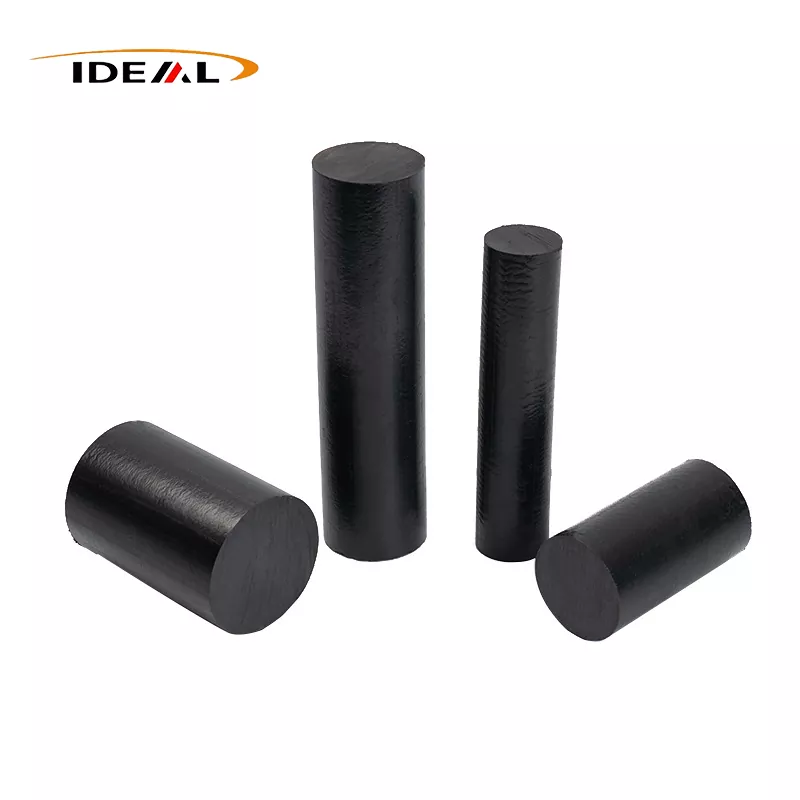
Friction in bearing applications originates from the interaction of surface asperities and the shear resistance of materials in contact. Conventional metals rely heavily on external lubricants to separate these surfaces, but such solutions degrade under high heat or chemical attack. Bearing Grade PEEK Rods bypass this limitation by leveraging intrinsic material properties. The polymer backbone of PEEK (polyether ether ketone) possesses a unique combination of stiffness and ductility, allowing microscopic deformations that distribute contact stress evenly. This reduces the real contact area and, consequently, the coefficient of friction (CoF) to values as low as 0.15–0.25 under boundary lubrication conditions—comparable to PTFE but with vastly superior wear resistance.
Unlike metals, which exhibit a sharp increase in friction as surface speed rises, the amorphous and crystalline phases within PEEK create a damping effect that stabilizes frictional heat generation. This intrinsic ability to manage frictional energy makes these rods a preferred choice for precision spindles, linear guides, and high‑speed bearings operating in dry or marginally lubricated environments.
2. Self‑Lubricating Polymer Matrix
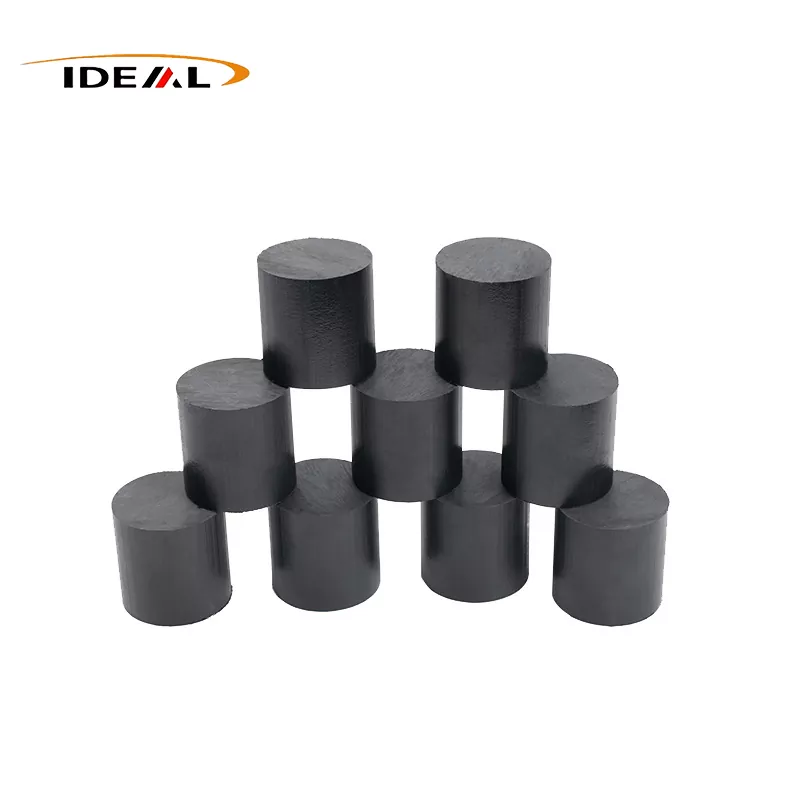
One of the most remarkable attributes of Bearing Grade PEEK Rods is the incorporation of solid lubricant fillers such as PTFE, graphite, and carbon fibers. These additives are homogeneously dispersed throughout the PEEK matrix during extrusion. During sliding contact, the shear stress causes the surface layer to transfer a thin, lubricating film onto the counterface. This transfer film acts as a sacrificial layer that dramatically reduces the shear strength at the interface, effectively decoupling the bulk material from direct metal‑to‑polymer abrasion.
This self‑replenishing mechanism is particularly valuable in applications where external oil or grease cannot be used—for example, in vacuum chambers, cleanroom environments, or food processing equipment. The wear rate of these filled grades is often below 5×10⁻⁷ mm³/Nm, ensuring that the ultra‑low friction performance remains consistent over millions of cycles without the need for periodic relubrication.
3. Thermal Stability and Load Capacity
Friction and heat are intrinsically linked: as friction increases, so does interfacial temperature, which often accelerates material degradation. When engineers deploy Bearing Grade PEEK Rods in demanding conditions, they benefit from a glass transition temperature (Tg) of 143°C and a continuous service temperature of up to 260°C. More critically, the mechanical properties—including flexural modulus and compressive strength—remain exceptionally stable up to 200°C.
This thermal resilience prevents the softening that typically leads to adhesive wear and increased friction in lower‑grade polymers. Furthermore, the high crystallinity of bearing‑grade formulations (typically >35%) enhances creep resistance under static loads. For dynamic bearings supporting loads above 20 MPa, these rods exhibit minimal deformation, preserving the tight clearances required for fluid film formation and maintaining low friction even at elevated PV (pressure‑velocity) limits.
4. Comparative Analysis: PEEK vs. Metals
To truly understand the advantage of Bearing Grade PEEK Rods compared to traditional bearing materials, we must examine their tribological parameters side‑by‑side. The following table contrasts PEEK with hardened steel, bronze, and polyamide‑imide (PAI) under dry sliding conditions at 23°C and 1 m/s sliding speed.
| Property | Bearing Grade PEEK | Hardened Steel (GCr15) | Phosphor Bronze | PAI (Torlon) |
|---|---|---|---|---|
| Coefficient of Friction (dry) | 0.18 – 0.22 | 0.55 – 0.70 | 0.35 – 0.45 | 0.25 – 0.30 |
| Wear Rate (×10⁻⁶ mm³/Nm) | 0.5 – 1.5 | 5.0 – 20.0 | 3.0 – 8.0 | 1.5 – 3.0 |
| Max Continuous Temp (°C) | 260 | 150 | 200 | 220 |
| Chemical Resistance (Acids/Solvents) | Excellent | Poor | Moderate | Good |
The data clearly shows that while metals offer high hardness, their friction coefficients are significantly higher and less stable over time due to oxidation and galling. Bronze, although better than steel, suffers from higher wear and requires consistent oil feed. PAI provides a close competitor, but bearing‑grade PEEK surpasses it in chemical inertness and toughness, especially in humid or steam‑exposed environments.
5. Surface Finish and Dimensional Precision
Friction is not solely a function of material chemistry; it is profoundly influenced by surface topography. Manufacturers of high‑quality rods employ precision centerless grinding and turning processes that achieve surface roughness (Ra) values below 0.8 μm and outer diameter tolerances of ±0.02 mm. This level of finish ensures that the initial running‑in period is short, and the steady‑state friction coefficient is reached rapidly.
A smoother surface reduces the mechanical interlocking of asperities, which is a primary source of friction in metal‑on‑metal contacts. Additionally, the consistent diameter and roundness of these rods allow for uniform hydrodynamic or mixed‑film lubrication regimes, minimizing localized hot spots that can trigger thermal degradation. For engineers specifying custom lengths or diameters, the machinability of PEEK—combined with its low thermal expansion coefficient (4.7×10⁻⁵ /°C)—ensures that dimensional stability is maintained across a wide temperature range, directly contributing to predictable frictional behavior.
6. Frequently Asked Questions
What is the maximum working temperature for these rods?
Are these rods suitable for medical or food contact applications?
How do these rods perform in chemically aggressive environments?
What standard diameters are available off‑the‑shelf?
7. Get Expert Support
Choosing the right bearing material is a strategic decision that directly impacts machinery uptime and performance. Beyond the technical data, real‑world success depends on proper material selection matched to your specific load, speed, and environmental conditions. When you specify Bearing Grade PEEK Rods for your next project, you invest in a solution that delivers consistent, ultra‑low friction from the first revolution to the last.
Ideal Plastic offers comprehensive engineering support to help you define the optimal grade, diameter, and tolerance for your application. Our technical team is ready to discuss your operating parameters and provide data‑driven recommendations.