


1. Thermal Limitations of Nylon in Continuous Service
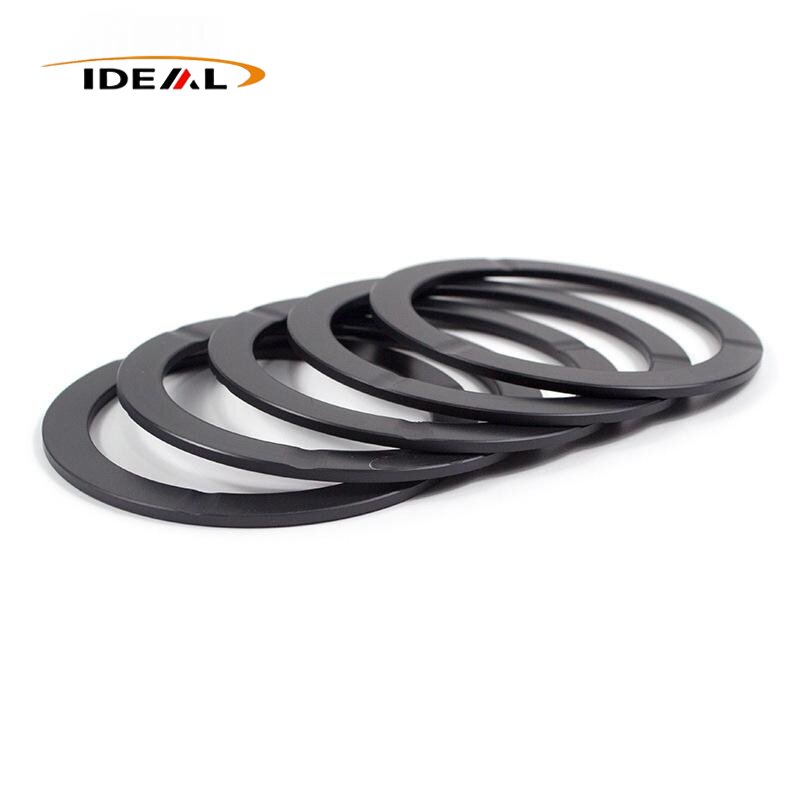
Nylon (polyamide) grades such as PA 6/6 are commonly used in washers, seals, and support rings due to their moderate cost and adequate performance at room temperature. However, when the operating temperature exceeds 100 °C, nylon begins to soften and lose mechanical strength. The glass transition temperature of nylon drops significantly in humid environments, further compromising its structural integrity. In contrast, high‑performance engineering polymers like PEEK Rings maintain their modulus and hardness up to 250 °C continuously, with short‑term peaks up to 300 °C. This thermal headroom makes them indispensable for applications involving hot fluids, friction‑generated heat, or elevated ambient temperatures.
The molecular structure of polyether ether ketone (PEEK) features rigid aromatic rings and strong intermolecular forces, resulting in a high melting point (~343 °C) and exceptional retention of mechanical properties at elevated temperatures. Nylon, by contrast, relies on hydrogen bonding that weakens as temperature rises and moisture penetrates the matrix. For assemblies where reliable operation above 120 °C is required, the choice between materials is clear.
2. Moisture Absorption and Dimensional Instability
Moisture absorption is a chronic weakness of nylon‑based components. Nylon 6/6 equilibrates at 2.5–3.5% moisture content under typical indoor conditions, leading to dimensional increases of 0.6% at 50% RH and up to 2.6% at full saturation. For a ring with a 100 mm nominal diameter, this translates to a potential dimensional shift of 0.6 to 2.6 mm – a catastrophic deviation in any precision mechanical assembly. Furthermore, absorbed water plasticizes the polymer, reducing tensile strength and stiffness while increasing elongation and creep rate.
Advanced engineering thermoplastics such as PEEK Rings exhibit negligible moisture uptake, typically less than 0.5% even after prolonged immersion. This hydrophobic character ensures that critical dimensions – inner diameter, outer diameter, thickness, and concentricity – remain stable across varied humidity conditions. Engineers can eliminate expensive compensation strategies or environmental controls that would otherwise be mandatory when specifying nylon rings for tight‑tolerance assemblies.
3. Wear Performance under Dry and Lubricated Conditions
Wear resistance directly influences the service life of annular components in rotating shafts, reciprocating rods, and sliding interfaces. Nylon offers acceptable wear performance when adequately lubricated, but its coefficient of friction rises sharply under dry or boundary‑lubricated conditions. This leads to excessive heat generation, surface galling, and accelerated material loss. In many industrial pumps, valves, and actuators, continuous lubrication cannot be guaranteed, making nylon a risky choice.
By contrast, PEEK Rings possess inherent self‑lubricating properties that reduce friction and wear even in dry‑running scenarios. The wear rate of PEEK is typically below 0.2 × 10⁻⁶ mm³/N·m, outperforming nylon by a factor of five to ten in practical applications. This low wear rate translates directly into extended maintenance intervals and consistent sealing performance over prolonged operating periods.
| Property | PEEK Rings | Nylon Rings (PA 6/6) |
|---|---|---|
| Continuous Service Temperature | 250 °C (482 °F) | 80–105 °C (176–220 °F) |
| Moisture Absorption (Equilibrium) | < 0.5% | 2.5–3.5% |
| Dimensional Change at 100% RH | Negligible | Up to 2.6% |
| Wear Rate (Dry Running) | < 0.2 × 10⁻⁶ mm³/N·m | Significantly higher |
| Self‑Lubrication | Excellent | Poor in dry conditions |
| Creep Resistance | Superior | Moderate, moisture‑dependent |
| Chemical Resistance | Excellent | Fair |
4. Creep Resistance and Long‑Term Shape Retention
Creep – the time‑dependent deformation under sustained load – is a critical factor for rings that must maintain axial positioning, sealing force, or clearance over months or years. Nylon exhibits pronounced primary creep that accelerates under both elevated temperature and moisture absorption. In humid environments, the creep compliance of nylon increases dramatically, leading to gradual loss of thickness or inner diameter. This can compromise sealing effectiveness or allow excessive movement of adjacent components.
PEEK Rings are renowned for their outstanding creep resistance, retaining dimensional stability even under sustained mechanical stress at high temperatures. The semi‑crystalline structure and high glass transition temperature (~143 °C) of PEEK ensure that viscoelastic relaxation is minimised. For applications such as back‑up rings, snap rings, and spacer collars, this property guarantees consistent assembly clearances and reliable mechanical function throughout the entire service life.
5. Chemical Compatibility and Environmental Robustness
Industrial environments often present combined challenges: heat, moisture, mechanical load, and aggressive chemicals. Nylon's fair resistance to oils, hydraulic fluids, and weak acids is reduced at elevated temperatures, and its tendency to absorb chemicals along with water accelerates degradation. Swelling, plasticisation, and loss of mechanical properties are common failure modes for nylon rings exposed to process fluids.
High‑performance alternatives like PEEK Rings offer excellent chemical resistance across a broad spectrum of aggressive media – including hydraulic oils, organic solvents, acids, and salt sprays. This inertness, combined with thermal and dimensional stability, makes them the preferred choice for chemical processing equipment, offshore machinery, oil‑and‑gas tools, and medical devices. The elimination of corrosion and chemical attack further enhances system reliability and reduces unplanned downtime.
6. Frequently Asked Questions
In most cases, yes. The dimensional standards for rings are widely compatible, but it is advisable to verify fit, clearance, and assembly forces because the higher stiffness and lower thermal expansion of PEEK may alter clearance behaviour. Always consult the manufacturer’s recommendations.
Precision CNC machining and high‑temperature injection moulding are the primary methods. CNC machining is especially suitable for thin‑wall rings, large diameters, and complex profiles with slots or stepped geometries. Post‑processing treatments relieve residual stresses and ensure final dimensional accuracy.
Industries operating in high‑temperature, high‑pressure, or chemically aggressive environments gain the most – including aerospace, oil and gas, semiconductor fabrication, chemical processing, marine engineering, and medical device manufacturing. The enhanced reliability directly improves equipment uptime and process consistency.
Generally, no. Unlike nylon, which requires moisture‑controlled storage to prevent dimensional changes, high‑performance polymer rings are stable in ambient conditions. Protection from UV exposure and mechanical damage is sufficient for long‑term storage.
Ideal Plastic – precision engineering solutions for demanding industrial applications.