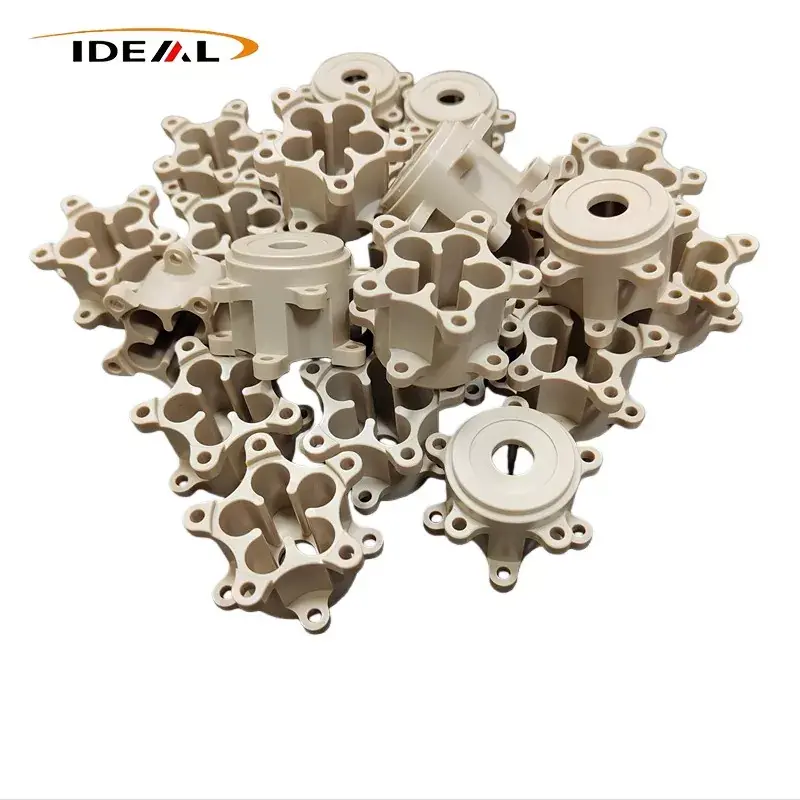
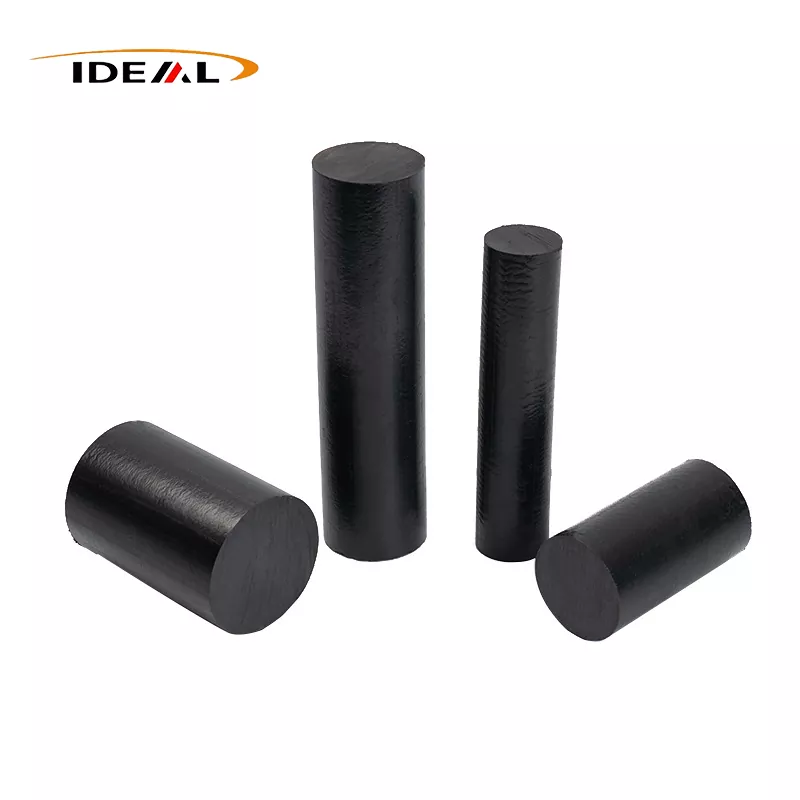
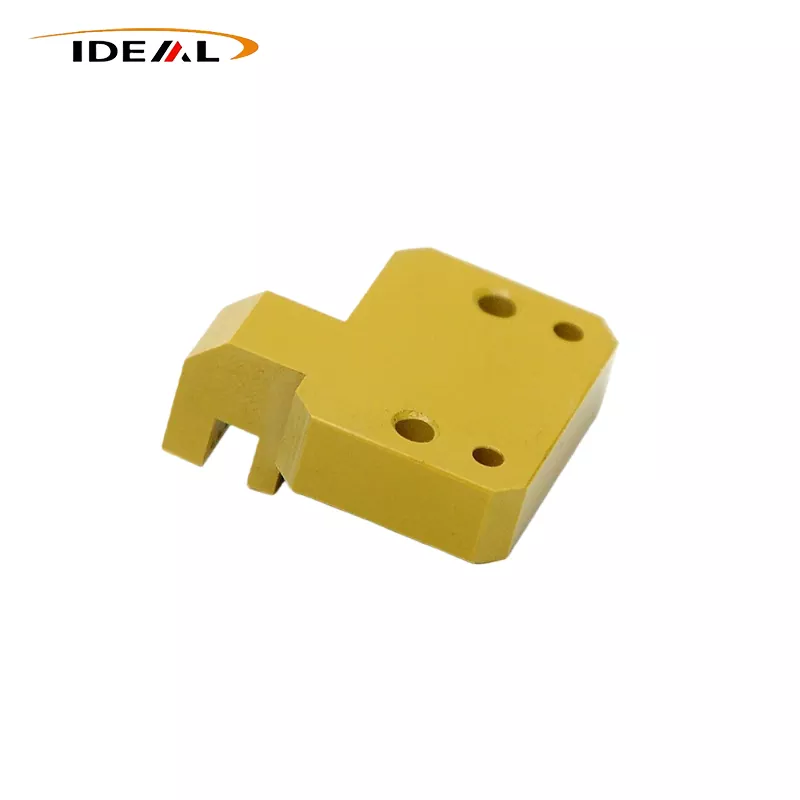
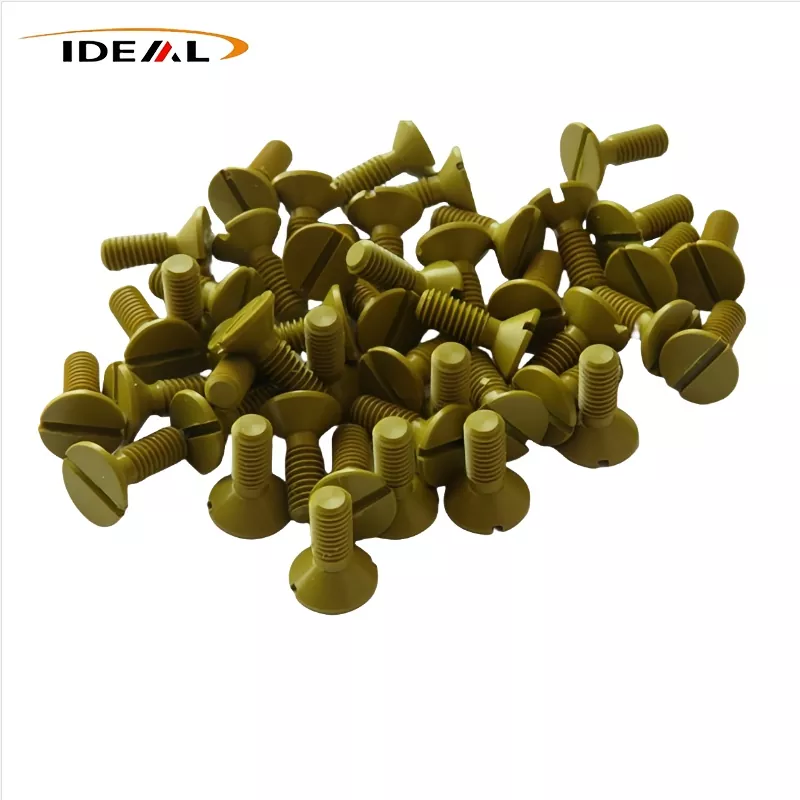
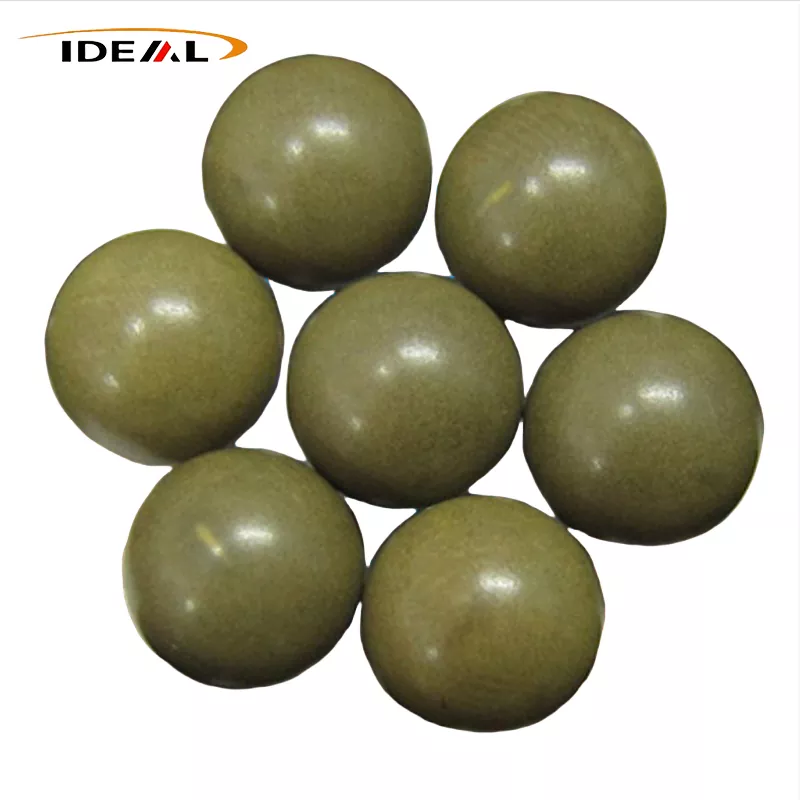
Okay, so here's the deal with the Torlon machined parts process. Basically, you start with ready-made stuff like plates and bars. Then, you use cutting and grinding to turn those into the final parts. Now, PAI is this really tough engineering plastic, a kind of thermoplastic polyimide. What's special about it is its molecular chain—it's got both amide and imide bonds lined up. That means it gets the best of both worlds from polyamide and polyimide, which makes it a top performer.
Your cutting tool needs to be sharp hard alloy. Run it at a speed of 200-300 meters per minute. Use the trick of "taking shallower cuts but moving faster," and keep the cutting depth between 0.1 and 0.5 millimeters. You gotta use coolant—no skipping—to stop the material from getting too hot. Oh, and it's a good idea to give it another annealing treatment after you're done machining. Yeah, this material can be a bit tricky to work with, but if you get your settings right, CNC can crank out even complex parts really well and super precisely.
Over at GuangZhou Ideal, we've got all the right gear and we know what we're doing. We're loaded with CNC milling machines, lathes, drill presses, plus CNC machining centers, five-axis centers, you name it. This lets us make sure every single Torlon machining part part is up to snuff. Craftsmanship-wise, our engineers really know their stuff. They'll pick the right material and the perfect tools for the job, then set up the ideal machining parameters and post-processing steps based on exactly what the part looks like, its size, and how good it needs to be. We're also good at spotting potential headaches with Torlon CNC part before they happen, fixing them, and getting your orders done right and on time.
|
Product name |
Torlon machined parts |
|
Material |
Basic grade, reinforced grade, wear-resistant grade |
|
Color |
Yellowish-brown, military green, dark green, black |
|
Size |
OEM/ODM/Drawing |
|
Tolerance |
According to customer requirements |
|
Minimum order quantity |
Negotiable |
|
Certificates |
ISO9001:2008, REACH, ROHS |
|
Delivery time |
5-10 days |


1.Heat Resistance:
Torlon machined parts is really good at handling heat. It can keep working for long periods at seriously high temperatures—its heat deflection temperature is usually over 250°C, and some grades can even go up to around 300°C. That’s why it’s often used in industrial gear and electronics that need to handle extreme heat. Take car engines, for example: parts made from Torlon machined parts can sit right near the engine and stay stable in that hot environment, without getting soft or losing performance from the heat.
2.Wear Resistance:
This PAI material has a pretty low friction coefficient—typically between 0.2 and 0.5, which is lower than a lot of metals. If you mix in some PTFE, the friction can drop to around 0.12. Adding graphite helps it wear even better under high pressure. You can also boost overall wear resistance by reinforcing it with glass or carbon fiber, though that might sometimes make the surface quality a little less smooth.
3.How Heat Affects PAI’s Strength:
PAI’s molecular chains have a rigid imide ring structure, which is what makes it so heat-resistant. Its aromatic heterocyclic setup also helps it handle both high and low temperatures—the chains just don’t move much even when it’s hot. But if you put it under stress for too long at high temps, it can still creep and slowly deform. And once the temperature crosses a certain point, the material’s grain boundaries weaken faster than the grains themselves.
4.Radiation Resistance:
Torlon machining part holds up really well against high-energy radiation like gamma rays and X-rays. Even in a radioactive environment, its mechanical properties and chemical stability don’t drop much, which makes it a good fit for nuclear or medical equipment. This comes down to its neatly arranged amide and imide groups in the molecular structure, which boost its ability to take radiation.
5.Dimensional Stability:
When we say PAI has good dimensional stability, we mean it keeps its shape and size well when things like temperature, humidity, or stress change. In other words, it doesn’t easily shrink, expand or get out of shape.
6.Low Thermal Expansion:
Torlon CNC part’s thermophysical properties help it stay stable even when temperatures shift. It has a very small thermal expansion coefficient—somewhere between 2 × 10⁻⁵ and 7 × 10⁻⁵ per °C—so parts made from it don’t change size much as things heat up or cool down.
There's this engineering plastic called Torlon machined parts—really top-notch stuff—that's getting more and more popular. Honestly, a lot of key industries pretty much rely on it now.
Aerospace: You’ll find it in engine parts, bearings that can handle high heat, and all kinds of seals.
Automotive industry: It pops up in turbocharger components, exhaust system pieces, and various connectors.
Electronic and electrical: It’s often used for insulation parts, connectors, and some precision components in semiconductor equipment.
Petrochemical industry: Mainly goes into places that need to resist corrosion—think pumps, valves, pipe fittings, and so on.
Mechanical engineering: It holds up really well even under high stress, like in bearings, gears, and piston rings.
GuangZhou Ideal, we’ve got both top-notch production gear and a skilled team to run it. Our shop is packed with all sorts of CNC machine tools, CNC machining centers, five-axis machining centers, plus high-end equipment like CNC engravers, laser cutters, and clean-room injection molding workshops. So whatever manufacturing needs your Torlon machined parts products might have, we’re ready to handle them—making sure your orders are done fast and done right.
1.Do you guarantee the performance of your products?
Yes, absolutely. We use raw materials from well-known brands, both local and international. Every batch comes with its own material report, so you know exactly what you’re getting. Our product performance is top-notch in the industry, and we can provide detailed property sheets for your reference.
2.How do you ensure product quality?
We’ve got a full quality control system in place, backed by advanced testing equipment and our own lab. Our team of experts monitors every step—from raw materials to the finished product—to make sure everything meets high-quality standards before it reaches you.
3.What kind of equipment do you work with?
We’re equipped with large-scale profile production lines, various CNC machines and machining centers (including four-axis and five-axis), engravers, laser cutting gear, and even a Class 100,000 cleanroom for injection molding.
4.Can you handle custom designs?
Sure! You can send us your 2D or 3D drawings in common formats like STEP, STP, STL, IGS, IGES, PRT, SLDPRT, SAT, or X_T. If you have a physical sample, we can scan it and work from that. We’re also happy to design or tweak products based on your specific needs.
5.How do you handle shipping?
We usually ship via DHL, FedEx, or similar carriers—by air or sea—for speed and convenience. If you have a preferred logistics provider or freight forwarder, we can use them instead. Keep in mind that shipping costs are covered by the customer and will vary depending on the size, weight, and destination of your order.