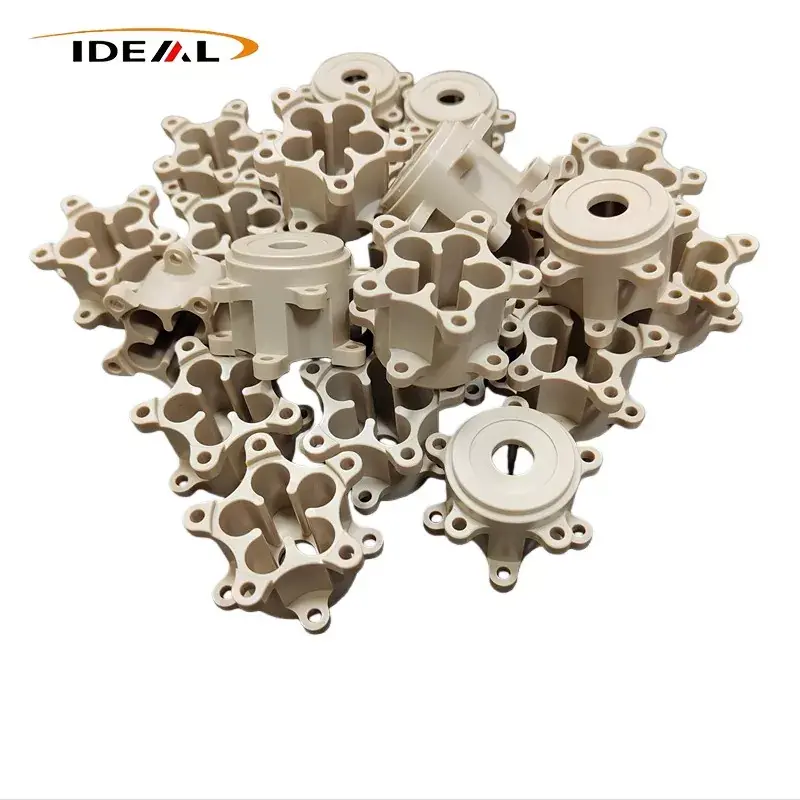
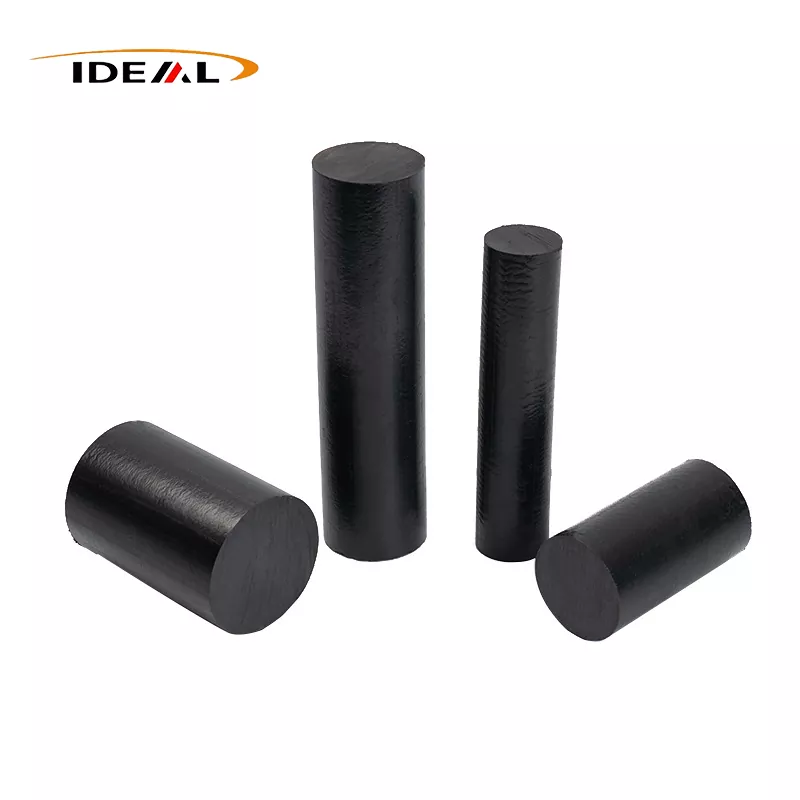
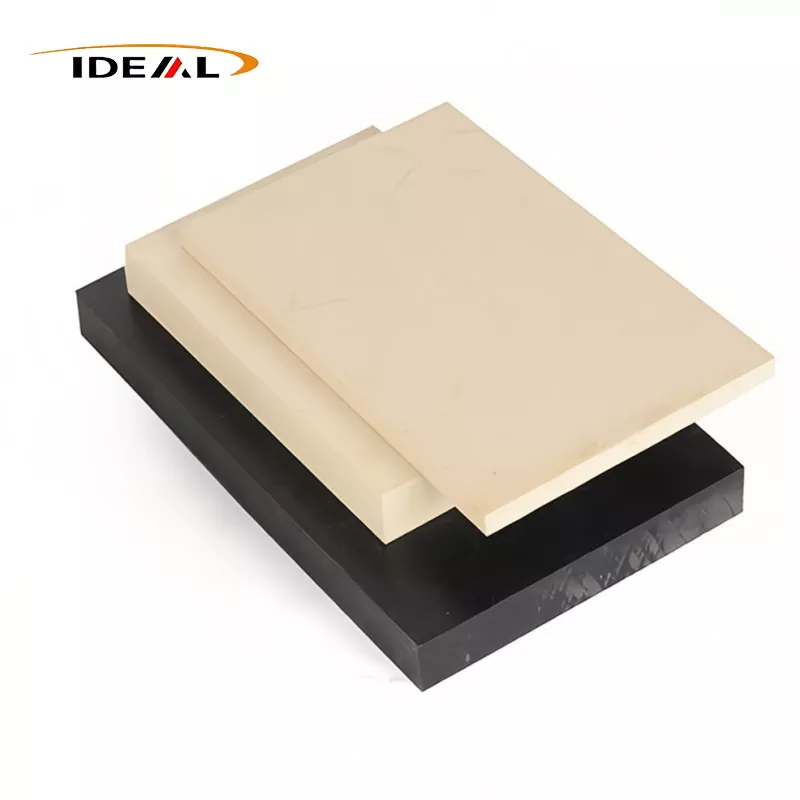
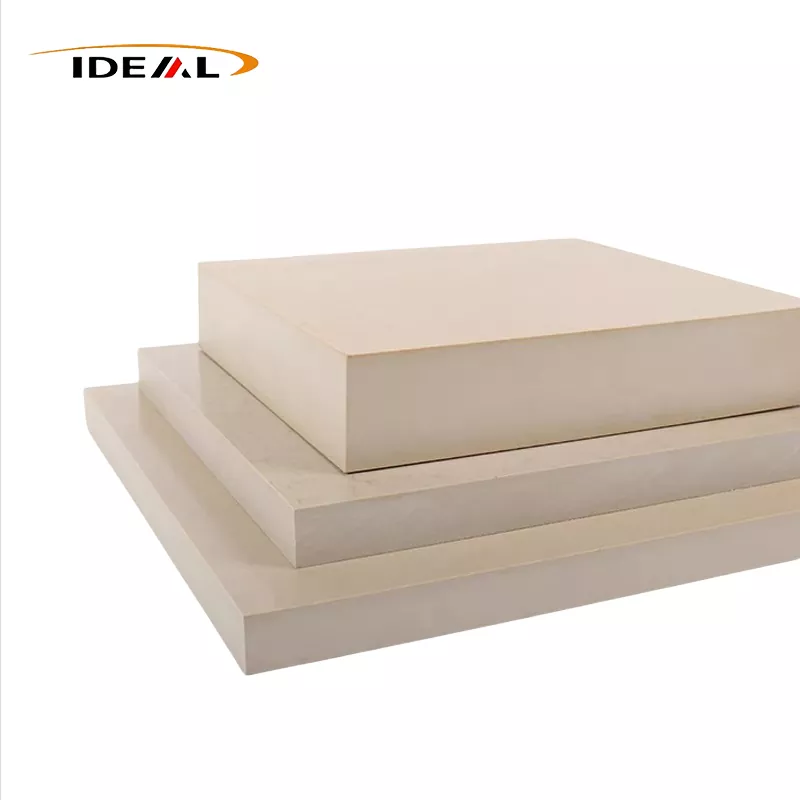
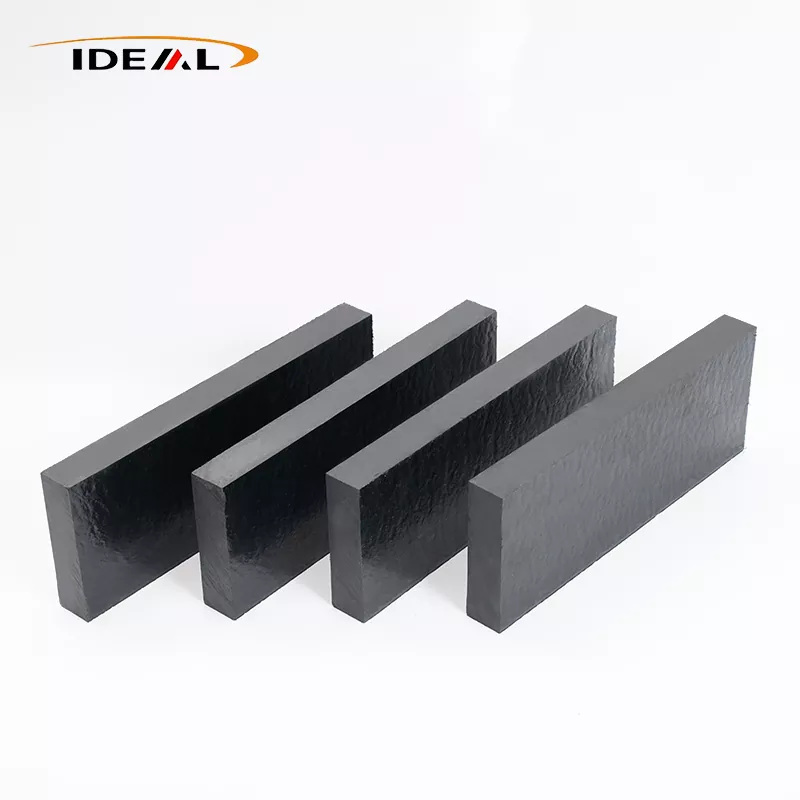
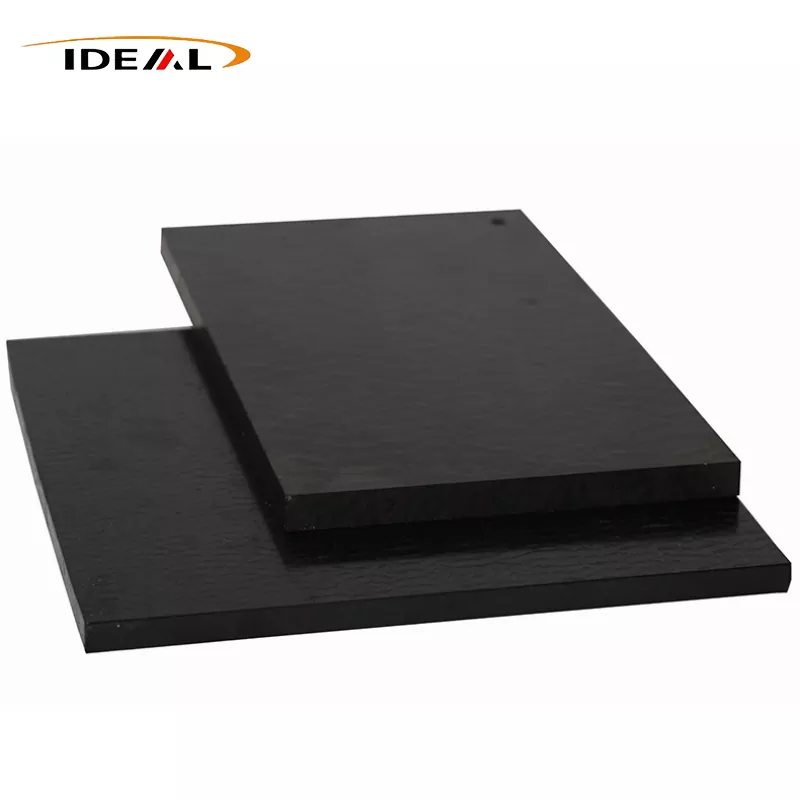
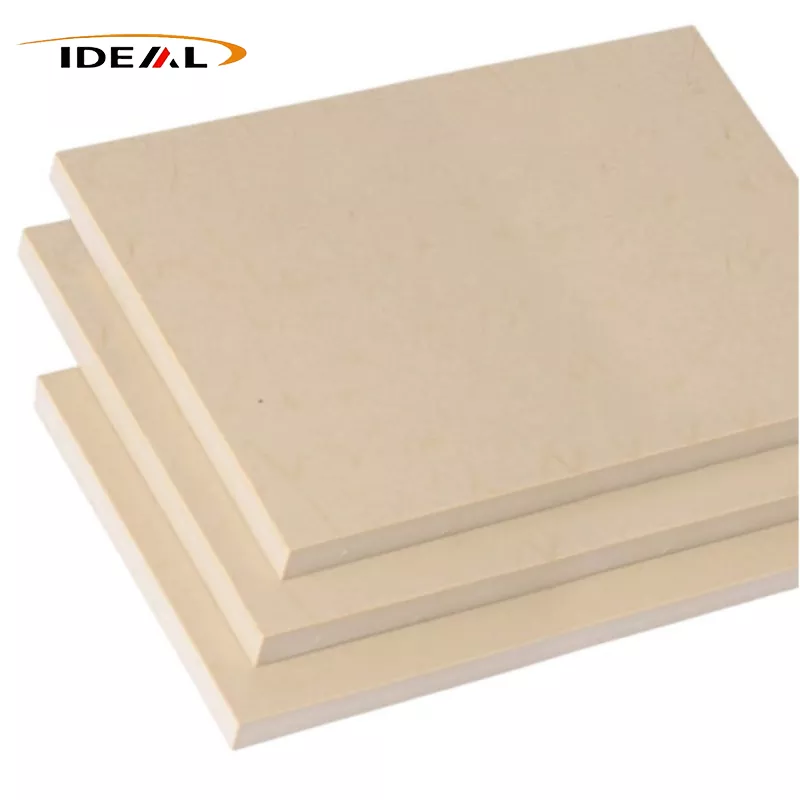
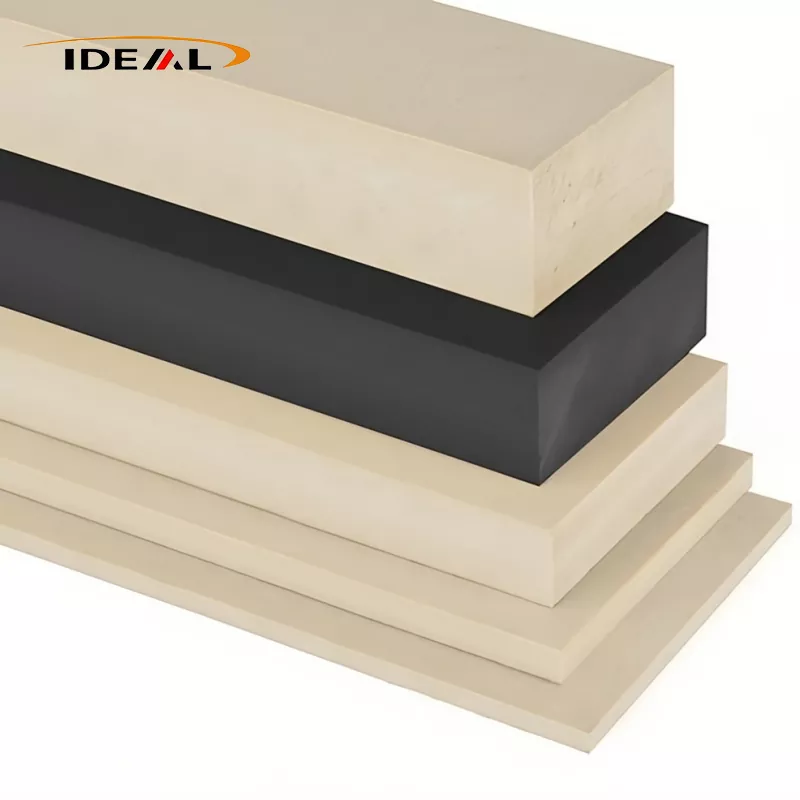
Carbon fiber Filled PEEK plates is a PEEK profile with really strong overall performance. PEEK stands for polyetheretherketone — it's a high-performance special engineering plastic. The backbone of its molecule is pretty special — it’s made up of repeating units of "benzene ring, ketone bond, benzene ring, ether bond, benzene ring, ether bond." Here’s an easy way to think about it: the rigid benzene rings inside act like the framework, giving the material its mechanical strength and heat resistance. Meanwhile, the flexible ether and ketone bonds allow the molecular chains some wiggle room, balancing out how easily it can be processed with its toughness and impact resistance.
Carbon fiber reinforced PEEK plate really helps cut down the wear rate of PEEK. Whether it’s under dry friction or boundary lubrication conditions, carbon fiber brings a lot to the table — it has the highest specific strength and modulus, good electrical and thermal conductivity, a low thermal expansion coefficient, plus resistance to fatigue and corrosion. Adding it into PEEK boosts stiffness and strength, reduces the thermal expansion of the composite material, and improves how well it conducts electricity and heat. Of course, the trade-off is that the cost also goes up a bit.
After more than ten years of research and hands-on work, our GuangZhou Ideal team has really nailed down a reliable production process for Carbon fiber Filled PEEK sheet. Depending on the quality score we’re aiming for, we can adjust the carbon fiber content anywhere between 10% and 40%:
At 10%–20%, you get better toughness and strength in the PEEK sheet, plus the best melt flow for processing.
Bump it up to 25%–30%, and you’ll see a clear improvement in stiffness, creep resistance, and dimensional stability.
Go up to 35%–40%, and the strength and modulus hit their peak — but at that point, toughness and flowability dip slightly.
Right now, the most commonly used mix is around 30%.
|
Product name |
Carbon fiber Filled PEEK plates |
|
Material |
Carbon fiber filling PEEK |
|
Color |
black |
|
Breadth |
600mm-1250mm |
|
Thickness |
3mm - 100mm |
|
Tolerance |
±0.02mm |
|
Certificates |
ISO9001:2008, REACH, ROHS |
|
Delivery time |
Standard sizes ship on the same day; custom sizes take 7-10 days. |
|
sample |
Free |


1.The mechanical performance gets a big boost: Adding carbon fiber makes PEEK much stronger and stiffer. Thanks to this, Carbon fiber Filled PEEK plates can handle heavier loads, which is perfect for critical parts in aerospace and automotive applications.
2.It’s really good at self-lubricating: Once carbon fiber is mixed in, the friction coefficient drops to around 0.1–0.2 (while pure PEEK is about 0.3). Plus, it lubricates on its own—no extra oil needed. That makes it super handy in places where lubricants aren’t practical, like medical equipment or food processing machinery.
3.Thermal expansion is reduced: The carbon fiber also lowers PEEK’s thermal expansion coefficient. What that means is Carbon fiber reinforced PEEK plate holds its size better—it’s less likely to expand or shrink when temperatures change. That’s a big plus when you’re making precision components.
4.Now it can conduct electricity: By tweaking the amount of carbon fiber, you can control how conductive it gets—taking it from pure PEEK’s insulated state to a conductive range with volume resistivity under 10 Ω·cm. This opens up uses where you need anti-static protection or electromagnetic shielding, like in electronic device casings.
5.It’s lightweight: Carbon fiber Filled PEEK sheet is lighter than a lot of metals but just as strong—or even stronger. That’s a major benefit for weight-sensitive industries like aerospace and automotive.
6.Of course, there are downsides too:
It’s pretty pricey: Both carbon fiber and PEEK are costly materials on their own, so the composite usually ends up 2 to 3 times more expensive than plain PEEK.
Performance depends on direction: Carbon fibers line up inside the material in a certain direction, so properties can vary depending on how you measure. Usually, you have to design the mold carefully to get the best fiber arrangement.
Doesn’t like sharp corners: When designing parts, try to avoid sharp notches or edges—they tend to focus stress and can lead to cracks in the material.
1.You know that Carbon fiber Filled PEEK plates material used in transportation gear? It's seriously tough—super wear-resistant, kind of slick so it lubricates itself, handles heat like a champ, and stays the same size even under stress. That's why you see it everywhere in vehicles. Think stuff like turbocharger parts in engines, valve seats, seals and gaskets, bits inside fuel pumps and injectors, and seals in cooling systems. Actually, PEEK material seals are in there too. It also pops up in catalytic converters, exhaust valves, and other spots under the hood. Oh, and PEEK is all over the electrical side of things too—like in battery management parts, connectors, sensors, you name it.
2.Then there’s office equipment. Take copiers, for example. If you make parts like separation claws, heat-resistant bearings, chains, and gears out of this stuff, they end up lighter, last way longer, don’t wear out easily, and even run smoothly without needing extra oil. Basically, you can just use them and not worry.
3.In medical and lab gear, Carbon fiber reinforced PEEK plate is a go-to because it can take repeated high-pressure sterilization without batting an eye. That’s why it’s used in things like endoscope pieces and dental cleaning tools. Plus, it’s strong and doesn’t dissolve easily, so you’ll find it in lab equipment too—like liquid chromatography columns and tubes. And since the body gets along with it well, it’s now being used to make artificial bones, replacing titanium in some cases.
4.Over in the semiconductor world, PEEK is the material of choice for wafer carriers and boxes. Why? It’s tough, stands up to chemicals, keeps its shape, resists static, and doesn’t give off gases. All that helps keep tiny particles from messing up the wafers while they’re being moved, stored, or shipped—making the whole process way more reliable.
5.The petrochemical industry loves Carbon fiber Filled PEEK sheet because it’s a real problem-solver for corrosion. It handles both acids and alkalis, plus high heat and pressure like a pro. In nasty, acidic oil and gas wells where they’re pulling up crude, valve parts and pipeline liners made of PEEK can put up with corrosive gases and salty water for ages. And in chemical reactors, stirrer blades made of PEEK can work in crazy acidic or alkaline conditions over 200°C—without rusting or contaminating the mix, so the product stays pure.
6.And in new energy tech, PEEK is turning into a big deal for making batteries safer. Inside lithium batteries, the separator support made from this stuff can take the heat (over 180°C) and fight off electrolyte corrosion. Even if a battery starts to overheat, this support holds the separator together and slows down how fast the heat spreads.
For GuangZhou Ideal, the number one priority is making sure our products are top-notch—really refined and excellent.
We’ve got a strong team and modern production lines backing us up.
From picking the right materials all the way to delivering the finished product, every single step is tightly managed. That’s how we keep the quality of Carbon fiber Filled PEEK plates consistently solid and reliable.
Thanks to everyone’s hard work, we’ve also streamlined our production process. That’s helped us cut costs and made our products even more stable. And honestly, it’s given us a stronger edge in the market too.
1.So, what does your company do?
We’re Guangzhou Ideal Plastic Technology Co., Ltd. We started in Hong Kong in 2011, and our main factory is in Huangpu, Guangzhou. Basically, we specialize in developing and producing semi-finished profiles from special engineering plastics—stuff like PEEK, PAI, PI, PPS, PPSU, PEI, and a few others. On top of that, we also do CNC machining and injection molding to help our customers turn those materials into finished parts.
2.What’s your minimum order quantity?
For semi-finished profiles, we’re pretty flexible—you can start with a small order. If you need custom parts, just tell us the details, like how they’ll be made and the size, and we’ll work something out together.
3.What kind of certifications do you have?
We’re ISO9001:2008 certified for our quality management system. Our products also come with SGS, CE, and RoHS certifications, and they meet environmental standards like REACH, EN71, and others.
4.What’s your return or exchange policy?
If there’s a quality problem, something we messed up, or anything that makes the product unusable, let us know as soon as possible. Once we check and confirm, we’ll take care of the return or exchange and cover the shipping costs. If you just ordered the wrong thing or had a change of mind (especially with raw profiles), we can still help as long as it’s in resellable condition—but you’ll need to handle the return shipping.
5.Can I get samples?
Sure! If we have the semi-finished profiles available in stock, we can send you samples for free. You’ll just need to cover the shipping cost. And no worries—the samples will be exactly the same as what you get in your actual order.
6.(Repeat for clarity, in case someone jumps here directly) What’s your return or exchange policy?
Just to recap: if there’s a quality issue, our mistake, or anything that stops you from using the product, reach out right away. We’ll confirm what happened and handle the return or exchange, including shipping. If it’s a case of ordering the wrong item or changing your mind (especially with raw profiles), we’re happy to help if it’s still in sellable shape—but the return shipping would be on your side.