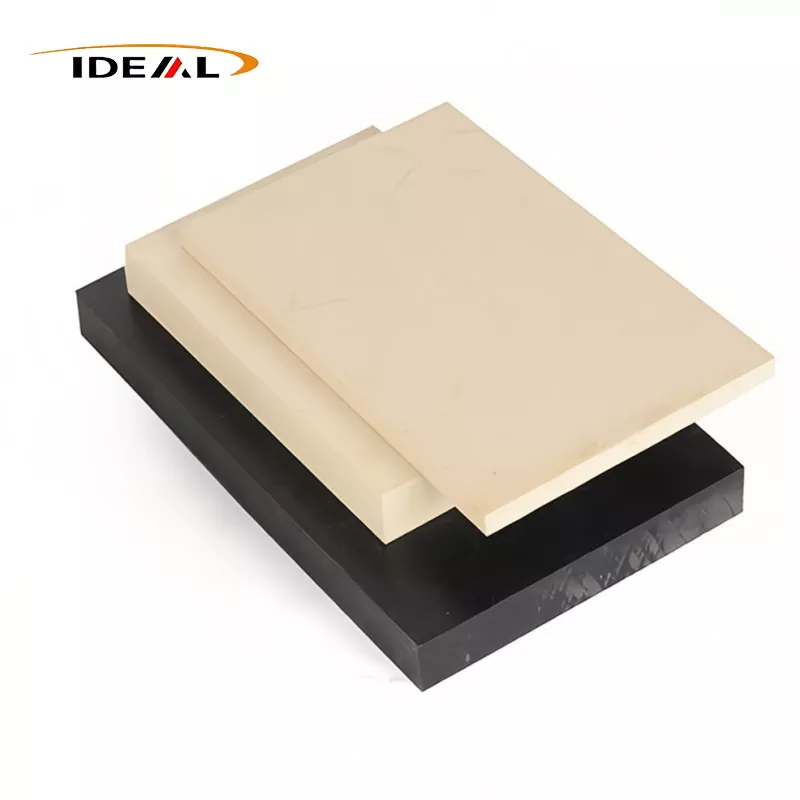
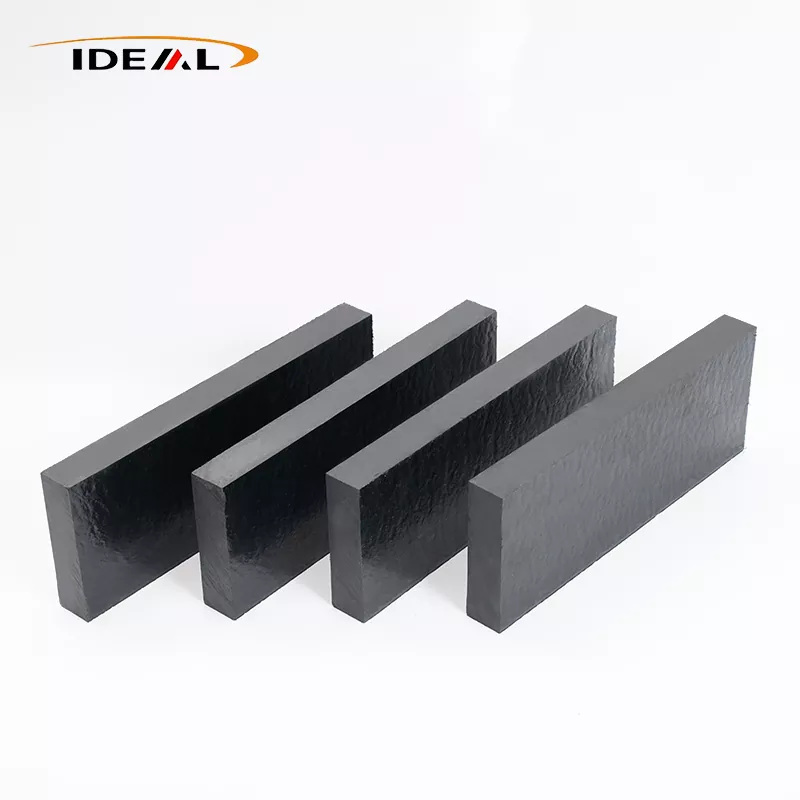
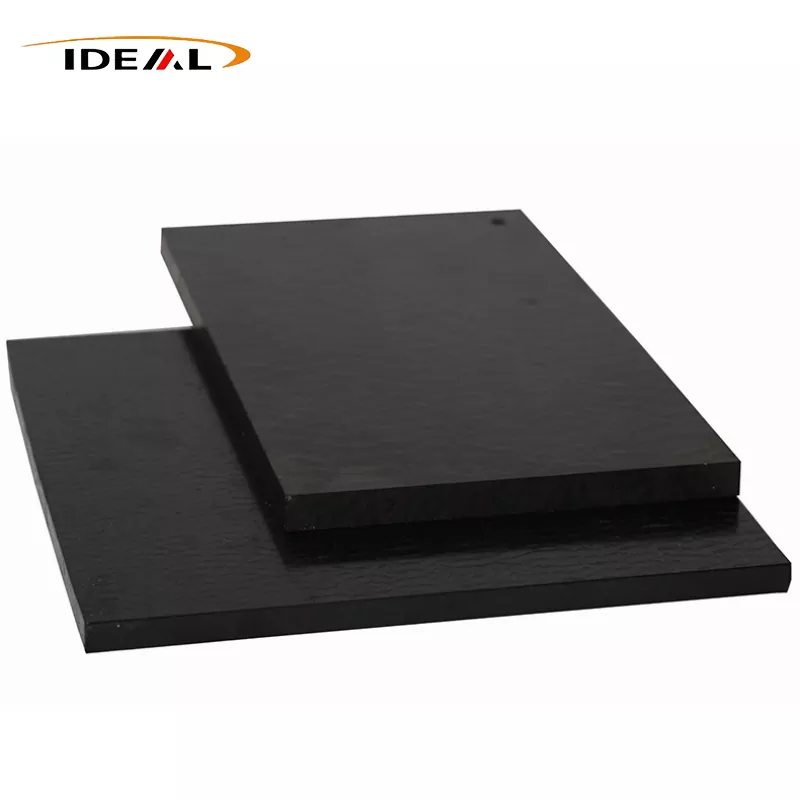
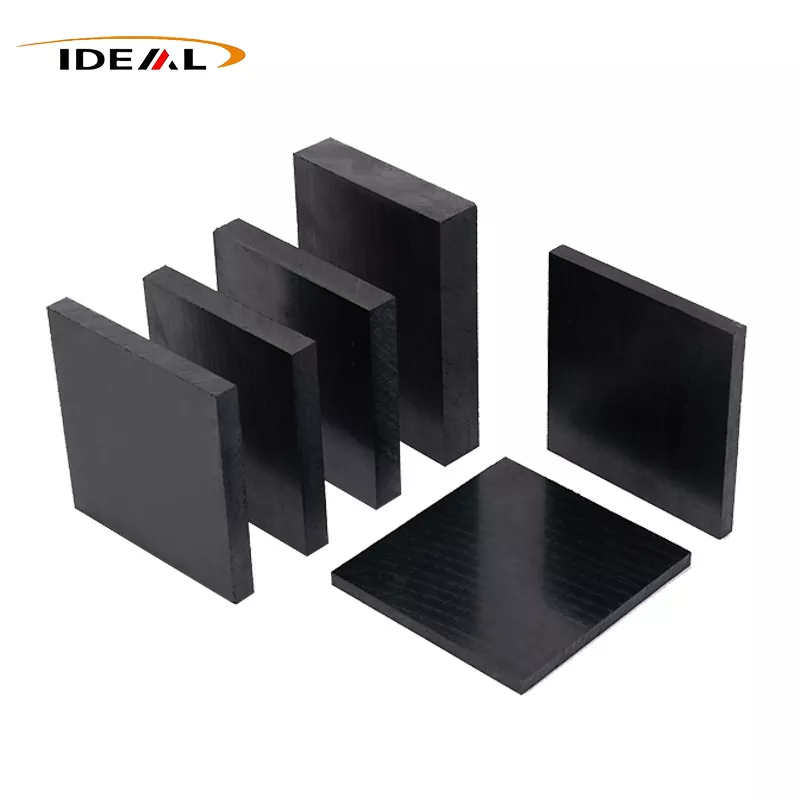
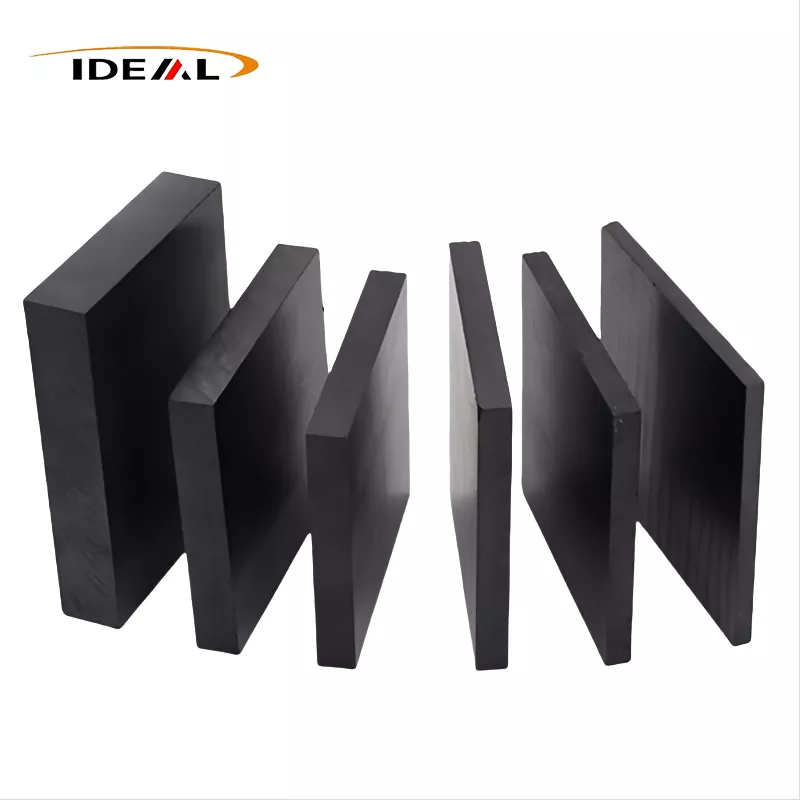
Wholesale Carbon Fiber Reinforced PEEK Plates directly from Ideal Plastic, China's premier high-tech developer of carbon-filled polyetheretherketone profiles. By compounding high-modulus carbon fibers into a highly stable PEEK matrix, we manufacture semi-finished structural sheets that bridge the gap between high-performance polymers and aerospace-grade aluminum. Our in-house extrusion lines ensure absolute material homogeneity, providing global distributors and OEMs with high-stiffness, low-wear stock shapes optimized for demanding CNC machining.
As an industry-leading Carbon Fiber Reinforced PEEK Plates manufacturer, Ideal Plastic delivers premium black structural sheets designed to survive environments that destroy standard polymers. We integrate high-purity carbon fibers with raw PEEK resin under tightly monitored thermal parameters, achieving a significant boost in continuous thermal stability and a drastic reduction in isotropic mold shrinkage. From standard stock sheets to customized dimensions, our production is backed by ISO 9001:2008 standards, ensuring full compliance with REACH, RoHS, and EN71 environmental criteria.
When engineering structural components for high-stress applications, weight reduction often conflicts with the need for high rigidity. Regular PEEK sheets can flex under intense loads, but our specialized composite sheets solve this limitation.
• Tensile Strength Surge: Compounding carbon fiber into the matrix elevates the tensile strength to a range of 150 to 200 MPa, closely approaching the mechanical performance of structural aluminum alloys.
• Elastic Modulus Boost: The structural stiffness is dramatically enhanced, driving the elastic modulus from pure PEEK's 3.8 GPa up to 8 to 12 GPa. This resistance to bending and warping under continuous load makes these sheets an excellent choice for structural aerospace and industrial backing plates.
Under high-temperature mechanical loads, standard polymers suffer from rapid softening, creeping, and sagging. This Reinforced PEEK Plates prevents such failures through its internal fiber-locking structure.
The Thermal Retaining Mechanism: High-modulus carbon fibers form a rigid, interconnected reinforcement network inside the amorphous and semi-crystalline PEEK matrix. This network physically restricts the mobility of polymer molecular chains as the temperature climbs toward the glass transition point.
While unfilled PEEK exhibits a heat deflection temperature (HDT under 1.82 MPa) of approximately 160°C, incorporating more than 20% carbon fiber pushes this threshold close to its melting point of 343°C. Specifically, a 30% carbon fiber filled grade routinely achieves an HDT exceeding 315°C, maintaining its load-bearing capacity without drooping, softening, or creeping.
|
Product name |
Carbon Fiber Reinforced PEEK Plates |
|
Material |
Carbon fiber filling PEEK |
|
Color |
black |
|
Breadth |
600mm-1250mm |
|
Thickness |
3mm - 100mm |
|
Tolerance |
±0.02mm |
|
Certificates |
ISO9001:2008, REACH, ROHS |
|
Delivery time |
Standard sizes ship on the same day; custom sizes take 7-10 days. |
|
sample |
Free |
For high-precision applications like semiconductor processing and medical instrumentation, moisture absorption and thermal expansion can ruin close-tolerance fits.
Near-Zero Hydrolysis
The composite exhibits exceptionally low moisture absorption, keeping its shape locked in even when continuously exposed to wet environments or steam sterilization cycles.
Extremely Low Expansion
The linear thermal expansion coefficient is restricted to 3.1 × 10⁻⁶/K to 6.8 × 10⁻⁶/K, matching the thermal movement of several metal alloys.
Radiation and UV Stability
The carbon fiber reinforcement acts as a natural shield against UV degradation and high-dose ionizing radiation (such as gamma-ray sterilization), preventing polymer embrittlement and surface micro-cracking over years of continuous exposure.
In dry-running sliding applications, contact with gritty particles or mating surfaces can cause rapid adhesive wear and premature failure in softer polymers.
Our Carbon Fiber Reinforced PEEK Plates feature high surface hardness due to the carbon fibers taking on the brunt of the contact pressure. Because the fibers are thoroughly integrated and securely bonded to the PEEK matrix, they resist pulling out or flaking off during sliding cycles. This structural stability minimizes abrasive wear debris, allowing these composite sheets to wear down far slower than unfilled PEEK in continuous-contact environments.
Industrial chemical equipment requires materials that can withstand harsh chemical attack without cracking or dissolving.
The PEEK base material provides outstanding chemical resistance. These composite plates are chemically inert and highly resistant to organic solvents, aqueous acids, alkalis, and industrial oils. They withstand long-term exposure in harsh environments, such as chemical processing lines or offshore oil rigs—where they regularly outlast stainless steel components.
Note: While highly resistant to most chemicals, the material can be affected by strong oxidizing agents such as concentrated nitric or sulfuric acid.
Due to their strength-to-weight ratio, chemical inertness, and thermal properties, these Carbon Fiber Reinforced PEEK Plates are used across several specialized industries:
• Semiconductor Industry: Used to machine Chemical Mechanical Planarization (CMP) retaining rings. Its low wear rate and high chemical resistance double the operational lifespan of these components compared to alternative plastics, reducing downtime.
• Aerospace Engineering: Used for engine compartment heat shields and structural brackets, saving weight while providing thermal insulation. It is also used in satellite thermal control systems to shield sensitive instruments from cosmic temperature swings.
• Medical Devices: Biocompatibility, chemical resistance, and compatibility with repeated autoclave sterilization cycles make these plates an excellent choice for surgical instruments and structural medical gear.
• Industrial & Energy Equipment: Used as chemical reaction vessel liners, heat exchanger seals, valve seats, and high-performance components in the nuclear power sector due to its low hydrolysis rate.
| Property | Value | Test Standard / Note |
|---|---|---|
| Primary Composition | PEEK with Carbon Fiber Reinforcement | High-homogeneity compounding |
| Tensile Strength | 150 to 200 MPa | Approaching aluminum alloys |
| Elastic Modulus | 8 to 12 GPa | High rigidity against bending |
| Heat Deflection Temp (1.82 MPa) | > 315°C (for 30% CF fill) | Pure PEEK: ~160°C |
| Melting Point | ~343°C | High-temperature polymer baseline |
| Linear Expansion Coefficient | 3.1 × 10⁻⁶/K to 6.8 × 10⁻⁶/K | Low thermal movement |
| Water Absorption | Near-Zero | Excellent dimensional stability |
| Standard Breadth | 600mm to 1250mm | Flat, low-stress sheets |
| Available Thickness | 3mm to 100mm | Optimized for CNC machining |
| Machining Tolerance | ±0.02mm | In-house precision |
| Compliance & Safety | ISO 9001:2008, REACH, RoHS | Certified environmental compliance |
A: Unlike unfilled PEEK, which is an electrical insulator, the addition of carbon fiber creates a conductive network within the polymer matrix. This provides mild electrical conductivity, which is useful for dissipating static charges in semiconductor wafer-handling applications. It also increases thermal conductivity, helping to dissipate localized heat in high-friction sliding environments.
A: Carbon fibers are abrasive and can cause rapid tool wear on standard high-speed steel (HSS) tooling. We recommend using carbide or diamond-coated (PCD) tools. To prevent surface delamination or fiber pull-out during high-speed milling, use sharp cutting geometries, maintain high feed rates, and ensure adequate cooling or chip evacuation.
A: While our Carbon Fiber Reinforced PEEK Plates are manufactured with high-quality resins and exhibit excellent biocompatibility for medical tools, surgical guides, and structural external devices, long-term human implants require specialized medical-grade resins with strict implant-level traceability. Please contact our technical team to discuss your specific medical grade requirements.