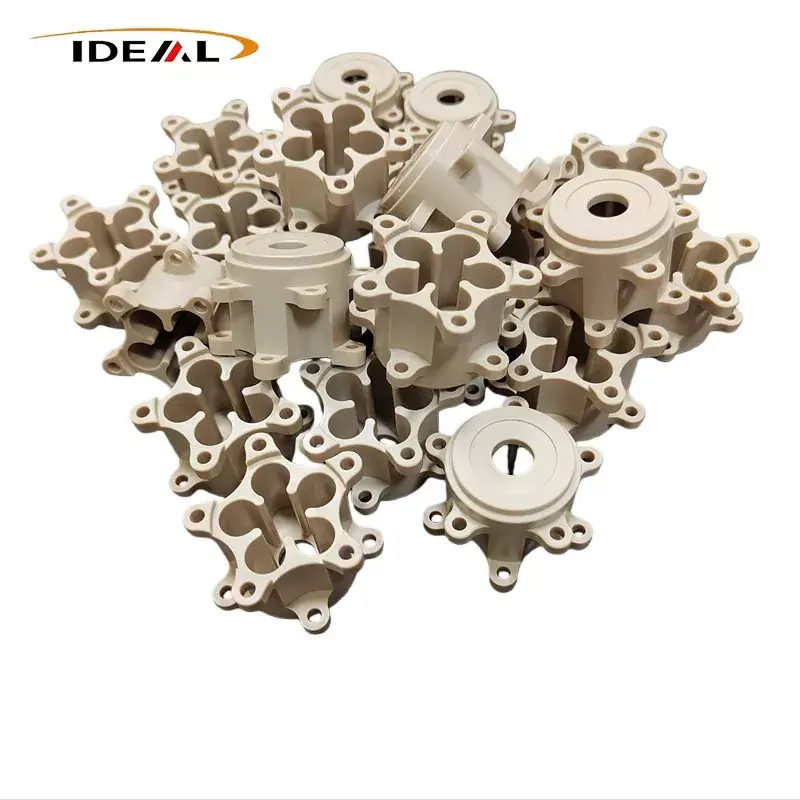
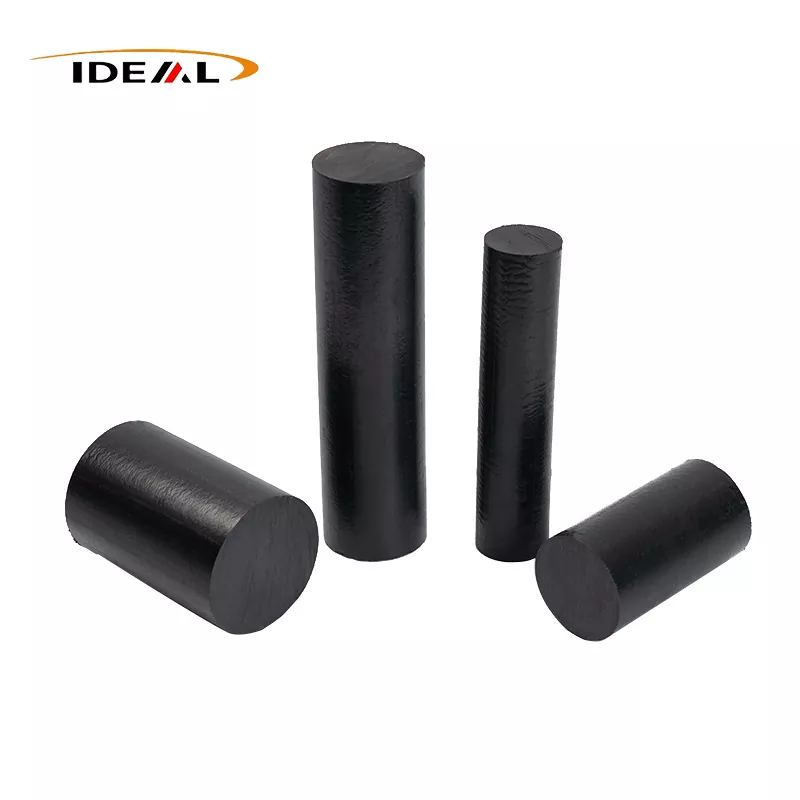
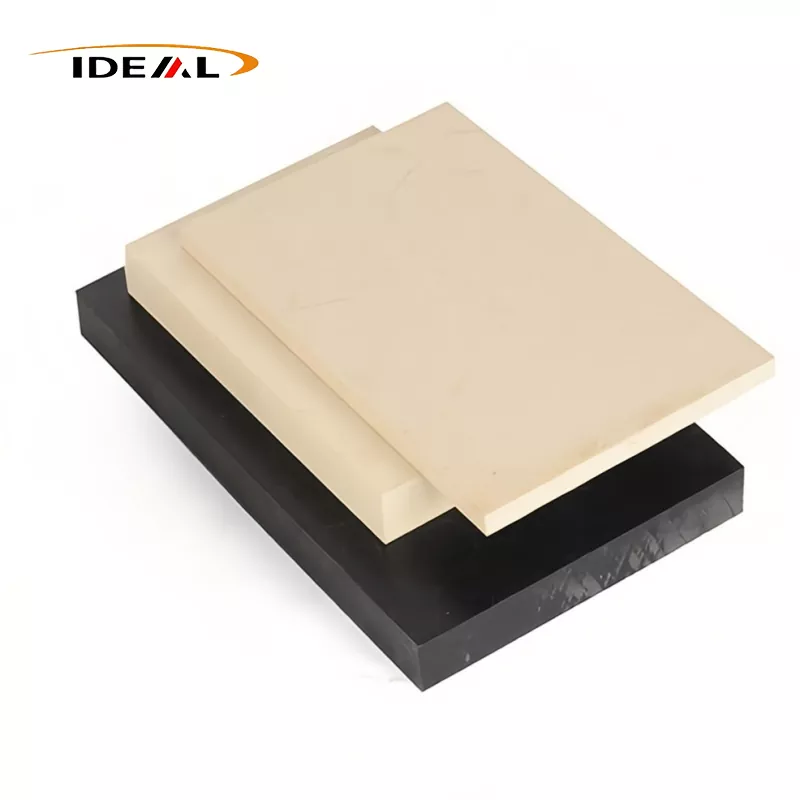
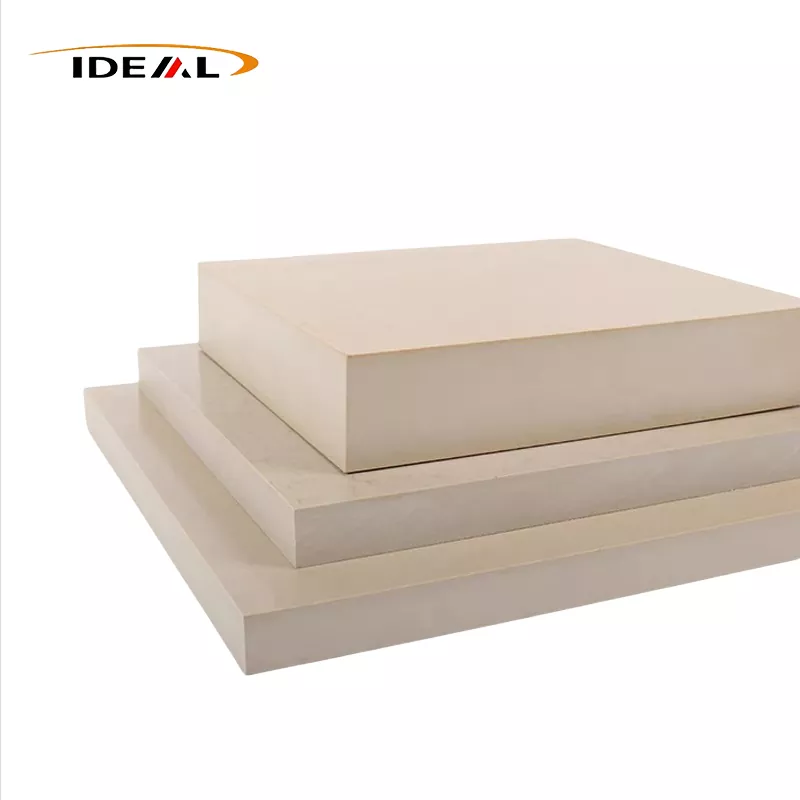
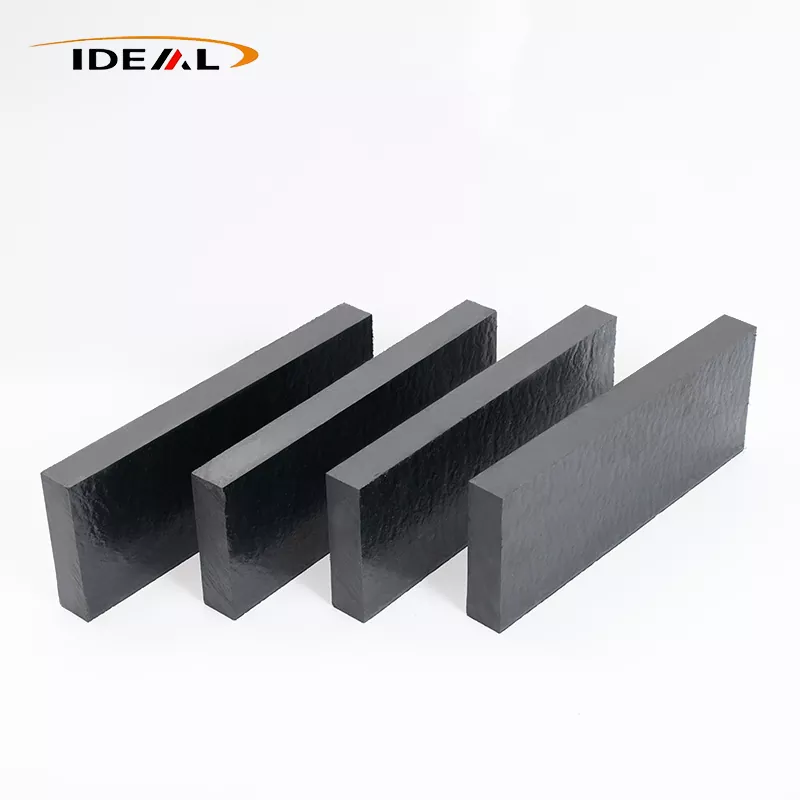
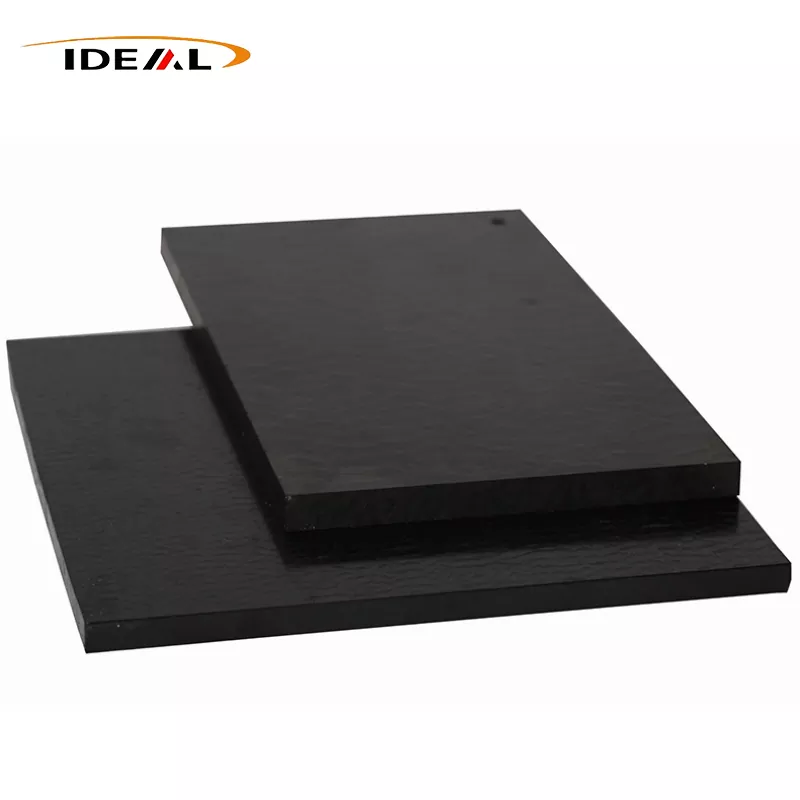
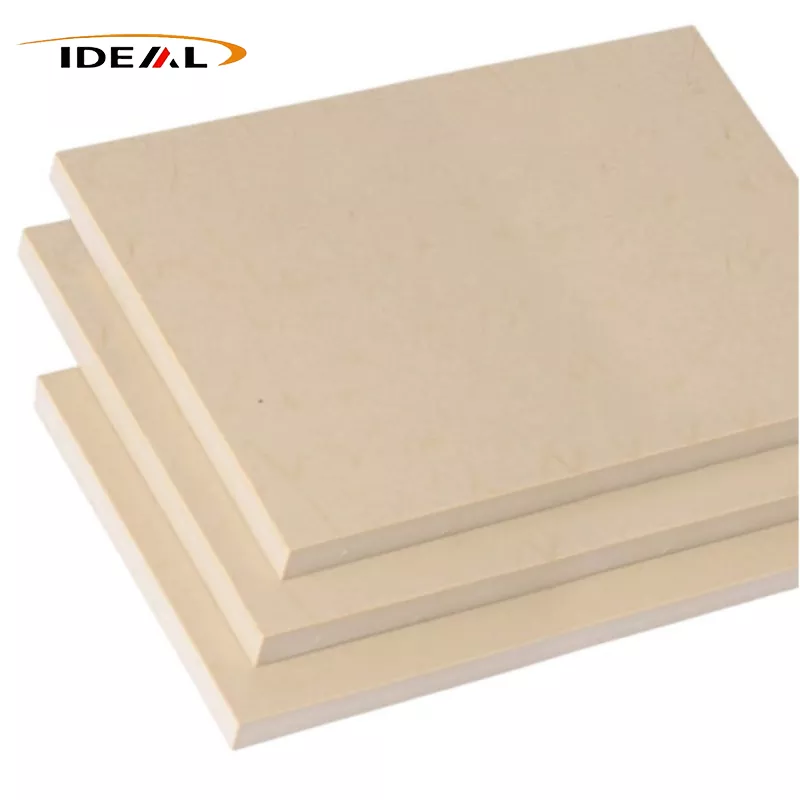
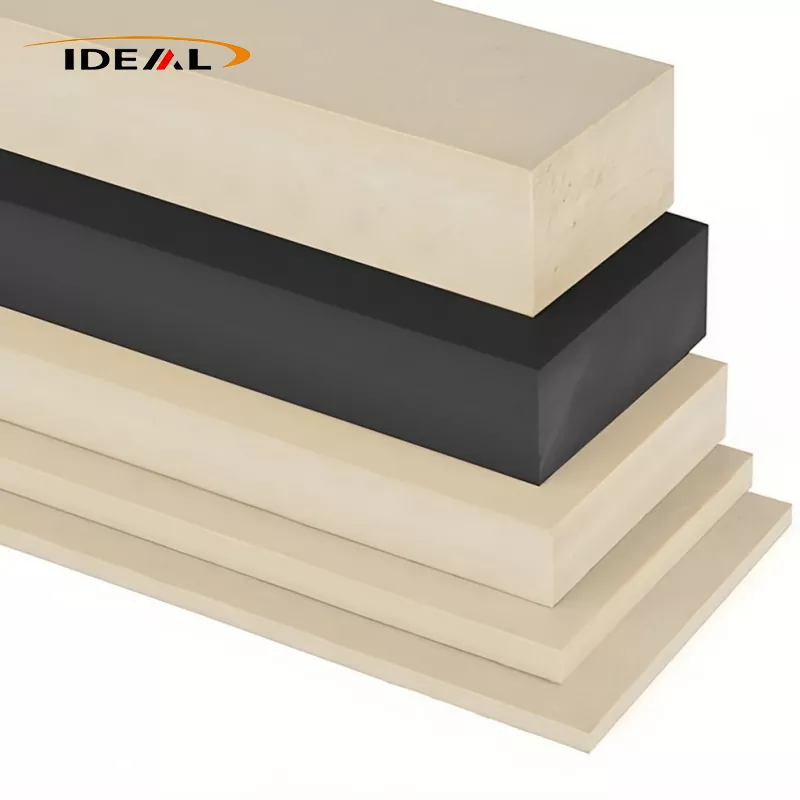
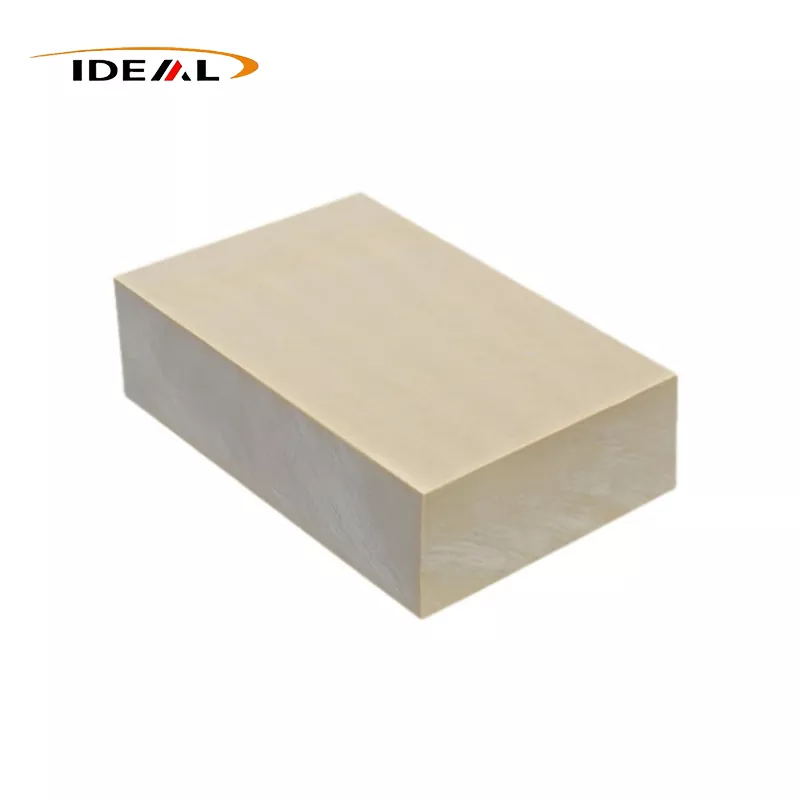
Glass Fiber Filled PEEK plates is a glass fiber-reinforced PEEK profile. PEEK’s scientific name is polyetheretherketone—its molecular structure is packed with benzene rings linked together by ketone and ether bonds. That’s what gives it such great heat resistance and mechanical strength right out of the gate.
Glass Fiber Filled PEEK plates is basically PEEK with glass fiber added. The glass fiber really boosts the material’s mechanical performance: think higher tensile strength, better flexural strength, and improved stiffness. For instance, with 30% glass fiber content, this material can reach a tensile strength around 200 MPa and a bending modulus over 12 GPa. Glass fiber also helps with dimensional stability—it lowers the thermal expansion coefficient, so it holds its shape well even under heat. Plus, it wears really well, which makes it a good fit for parts that need to handle friction.
Here at GuangZhou Ideal, we make Glass Fiber reinforced PEEK plate using PEEK resin from well-known suppliers. With more than fourteen years of experience in production and R&D, plus advanced equipment and tight quality control, our product performs at the top of the field. And when it comes to dimensions, we can hit the specs our customers need.
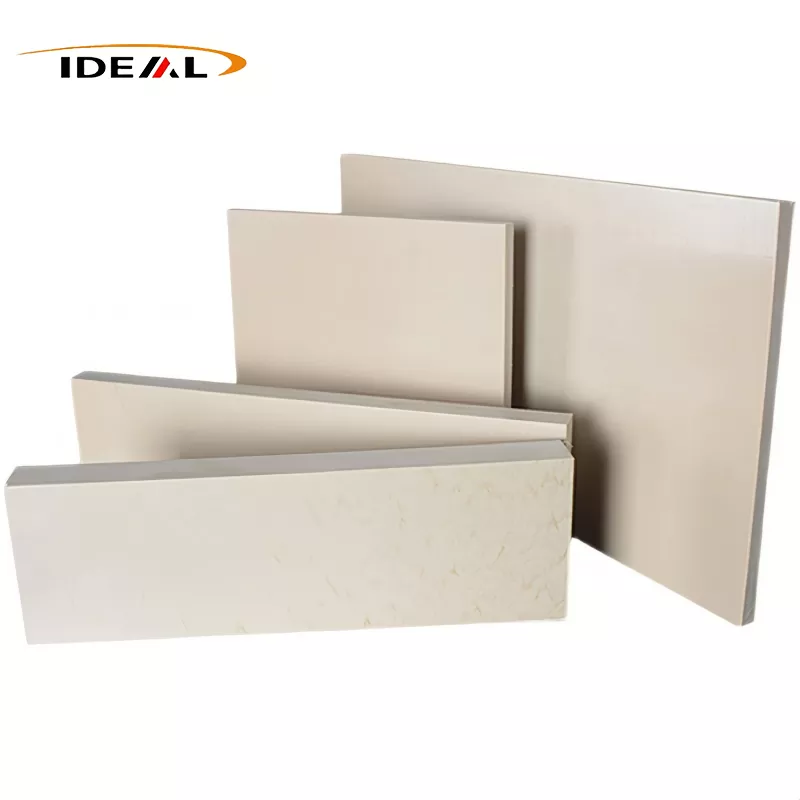
We stock a wide range of standard sizes, so we can ship quickly. We also provide free cutting—just tell us the size you want, and we’ll slice the profile to your exact requirements.
|
Product name |
PEEK GF30 plate |
|
Material |
Glass fiber filled PEEK |
|
Color |
Nature |
|
Breadth |
600mm-1250mm |
|
Thickness |
3mm - 100mm |
|
Tolerance |
±0.02mm |
|
Certificates |
ISO9001:2012, REACH, ROHS |
|
Delivery time |
Standard sizes ship on the same day; custom sizes take 7-10 days. |
|
sample |
Free |
1.Mechanical Properties:
Glass Fiber Filled PEEK plates is really strong and stiff—it has a tensile strength over 100 MPa and performs great under bending, too. It's also tough and impact-resistant, and even at high temperatures it stays strong. Overall, it beats most common thermoplastics in mechanical performance.
2.Improved Friction & Wear:
Adding glass fiber makes PEEK way slicker—its friction coefficient drops from around 0.3–0.4 (for pure PEEK) down to 0.15–0.2. Wear rate can be cut by about ten times, too. But if you go overboard with glass fiber (more than 40%), it can start wearing down the parts it rubs against. That’s why it's often blended with lubricants like PTFE or graphite.
3.Radiation Resistance:
If Glass Fiber reinforced PEEK plate sits in radiation for a long time, the surface might get a little harder or brittle. But radiation doesn’t really hurt its strength or durability, so it can still last a long time in radioactive spots.
4.Heat Resistance & Dimensional Stability:
Pure PEEK starts deforming around 143°C under load, but add 30% glass fiber and that jumps past 315°C. Glass fiber also helps spread heat and doesn’t expand much when hot (around 5–10 × 10⁻⁶ per °C), so it holds its shape well in high heat. That’s why it’s great for hot environments, like insulation parts in jet engines.
5.One catch: glass fiber makes the melt thicker, so you need to mold it hotter—usually 380–400°C, about 10–20°C higher than pure PEEK. But that also means less shrinkage: molding shrink drops from 1.2% (pure PEEK) to just 0.3–0.5%, so finished parts come out more precise.
6.Fatigue Resistance:
PEEK GF30 plate handles repeated stress really well—it stays tough and keeps performing over time without wearing out easily.
1.Glass Fiber Filled PEEK plates, which is PEEK plastic, is seriously impressive stuff when it comes to planes, rockets, and transportation in general. Thanks to its toughness and chemical stability, it’s a go-to material for aerospace parts—you’ll find it in everything from structural components to small fittings. Even under extreme conditions, it holds up really well, helping equipment perform more safely and reliably.
2.In electronics and appliances, PEEK is just as handy. It’s a great insulator, handles high heat like a champ, and is easy to work with—pretty much the perfect match for electrical products. Whether it’s used in high-end circuit boards or as support for sensitive components, it doesn’t flinch, even in really demanding situations.
3.The medical field loves PEEK too. It’s biocompatible, non-toxic, and stands up to sterilization and chemicals without a problem. That’s why you’ll see it in all kinds of medical devices—doctors and engineers trust it because it’s both safe and durable.
4.PEEK GF30 plate is also gaining ground in fast-growing sectors like new energy and electronics. In areas like electric vehicles, wind turbines, and solar power, it’s shaping up to be a key material thanks to its performance under stress.
5.You’ll even spot PEEK in high-end consumer goods. Because it’s so tough and wear-resistant, it’s used in things like precision watch movements and high-performance sports gear.
6.Then there’s humanoid robotics—where keeping things light is everything. You want more carrying capacity without killing battery life. Here, Glass Fiber reinforced PEEK plate really shines: it’s stronger and lighter than aluminum and could very well become the future “skeleton” material for next-gen robots.
Hey, we're GuangZhou Ideal, and we make Glass Fiber Filled PEEK plates. We’ve got all the professional gear for testing, plus a whole team just focused on quality. Every single product gets checked one by one—no exceptions. It goes through a tough testing routine to make sure it meets what customers want and fits industry standards. We’ve always done it this way, so you can buy and use our stuff with total confidence.
1. Returns & Exchanges
If there’s a quality issue, the size doesn’t fit, or anything else that keeps you from using the product—whether it’s semi-finished or custom-made—just let us know as soon as you can. If it’s our fault, we’ll handle the return or exchange and cover shipping both ways.
If you ordered the wrong item or want to return for personal reasons (especially with profile blanks), that’s usually okay too—as long as it’s still in resalable condition. In that case, you’d just need to take care of the shipping costs.
2. What equipment do you use?
Our factory runs full-scale plastic profile production lines, plus a range of CNC machines and machining centers—including 4-axis and 5-axis set-ups. We’ve also got engraving machines and laser cutting gear. Oh, and our injection molding workshop is a 100,000-class cleanroom—super clean and completely dust-free.
3. Can I get samples?
Absolutely. If it’s a semi-finished profile we already have in stock, we can send samples free—you’d just cover shipping. And don’t worry, the sample will match the performance and specs of your actual order later on.
4. What’s the smallest order you accept?
With semi-finished profiles, even a single piece is fine. For custom machined parts, it varies by the process and dimensions—so let’s talk details and we’ll find what works.
5. How long does delivery take?
If it’s a stock profile, we ship as soon as payment comes through. For custom orders, timing depends on the quantity and how complex the job is—just share what you need and we’ll give you a realistic timeline.