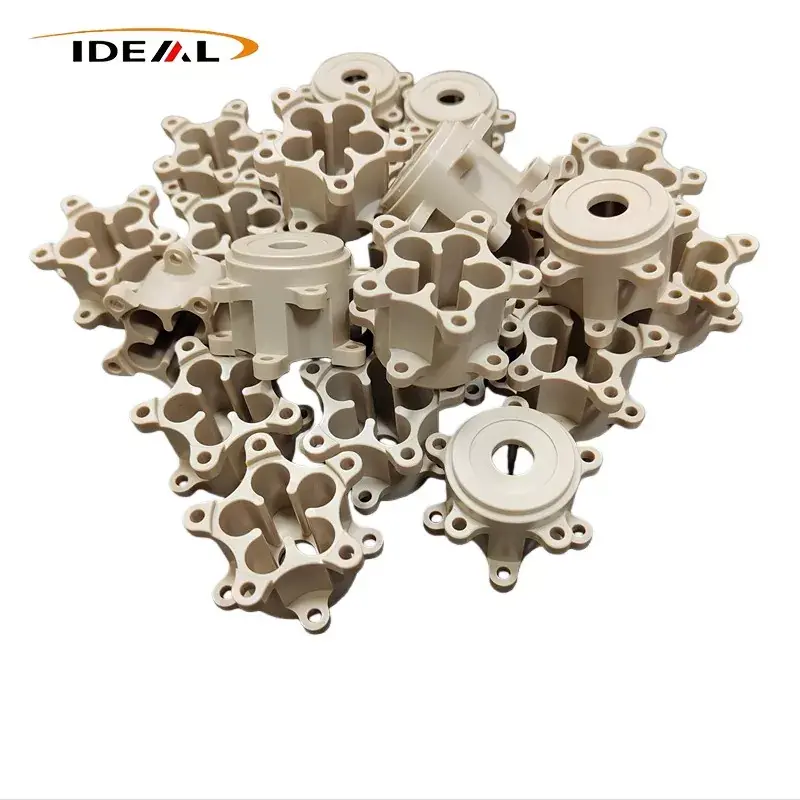
So, PEEK machined products is made from this stuff called PEEK. PEEK is a type of special engineering plastic—it’s part of the polyaryletherketone family. Basically, it’s made by combining several monomers that have aromatic, ether, and ketone groups. This material is pretty awesome—it’s strong, stiff, resistant to wear and peeling, and it’s also easy to work with. Plus, it’s got great chemical stability and is biocompatible.
When it comes to making things out of PEEK machined products, we usually go with injection molding, machining, or compression molding.
Injection molding is when we take PEEK pellets or powder, heat them up until they melt, and then inject that into a mold using a special machine. That way, we can create parts, pipes, or sheets in all kinds of shapes.
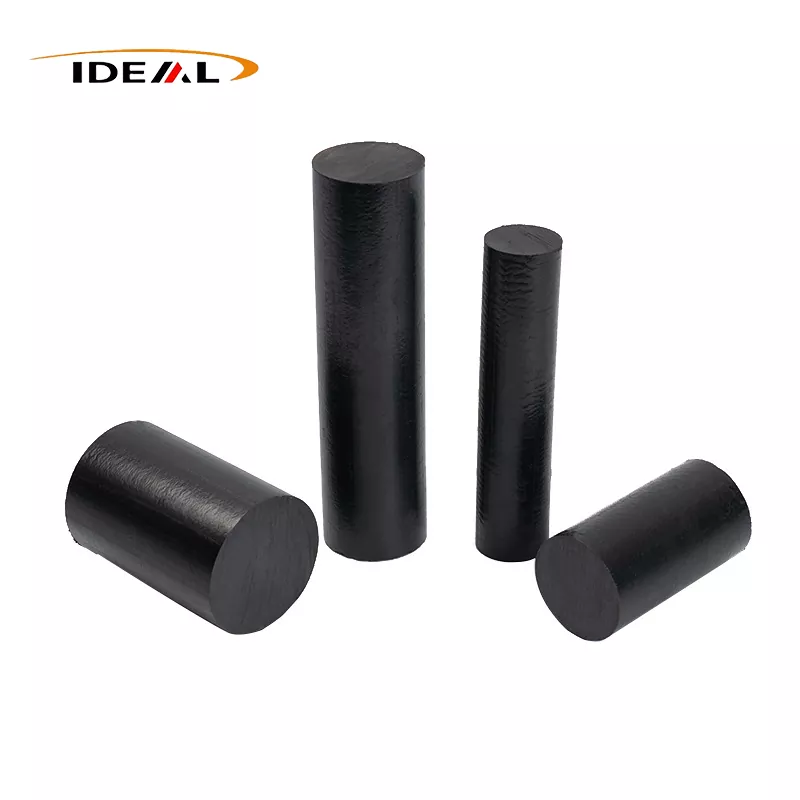
Machining is another option—we start with ready-made PEEK blocks or rods, and then use things like lathes or milling machines to shape them into the exact part you need. This works really well for smaller orders or when you need really high precision.
Then there’s compression molding. Here, we put the material into a mold, heat it, and add pressure to melt and shape it. It’s a good fit for complex designs or smaller batches.
The cool thing is, we handle everything in-house for GuangZhou Ideal—from developing the mold all the way to processing the final PEEK product. Our workshop is stocked with all kinds of professional machines, and we’ve been making PEEK machining product for more than ten years. Our tech team has solved all sorts of challenges along the way, so our process is pretty solid by now. Over the years, we’ve worked with thousands of customers, both locally and internationally, and the feedback we get is always really positive.
|
Product name |
PEEK machined products |
|
Material |
Pure PEEK, fiber-reinforced PEEK, abrasion-resistant PEEK |
|
Color |
Nature,black and custom color |
|
Size |
ODM/OEM/Drawing |
|
Tolerance |
According to customer requirements |
|
Forming method |
according to product shape and order quantity |
|
Minimum order quantity |
negotiation |
|
Lead time |
10-15 days |
1.Handles Heat Like a Champ
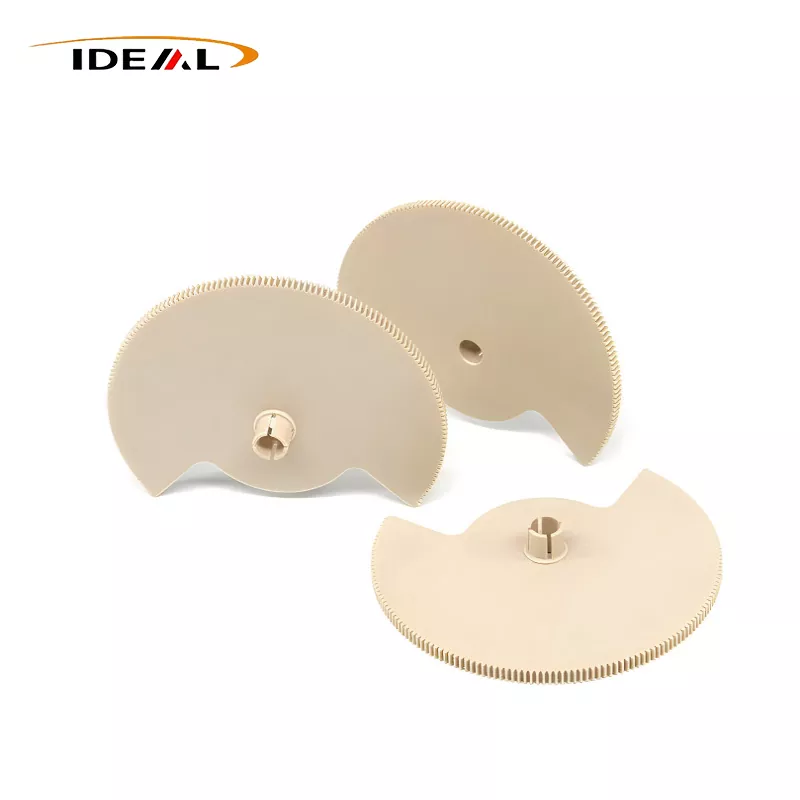
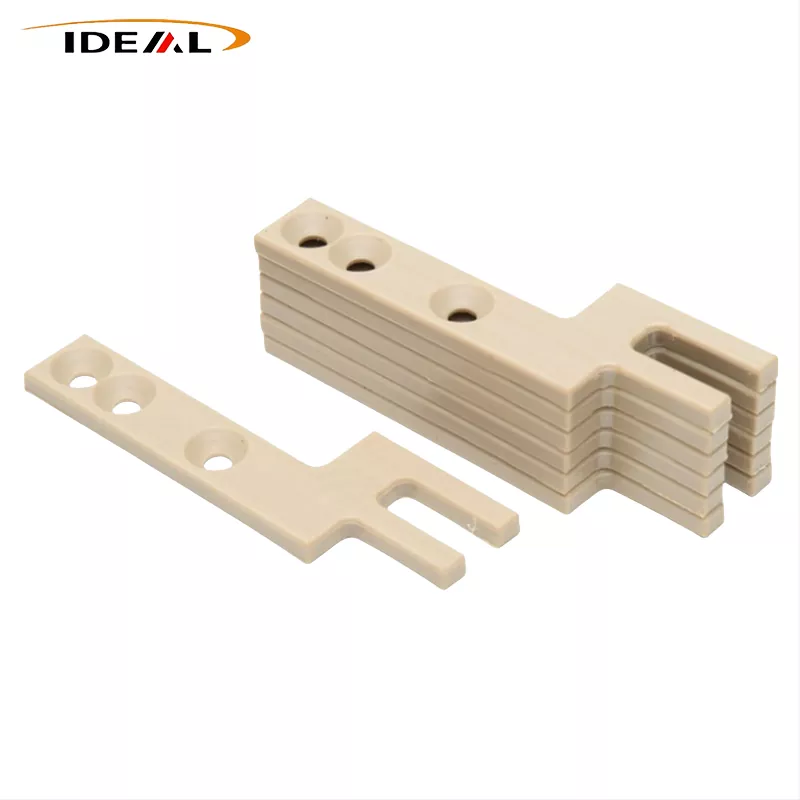
PEEK machining product isn’t afraid of heat. We’re talking a melting point of 343°C, and it doesn’t even start to soften until 143°C. This means that it can work in an environment of 260 ℃ for a long time, and even if it reaches 300 ℃ in a short period of time, there is no problem.. And get this—at 400°C, it still hardly breaks down. It’s also seriously resistant to aging: after sitting at 250°C for 3000 hours, it’s still stiff and strong when you try to bend it—no softening whatsoever.
2.High strength and rigidity
PEEK is both rigid and tough. On its own, it has a tensile strength around 90–100 MPa, and bending strength between 140–165 MPa. Add some fibers into the mix, and it gets even stronger. It’s also great at handling repeated stress—its fatigue resistance is right up there with some metal alloys.
3.Not afraid of corrosion
PEEK machined parts stays cool around almost all chemicals thanks to its tight molecular structure and stable chemical bonds. Only seriously aggressive stuff like concentrated nitric acid or fuming sulfuric acid can make it swell just a little. But unlike regular plastics, it won’t fall apart or melt—it holds its ground.
4.Won’t Easily Catch Fire
Another plus—PEEK is naturally flame retardant. It meets the UL94 V-0 standard (tested at 1.6 mm thick) without needing extra additives. If it does burn, it produces very little smoke and no toxic gases. That’s why it’s a go-to material in planes and electronics where safety is a big deal.
5.Fatigue resistance
When it comes to handling repeated stress over time, PEEK is one of the best thermoplastics out there. It stays stable and doesn’t wear out easily, even under long-term loading.
6.Resists “Slow Deformation” (a.k.a. Creep)
PEEK machined products is also great at resisting creep—meaning it won’t slowly stretch or deform under constant pressure, even in hot, high-pressure, or heavy-load situations. Thanks to its special molecular structure, it keeps its shape and doesn’t give in over time.
1.In the aerospace world, PEEK plastic is a go-to material for all sorts of parts on planes—things like connectors, bolts, and nuts. It’s strong, light, and doesn’t rust, which helps make the whole aircraft a lot lighter.
2.When it comes to medical tools, PEEK machining product really shines. Surgical forceps and handles made from it can handle being sterilized again and again—even under high-pressure steam at 260 ℃—and they barely change. You can toss them around through tons of cycles, and they’ll still keep their strength, losing less than 5% of it. Catheter connectors are another win: they can sit in chemical disinfectants for thousands of hours without swelling up or cracking.
3.For machinery, PEEK is a tough player. It stands up to heat, high pressure, and corrosive stuff. Plus, it doesn’t wear down easily and has low friction, which makes it perfect for seals, gaskets, bearings, gears—anything that tends to get worn out. You’ll also spot it in pumps, valves, nozzles, and fluid channels.
4.PEEK machined parts is getting more popular in conveyor systems too, thanks to its durability, heat resistance, and ability to handle chemicals. It’s a solid choice for conveyor plates, wheels, guide rails, and pipe connectors—they just last and last.
5.Over in the electronics industry, people love PEEK because it’s a great insulator, handles high temperatures, and doesn’t soak up moisture. That’s why it’s often used in electronic packaging, circuit boards, and chip carriers.
6.And now in AI and robotics, PEEK is stepping in to replace metal in things like robot joint frames, gears, and bearings. This swap cuts down weight by about 40%, but it’s still super strong—tensile strength can hit 200 MPa. That means robots can move more smoothly and carry heavier loads without a problem.
GuangZhou Ideal's got some really nice equipment, and we don’t stop there—we’re always investing in R&D and upgrading their gear. we know what we’re doing, with tons of experience and solid tech behind them. When it comes to making PEEK machined products, they pay close attention to every step, making sure everything’s precise and the quality is on point.
And our service? Seriously good. From the first time you reach out, through the whole production process, all the way to after-sales support—they’ve thought of everything. You never have to worry about being left hanging. Their tech support really knows their stuff, and they get back to you fast. Working with them is just… easy. You can actually relax.
1.What does your company do?
We’re Guangzhou Ideal Plastic Technology Co., Ltd. Our company was set up in Hong Kong back in 2011, and our factory is based in Huangpu, Guangzhou. We mainly focus on developing and making semi-finished profiles using special engineering plastics—like PEEK, PAI, PI, PPS, PPSU, PEI, and others. Besides that, we also handle CNC machining and injection molding to help turn materials into finished parts for our customers.
2.What’s the minimum order quantity?
For semi-finished profiles, we can start with a small order. If you’re looking for custom parts, let’s talk details—like how they’ll be made and the size—so we can figure out what works.
3.How to pay?
Before starting production, you need to pay a partial deposit first. Wait until all the goods are completed before settling the final payment. We will arrange shipment as soon as we receive the final payment. You can make payment to our Hong Kong HSBC bank account, or through your designated freight forwarder.
4.What certifications do your products have?
Our company is certified with ISO9001:2008 for quality management. Our products also have SGS, CE, and RoHS certifications, and meet environmental standards like REACH, EN71, and others.
5.What’s your return or exchange policy?
If there’s a quality issue, a mistake on our end, or anything that keeps you from using the product, contact us right away. Once we confirm the situation, we’ll handle the return or exchange and cover the shipping. If you just ordered the wrong thing or changed your mind (especially with raw profiles), as long as it’s still in sellable condition, we can still help—but you’d need to cover the return shipping.