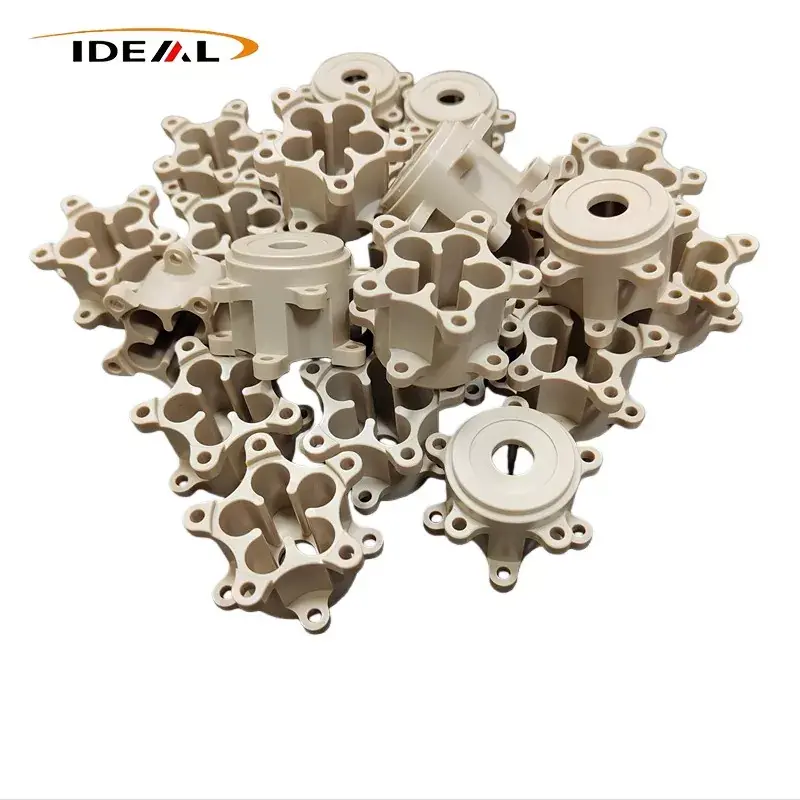
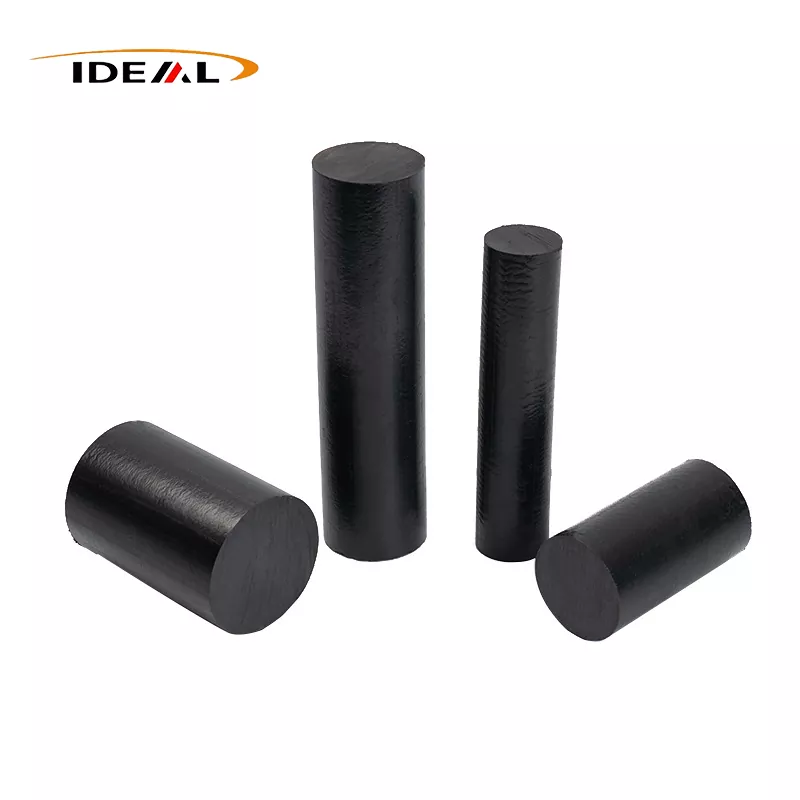
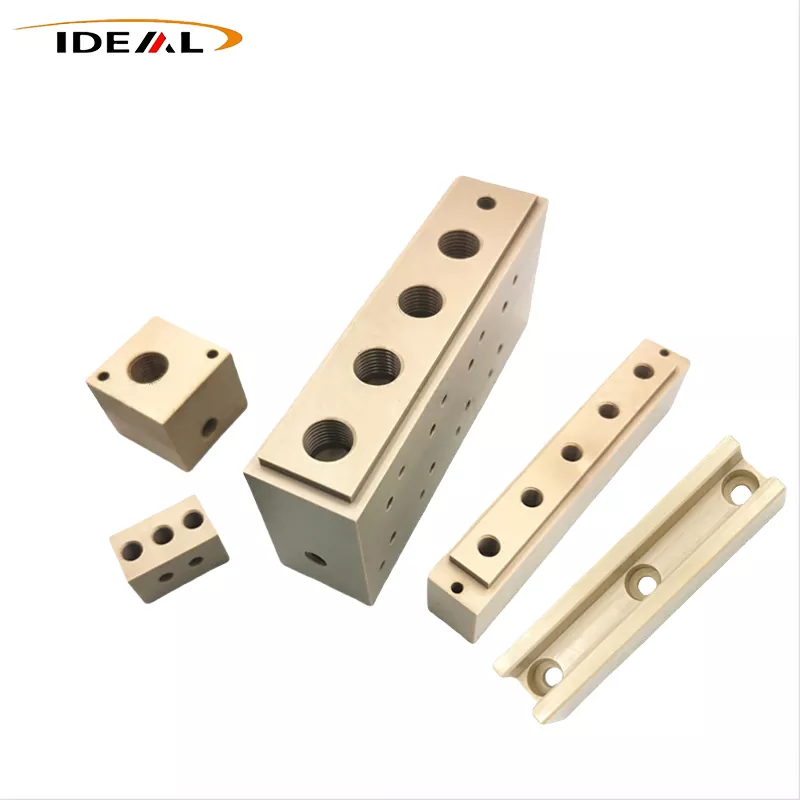
The PEEK injection molded parts part made by Guangzhou Ideal Company uses PEEK material. So what’s PEEK exactly? It’s actually a high-performance specialty plastic—part of the polyaryletherketone family. You can think of it as a tough engineering plastic that’s really stable, handles high heat, stands up to chemicals and radiation, and is strong, wear-resistant, impact-resistant, and still easy to work with.
PEEK injection molded parts is made by injection molding. Basically, they melt the PEEK plastic, inject it into a mold, and then take it out once it’s cooled down and solidified. This approach works really well for mass-producing parts with complex shapes, tight tolerances, and great mechanical properties. The upside? Low cost per part, efficient material use, and consistent sizing. On the downside, the production cycle can be longer, and it demands a lot in terms of mold design and process control.
Now, during injection molding with PEEK, sometimes you can run into “warping.” That usually happens when the plastic doesn’t shrink evenly as it cools. Think about it—if everything shrinks at the same rate, the part just gets a bit smaller but stays in shape. But if one part shrinks more than another, things start to bend or twist.
Luckily, Guangzhou Ideal has plenty of experience dealing with this kind of issue. They’ve got high-end equipment like CNC machines, machining centers, and cleanrooms, plus a team of skilled engineers who really know their stuff. Over the past ten years, they’ve developed thousands of PEEK injection molds and handled all sorts of production challenges. So even if PEEK injection part ends up with cosmetic or performance issues—like water streaks, flow marks, black specks, rough surfaces, bubbles, sink marks, or warping—they know how to tackle them. By fine-tuning the mold design and adjusting the injection process, they can steer clear of these defects and make sure the final product comes out right.
|
Product name |
PEEK injection moulding part |
|
Material |
Unfilled peek, Glass Fiber Reinforced PEEK, Carbon Fiber Reinforced PEEK, bearing grade peek |
|
Size |
Custom |
|
Tolerance |
According to customer requirements |
|
Certificates |
ISO9001:2008, REACH, ROHS |
|
Mold development cycle |
10-20 days |
|
Mold lifespan |
600000-800000 mold cycles |
|
Minimum Order Quantity (MOQ) |
Negotiated decision |


Alright, let's talk about PEEK injection molded parts material. This stuff is seriously tough—it's got high strength, good rigidity, can handle high temperatures, resists wear and tear, and stays chemically stable. No wonder so many industries are using it these days.
It can take a hit
Pure PEEK has an impact strength around 60-80 kJ/m². Even when reinforced with glass or carbon fiber, it might dip slightly, but it's still way stronger than most other engineering plastics. What’s really cool is that even in freezing conditions like -40°C, it doesn’t get brittle. So yeah, it works fine in places where temperatures swing a lot.
Handles heat like a champ
Basic PEEK (without any fillers) can run non-stop at 260°C, and can even handle short bursts up to 300–310°C. At high temps, it keeps about 90% of its toughness. If you add glass fiber, its heat deflection temperature hits 316°C—it can sit at 315°C for 1500 hours no problem. Carbon fiber-filled PEEK also handles 316°C and doesn’t warp easily under heat. At 250°C, it still keeps a bending strength of 12–13 MPa, which is roughly 15% better than unfilled PEEK. The version with PTFE filler keeps similar heat resistance (long-term 260°C), though PTFE might lower the heat deflection temp just a bit.
Slippery and hard to wear out
PEEK injection molded parts has a really low friction coefficient and wears slowly. That means less energy loss, less heat build-up, and less damage over time. When you use it in moving parts like gears or bearings, it not only boosts efficiency but also makes them last longer.
Good with electricity—stays insulating
PEEK is naturally a great insulator. Even when things get rough—high heat, high voltage, or damp conditions—its electrical insulation stays reliable. Its volume resistivity usually sits around 10¹⁵–10¹⁶ Ω·cm, dielectric constant is between 3.2–3.3 F/m, and at 1kHz frequency the dielectric loss is only 0.0016. Its breakdown voltage goes up to 17 kV, and it’s got decent arc resistance too, around 175V.
Fights off fatigue
PEEK injection moulding part holds up really well under repeated stress. It can take load cycles again and again without wearing out quickly. That makes it a great fit for parts under constant motion—think transmission components in machinery or sports gear.
Doesn’t like to burn
PEEK is naturally flame retardant—it tends to put itself out and isn’t easy to ignite. That’s a big reason why it’s a go-to in fields like aerospace and electronics, where fire safety is a top concern.

Aerospace Technology

artificial intelligence
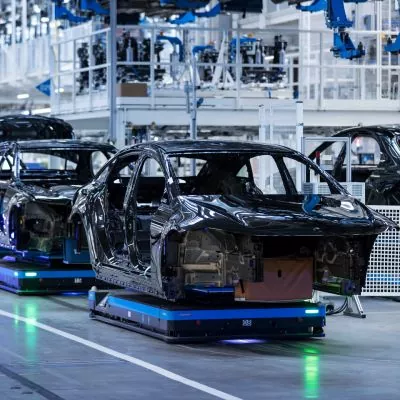
automotive industry

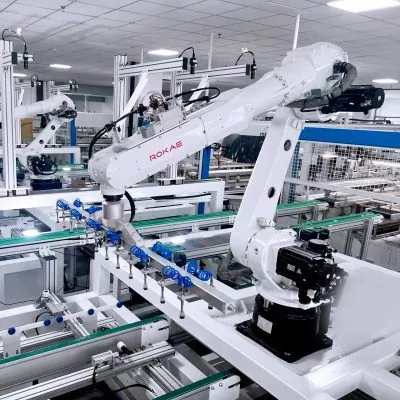
conveyor

energy device
mechanical parts
Hey there! Let us introduce ourselves—we're GuangZhou Ideal, a leading manufacturer based in China, specializing in PEEK injection molded parts.
We’ve got a pretty impressive setup to make sure we deliver top-quality products. Our facilities include a large-scale production line, all kinds of CNC machine tools, CNC machining centers, and even five-axis machining centers. We also work with CNC engraving machines, laser cutting equipment, and a 100,000-class dust-free injection molding workshop.
But it’s not just about the machines—we have a talented team of skilled professionals who know their stuff. Over the years, we've built strong partnerships with thousands of companies, both here in China and around the world.
So if you’re looking for a reliable partner for PEEK injection part, we’d love to hear from you. Get in touch—we’d be happy to work with you!
What kind of customization do you offer?
You can send us your 2D or 3D files—we take all the common types like STEP, STP, STL, IGS, IGES, PRT, SLDPRT, SAT, and X_T. If you’ve got a physical sample, just mail it to us and we’ll take the measurements. We’re also happy to design something from scratch or tweak an existing product based on what you need.
Is there a minimum order quantity?
For semi-finished profiles, we can do even just one piece. If it’s a custom part, we’ll need to talk details—like how it’s made and the size—to figure out the minimum.
Can I get a sample?
For semi-finished profiles, if you need a sample to test things out, we can usually send one at no charge—as long as we have it in stock. You’d just cover the shipping. And don’t worry—the final product will match the sample’s specs exactly.
How can I pay?
We’ll ask for a deposit to get things rolling. Once everything’s made and ready to go, we’ll collect the remaining balance before shipping. You can pay into our HSBC Hong Kong account or arrange payment through your freight forwarder.
How long does production take?
If it’s a profile we already have in stock, we ship as soon as we receive your payment. For custom orders, timing depends on the quantity and how complex the job is—let’s discuss it when you place your order.