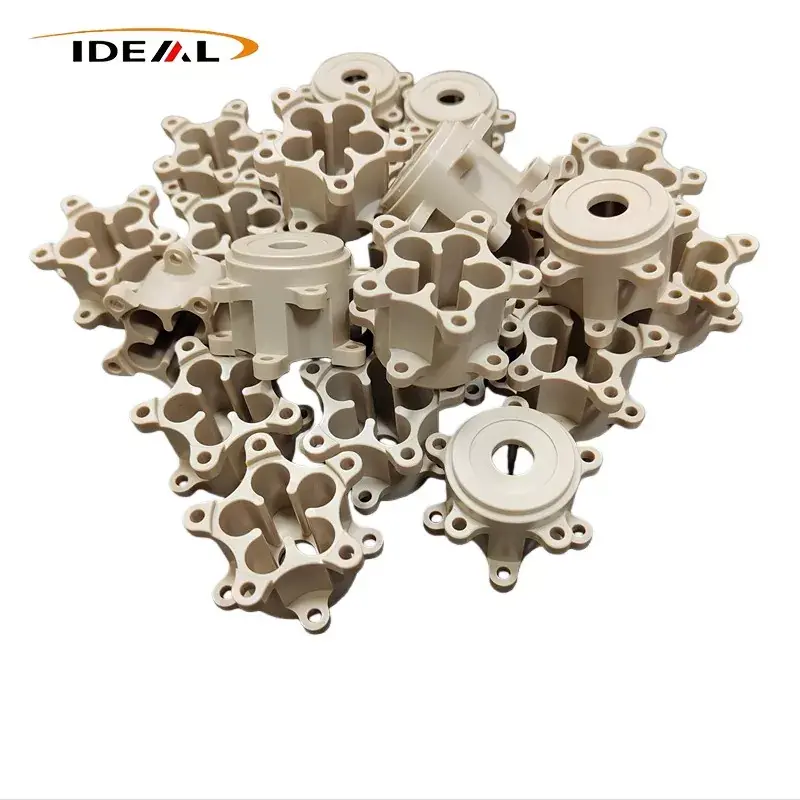
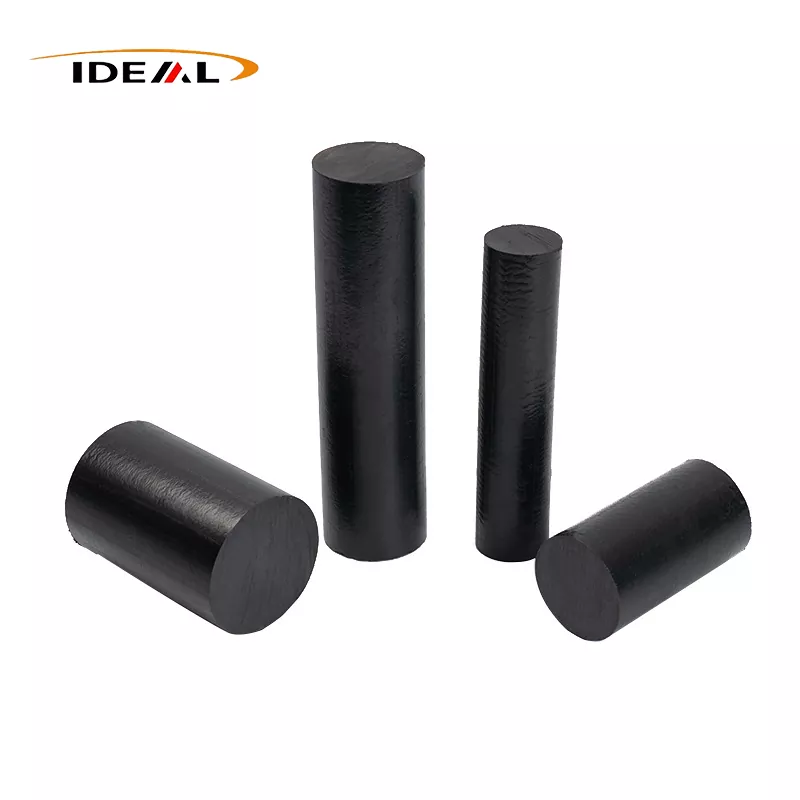
CNC PEEK product is basically made from these PEEK profile blanks. we start with that as the raw material, and then use CNC machines to precision-cut and shape it into the final product.Now, about PEEK — it's a special kind of engineering plastic, a thermoplastic to be exact. Its molecular structure has these benzene rings, linked together by ketone groups and ether bonds. Because of that unique setup, it’s really stable, can handle high temperatures, resists corrosion, and overall, it’s just a high-performance material.
For CNC PEEK product, we use different types of CNC machines, each with their own role:
1.CNC lathe: It spins the material while the cutting tool stays in place. Great for round stuff like shafts or disks, especially when working with materials like PEEK. Super precise.
2.CNC milling machine: This one needs us to change tools manually, and it can’t run multiple steps non-stop. Mostly used for milling flat surfaces, curves, or cutting slots.
3.CNC machining center: Usually 3 or 4-axis, it changes tools automatically and can handle drilling, milling, boring, and tapping all in one setup. Perfect for complicated parts that need multiple operations—like housings or odd-shaped components. Also good for bigger batches.
4.5-axis machining center: Adds one more rotating axis, so the tool can move freely in any direction. Ideal for complex shapes like impellers or aircraft parts, all done in one go.
5.CNC engraving machine: Super accurate—up to 0.001mm. It’s the go-to for engraving text or patterns, whether you want it raised, see-through, or cut out. Also really good for thin-walled or small delicate parts with detailed designs.
We’ve put a lot into these machines for GuangZhou Ideal, so when it comes to making CNC PEEK part, we’ll pick the right equipment based on the shape of the product and order size. We’ve got the experience and the tools—so whatever custom parts you need, we can make it happen.
|
Product name |
PEEK CNC products |
|
Material |
Pure PEEK, GF30 PEEK, CF30 PEEK,HPV PEEK |
|
Color |
Nature,black and custom color |
|
Size |
ODM/OEM/Drawing |
|
Tolerance |
According to customer requirements |
|
Forming method |
according to product shape and order quantity |
|
Minimum order quantity |
negotiation |
|
Lead time |
10-15 days |
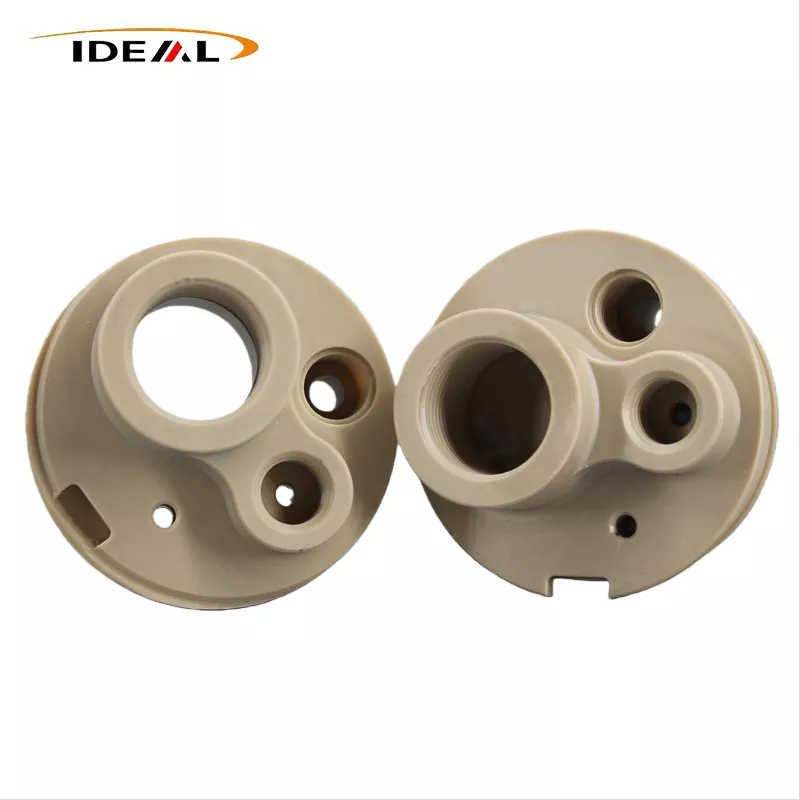
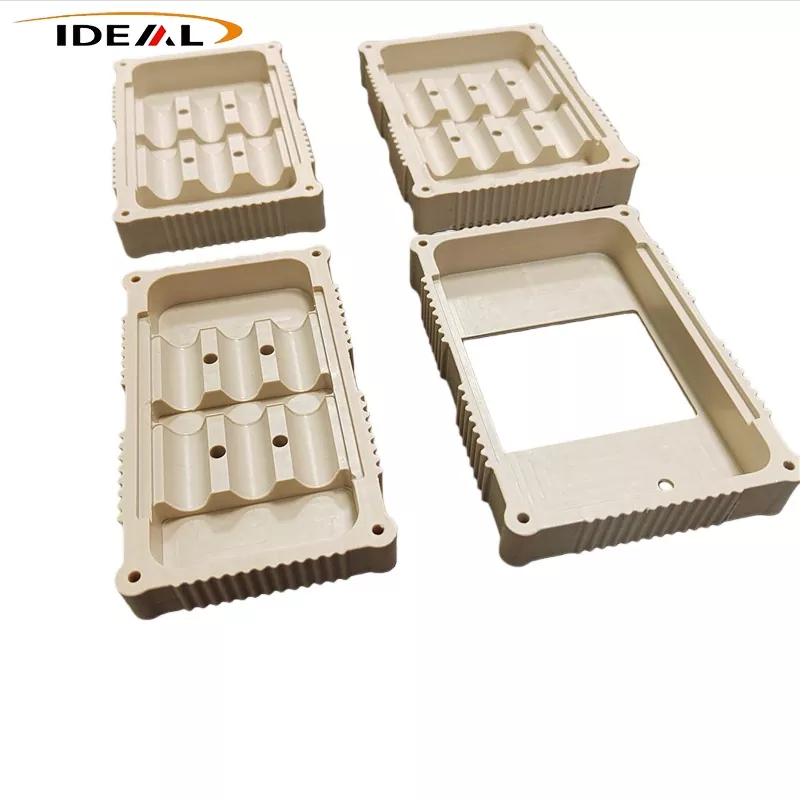
1.Good mechanical properties
CNC PEEK product has a tensile strength usually around 90–100 MPa—way stronger than most common engineering plastics. And if you mix in glass or carbon fiber, that number can shoot up to 150–250 MPa, putting it in the same league as some aluminum alloys. Its bending strength typically sits between 130–150 MPa, with a bending modulus around 3.5–4.3 GPa. Reinforce it, though, and that modulus can climb to 10 GPa, meaning this stuff is seriously stiff and hardly bends, even under heavy or long-term loads.
2.Self-lubricating
PEEK is like the non-stick pan of plastics—it’s got this slick molecular setup that basically makes its own lubricating layer. You don’t need to keep adding grease or oil, and it still wears really well over time.
3.Radiation resistance
CNC PEEK part handles radiation like a champ. Even in heavy gamma ray zones, it stays stable and doesn’t break down easily. It totally beats other plastics that claim to be radiation-resistant, which is why it’s often used in critical parts inside nuclear gear.
4.Hydrolysis resistance
You can leave PEEK sitting in 260°C steam or high-pressure water for thousands of hours, and it’ll still hold up strong. Honestly, it’s one of the best engineering plastics out there when it comes to handling moisture and steam. Even after hanging out in 200°C steam, its strength, weight, and look barely change.
5.Radiation resistanc
Yeah, PEEK CNC products is also seriously good with radiation. In fact, among all engineering plastics, it’s one of the top picks for handling gamma rays. It only starts getting brittle when gamma exposure goes above 10–12 million Gy. And beta rays? They barely make a dent, even at pretty high doses.
6.High temperature resistance
PEEK is one of the best thermoplastics around when things get hot. It melts at 343°C and is UL-rated for long-term use up to 260°C. It still holds up strong mechanically even at 300°C. Standard PEEK can handle heat deflection temps around 135–160°C, but mix in 20% glass fiber and that jumps to 286°C. Go up to 30% glass fiber, and you’re looking at 300°C.
1.In manufacturing, PEEK is like the go-to material when you need something super strong, durable, and able to handle high heat. That’s why it’s often used for important parts like compressor valves, piston rings, and seals. You’ll also find it in things like bearings, shaft sleeves, and gears.
2.Over in aerospace, CNC PEEK product really stands out because it can take the heat, resist radiation, and doesn’t catch fire easily. That makes it a great fit for aircraft engines, and you’ll even see it in some key parts of rocket engines.
3.When it comes to oil drilling, seals are a big deal—and PEEK is up to the task. It holds up under high temperatures, handles corrosion like a champ, and is plenty strong, so it’s just what the job calls for.
4.In the electronics world, CNC PEEK part is a popular pick for stuff like electronic packaging, circuit boards, and chip substrates. Why? It’s a good insulator, stands up to heat, and doesn’t soak up moisture.
5.Then there’s the food industry. PEEK plastic works well here because it doesn’t mind high temps or harsh chemicals. You’ll spot it in food processing equipment—think conveyor belts, machine parts, seals, and things like that.
6.And in chemistry and medicine, PEEK CNC products really shines with its corrosion resistance. A lot of lab tools that deal with chemicals—like bottle caps, pipe connectors, and isolators—are made from it.
Here at GuangZhou Ideal, we’ve built our own way of doing things—from product research and development to design, production, and after-sales support. We’ve got a team of experts and top-notch equipment, so we can offer all kinds of help with CNC PEEK product, whether it’s technical advice, custom design solutions, cost optimization, or anything else you might need.
How does customization work?
We can handle all the common file types you're likely using—STEP, STP, STL, you name it. If it's easier, just mail us a physical sample and we’ll figure it out from there. Got your own ideas or want to make a few changes? That’s totally fine—we can help design or adjust the product to match what you need.
Can I get samples?
Definitely! If we’ve got the semi-finished profiles in stock, we’ll send samples over at no cost. You’ll just need to cover the shipping. And no worries—the samples will be exactly the same as what you get in your actual order.
Is the performance of your products reliable?
We use materials from trusted brands, both local and international. Every batch comes with its own test report, and honestly, our product performance is among the best in the industry. If you’d like more detailed specs, just let us know—we’re happy to send over the full product info.
What’s the minimum order quantity?
For semi-finished profiles, we’re good with single orders. For custom parts, it depends on the processing method and the size of the product, so we’ll need to chat about that.
Can products be customized? How does that work?
Yes, customization is something we do regularly. You can send us 2D or 3D drawings—common formats like STEP, STP, STL, or IGS are all fine. If you’ve got a physical sample, just send it over and we’ll take care of the measurements. And if you have any special requests, we can also help with the design or tweak things to fit.