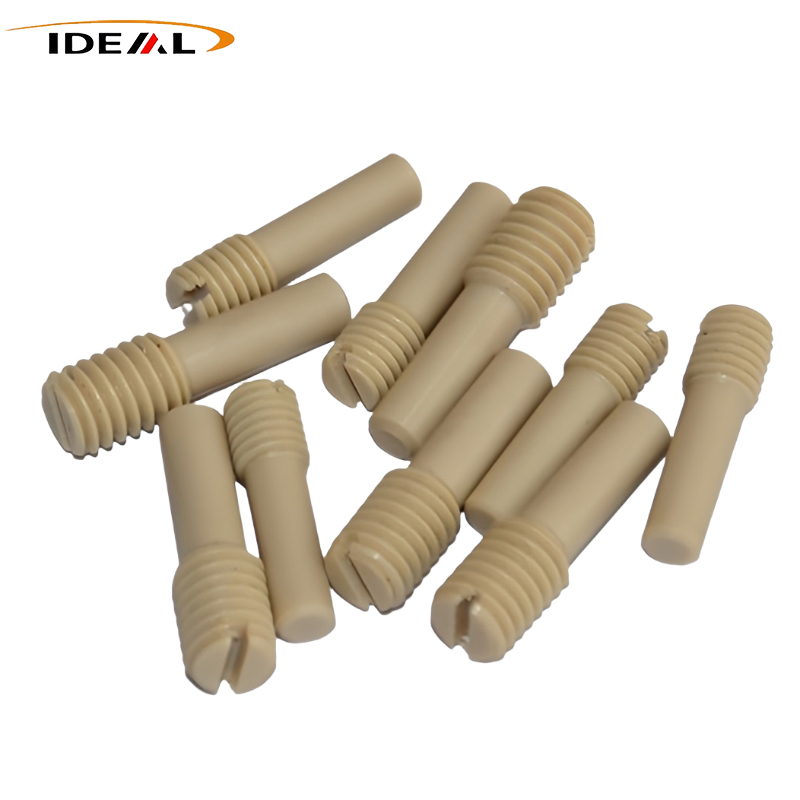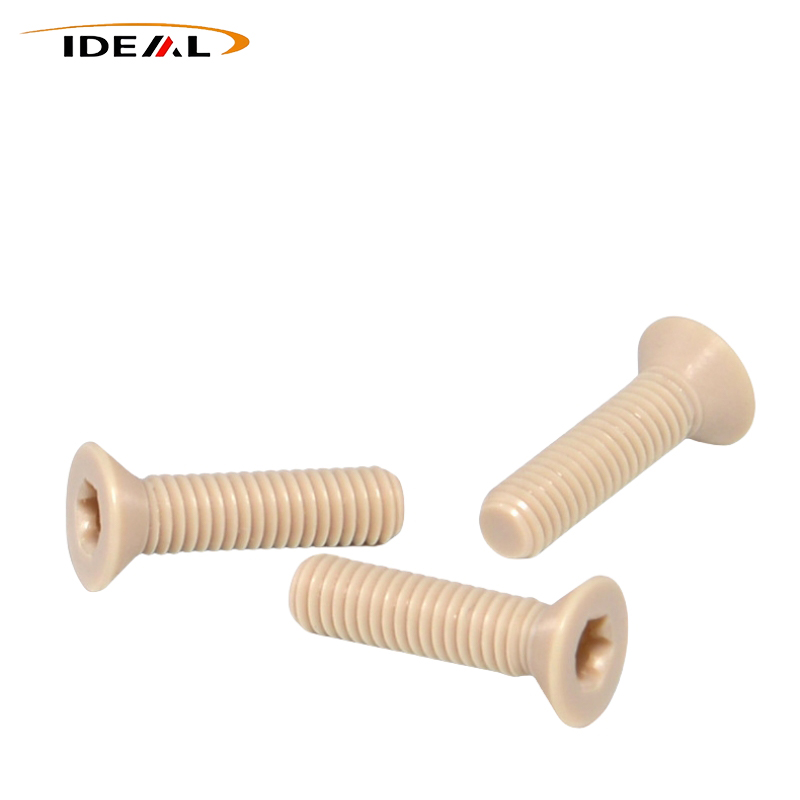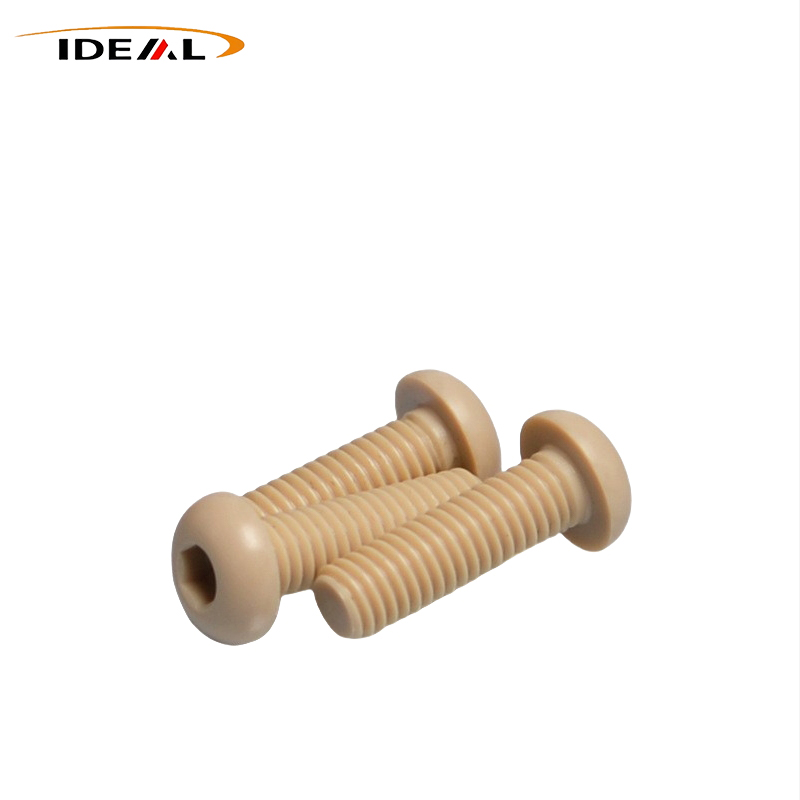
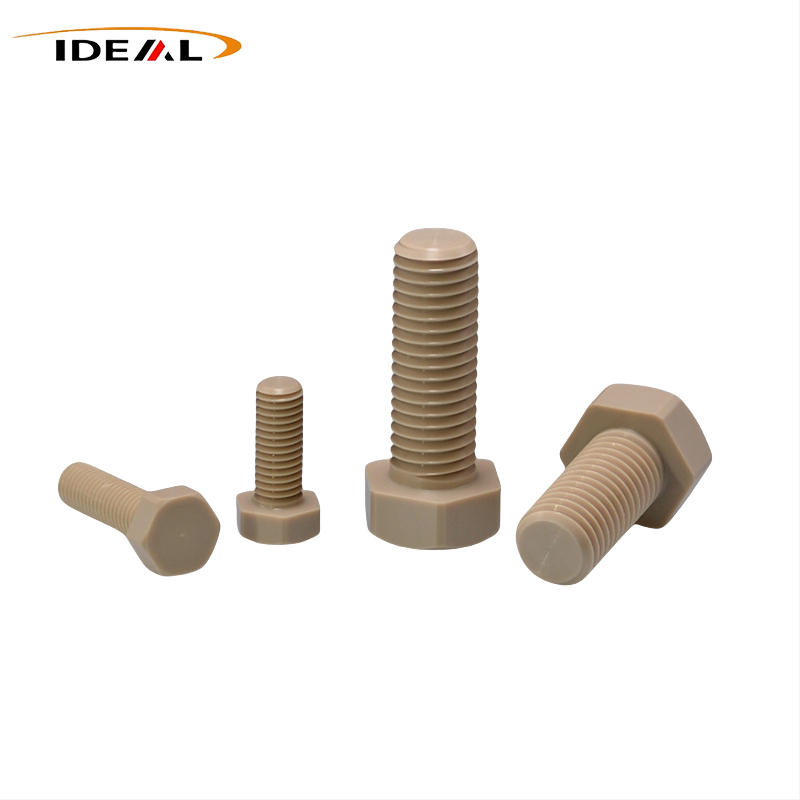
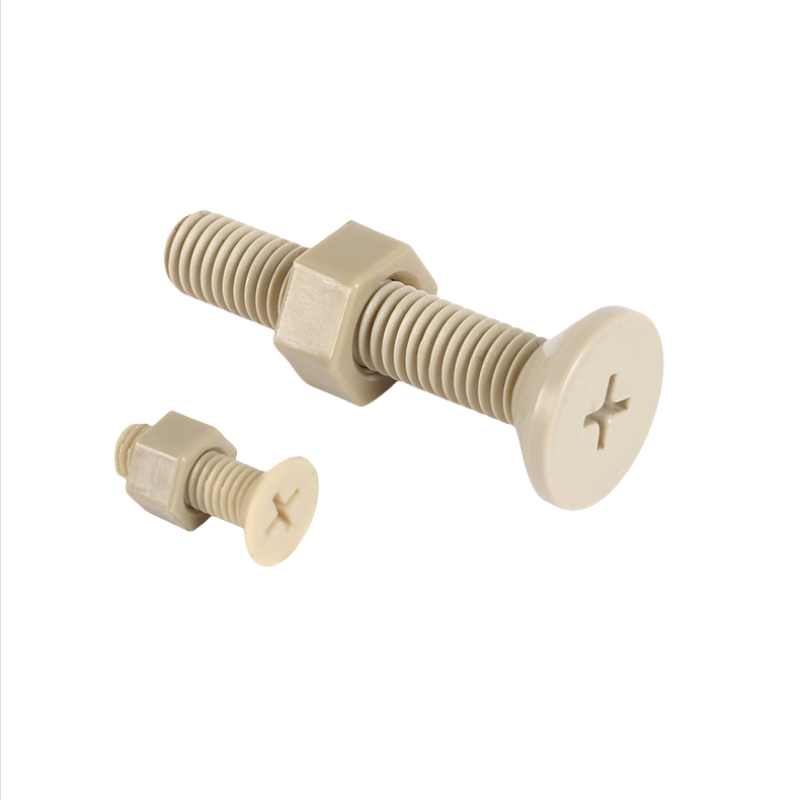
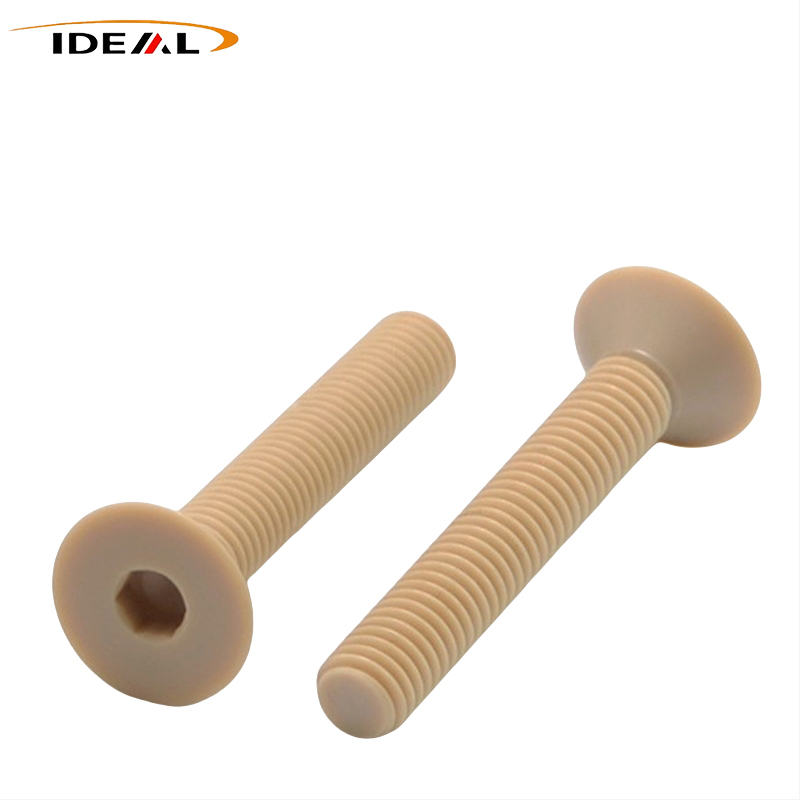
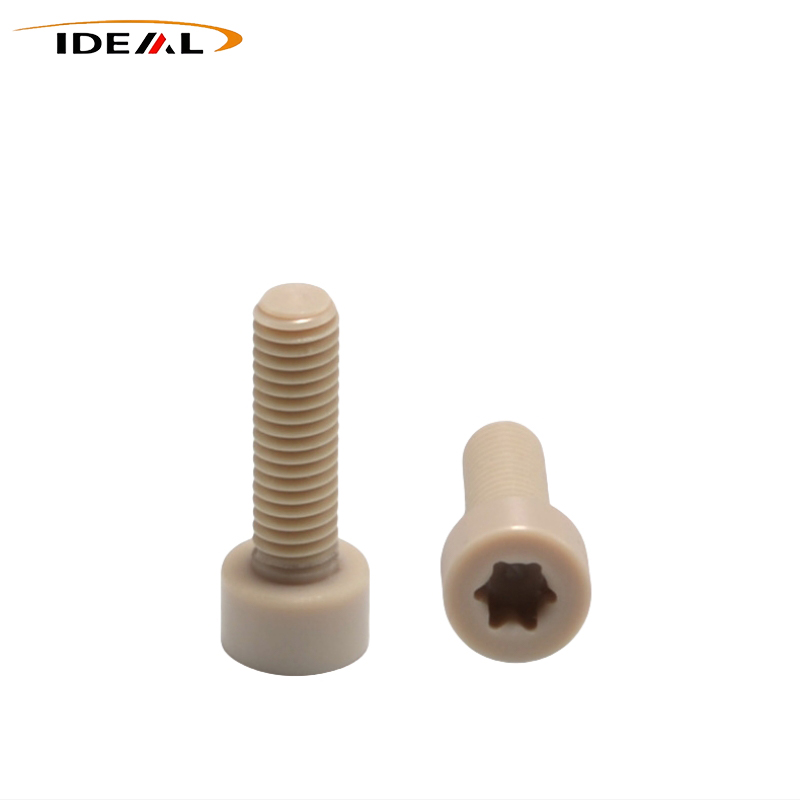
PEEK Bolts, also known as PEEK Screws or polyetheretherketone fasteners, are non-metallic fasteners made from PEEK (polyetheretherketone) base stock. Compared with metal bolts, they provide excellent chemical resistance, electrical insulation, non-magnetic performance and low weight for equipment assembly in harsh operating environments. Available in virgin PEEK and reinforced grades, PEEK Bolts support different requirements for strength, wear resistance, temperature resistance and dimensional stability.
Ideal Plastic is a China manufacturer of specialty engineering plastic components. Its PEEK Bolts are available in virgin PEEK, carbon-fiber-reinforced PEEK, glass-fiber-reinforced PEEK and lubricant-modified PEEK, with material and machining options selected according to the required temperature, chemical exposure, electrical properties, wear and dimensional requirements.
| Product Name | Polyetheretherketone (PEEK) Bolts |
| Material | Virgin PEEK, 30% Carbon Fiber Reinforced PEEK, 30% Glass Fiber Reinforced PEEK, PTFE + Graphite + Carbon Composite Lubricated Modified PEEK |
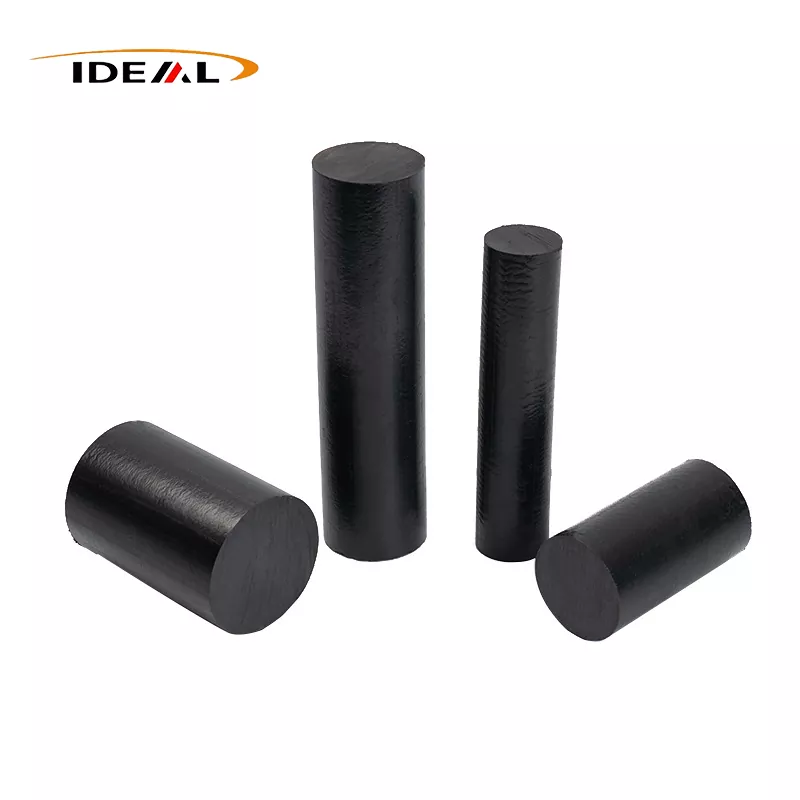
| Color | Black, Beige (Custom colors available) |
| Sizes | Metric, Imperial |
| In Stock Sizes | M2-M12 |
| Custom Sizes | M1.6, M1.7 (Very Small Sizes), M14 and above (Large Sizes) are almost never in stock and must be CNC customized |
| Thread Accuracy | Complies with ISO 965 / DIN13 thread standards; metric external threads: 6g accuracy; precision applications: 5g; imperial UNC: default 2A. Precision Applications (3A) |
| Coaxiality (TIR) | General industrial grade 0.05mm, semiconductor precision grade 0.02mm |
| Dimensional Tolerances | CNC precision machining: ±0.05mm-±0.02mm, High-Temperature Precision Injection Molding: ±0.15mm-±0.06mm |
The material grade determines the mechanical, electrical, friction and environmental characteristics of the finished fastener. PEEK Bolts are available in four material formulations for different operating conditions.
1. Virgin PEEK: High toughness, chemical resistance, electrical insulation, high elongation and good impact resistance. Suitable for semiconductor vacuum chambers, MRI equipment, pharmaceutical and food-processing machinery.
2. 30% Carbon-Fiber-Reinforced PEEK: Higher rigidity, creep resistance and wear resistance with a lower coefficient of thermal expansion. It is antistatic or weakly conductive rather than electrically insulating. Suitable for oil and gas equipment, high-temperature loads and fretting conditions.
3. 30% Glass-Fiber-Reinforced PEEK: Improved rigidity and creep resistance while retaining electrical insulation. It is suitable for high-temperature structural fasteners and tooling fixtures but is not recommended for sliding friction or high-cleanliness vacuum environments.
4. PTFE + Graphite + Carbon Modified PEEK: Provides very low friction and strong self-lubrication with reduced mechanical strength. It is mainly used for sliding-friction joints and is generally CNC customized.
PEEK fasteners are selected for properties that are difficult to obtain from conventional metallic fasteners. The actual performance depends on the material grade and application conditions.
1. Electrical insulation: Virgin PEEK provides electrical insulation for applications where conductive metallic fasteners are unsuitable.
2. Chemical resistance: Neat PEEK withstands most acids, alkalis, salts and organic solvents and provides hydrolysis resistance.
3. Non-magnetic performance: Virgin PEEK does not introduce the magnetic characteristics associated with metal fasteners, making it suitable for selected MRI, optical and precision equipment.
4. Low weight: Virgin PEEK has a density of roughly one-fifth that of stainless steel, supporting weight-sensitive equipment designs.
5. Wear and creep resistance: Carbon-fiber reinforcement improves rigidity, creep resistance and wear resistance for applications involving sustained loads.
These properties make PEEK Bolts suitable where fastening requirements include more than mechanical joining alone.
The head and drive configuration should match the available installation space, required bearing area and assembly method.
1. Hex Socket Head: Cylindrical head with internal hex drive. The larger head diameter provides a defined bearing area and is suitable for confined assembly spaces. M2-M12 sizes are readily available.
2. Hex Socket Countersunk: 90° tapered head designed to sit flush with the workpiece surface. The countersink and fastener head must be properly matched to prevent head damage.
3. Hex Socket Set Screw: Headless design for positioning and light clamping. It is not intended for large tensile loads.
4. Torx: The drive distributes installation stress more evenly and can tolerate comparatively higher torque than an internal hex drive.
5. External Hex: Hexagonal head for wrench or socket installation, mainly used for larger chemical-processing equipment in M6-M12 sizes.
Material and grade selection should follow the actual operating environment. PEEK Bolts are used in specialized applications including semiconductor equipment, medical equipment, chemical processing, oil and gas, aerospace and precision optical equipment.
High-purity virgin PEEK provides low particle shedding, low outgassing, plasma resistance and compatibility with acid and alkali cleaning. It is used for semiconductor and vacuum systems where metallic contamination must be controlled.
30% carbon-fiber-filled PEEK provides resistance to oil and gas, saltwater and hydrogen sulfide, together with improved creep resistance. Applications include downhole logging tools, sensor housings, electronic modules, packer assemblies and wellhead valves.
Neat PEEK is used for chemical pumps, valves, filters, reactor components, pipe-flange auxiliary fastening and tank accessories. It also avoids galvanic corrosion when paired with dissimilar metals.
Virgin PEEK combines low density, electrical insulation, non-magnetic behavior and fatigue resistance. Listed applications include avionics bays, circuit boards, cabin interiors, brackets, UAV sensor modules and non-load-bearing satellite fasteners.
High-purity PEEK provides low thermal expansion, low particle content, non-magnetic behavior and vibration-damping characteristics. It is used in lithography optical modules, spectrometers, telescopes, precision test fixtures, interferometers and optical tables.
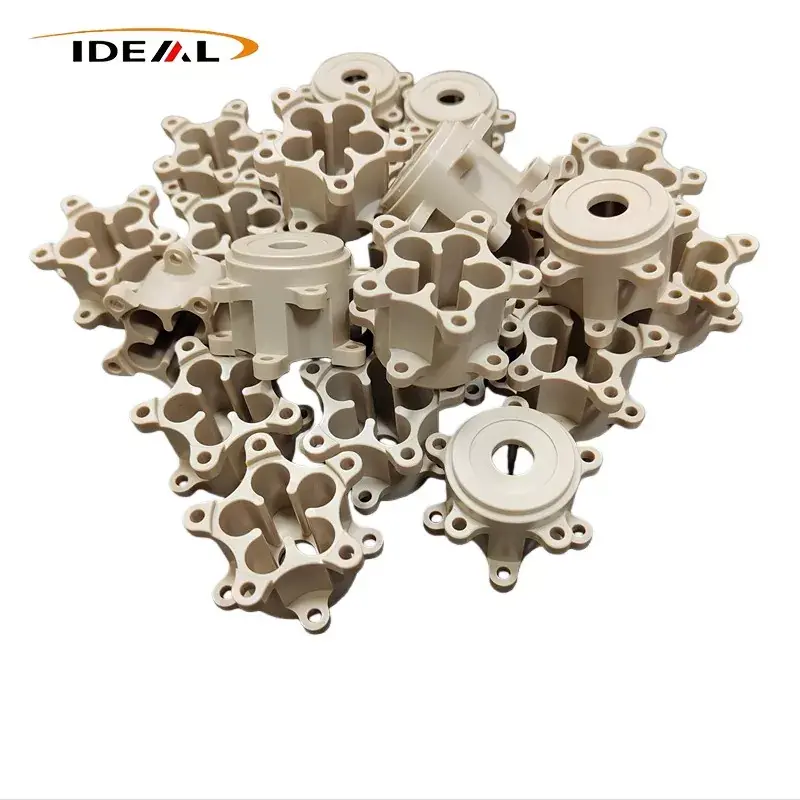
Ideal Plastic uses CNC machining, high-temperature injection molding and other specialty plastic processing methods for customized engineering-plastic components. PEEK Bolts can be CNC machined for miniature fasteners, fine pitches, shoulder features, axial through-holes and other complex geometries.
For precision fasteners, annealing and stress-relief processing are used to address residual stress and dimensional stability. Metric external threads can be manufactured to 6g tolerance, with 5g available for precision applications. Imperial UNC threads use 2A as the default and 3A for precision applications.
Quality control for polymer fasteners focuses on material consistency, thread condition, dimensional accuracy and potential defects such as cracking or dimensional drift.
Thread surfaces are inspected for visible microcracks, tears, scorching and whitening. The effective thread length follows drawing requirements, while pitch and thread angle are checked against the specified standard.
For each order batch, the supplied documentation can include a Certificate of Conformity, batch traceability number and dimensional inspection report.
PEEK should not be treated as a direct replacement for high-strength steel in every application. The following conditions require particular attention.
1. Heavy-duty joints: Not recommended where extremely high preload and permanent locking are required.
2. Strong oxidizing media: Concentrated sulfuric acid and fuming concentrated nitric acid can chemically attack PEEK.
3. Continuous high preload above 240°C: Continuous high preload at these temperatures can cause rapid creep and severe preload loss.
4. Repeated reassembly: Repeated tightening can create microscopic plastic damage in the threads and increase fracture risk.
| Material | Main Characteristics | Electrical Behavior | Typical Use |
| Virgin PEEK | High toughness, chemical resistance, low particle shedding | Insulating | Semiconductor, MRI, chemical, pharmaceutical |
| 30% Carbon Fiber PEEK | High rigidity, creep resistance and wear resistance | Antistatic / weakly conductive | Oil & gas, high-temperature assemblies |
| 30% Glass Fiber PEEK | Improved rigidity and creep resistance | Insulating | Structural fasteners, tooling fixtures |
| PTFE + Graphite + Carbon Modified PEEK | Very low friction and strong self-lubrication | Application dependent | Sliding-friction joints |
A: They are suitable for corrosion-resistant, insulating, non-magnetic and weight-sensitive applications, but their lower mechanical strength requires separate clamping-force calculations.
A: PEEK or PTFE washers are recommended to distribute clamping force and reduce the risk of bolt-head collapse.
A: Yes. Custom CNC machining is available for dimensions outside standard stock sizes and for customer drawings or samples.
A: Weak interlayer bonding and internal voids can create stress concentrations in threads and increase cracking risk during tightening.
A: Carbon-filled PEEK can be considered for sustained high-temperature loads, together with suitable washers, controlled preload and periodic torque inspection.
A: Yes. CNC machining with annealing treatment is preferred for miniature sizes and fine pitches where molded-thread micro-defects are difficult to eliminate.