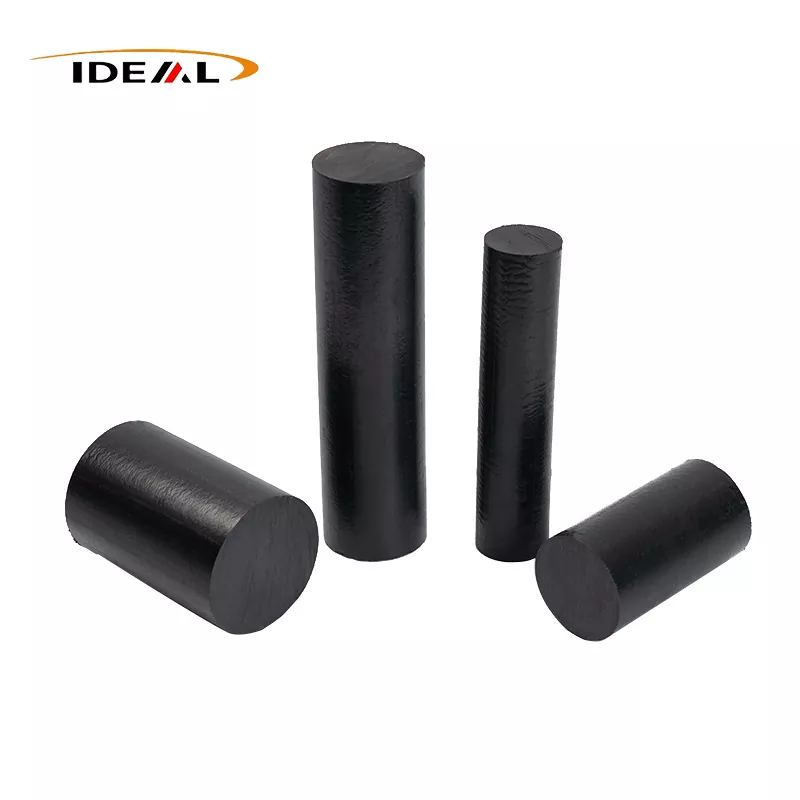
As a professional China supplier, Ideal Plastic provides high-stability, industrial-grade PEEK Fasteners tailored for extreme working scenarios where traditional metal fasteners fail to operate stably. Covering pure, carbon-filled and glass-filled PEEK grades, these non-magnetic, insulating fasteners deliver superior high-temperature and corrosion resistance for semiconductor, chemical, medical and new energy precision equipment. Backed by 14+ years of engineering plastic manufacturing experience, the factory adopts standardized CNC machining and injection molding processes, with all products complying with REACH standards to ensure long-term operational stability of precision industrial assemblies.
Specialized in high-performance engineering plastic production, Ideal Plastic, a reliable Chinese manufacturer, produces customized and standard PEEK Fasteners that replace conventional metal fastener solutions for extreme industrial environments. Different from ordinary plastic fasteners, our PEEK fastener series adopts high-purity PEEK raw materials and professional modified filling formulas, combining mature injection molding and five-axis CNC precision machining technologies. All products undergo strict factory inspection and stress relief treatment, fully meeting DIN and ISO industrial standards, and solving core pain points such as electromagnetic interference, chemical corrosion and high-temperature aging faced by metal fasteners in precision equipment operation.
| Product Name | PEEK Fasteners |
| Material | Unfilled PEEK, Carbon Filled PEEK, Glass Filled PEEK |
| Color | Black, Beige (Custom colors available) |
| Thread Type | Metric, Imperial |
| External Thread Accuracy | Mainstream uses 6g tolerance grade; 5g grade is available for high-precision semiconductor equipment |
| Internal Thread Accuracy | Mainstream uses 6H tolerance grade; 5H is used for high precision |
| Dimensional Tolerance | Standard parts tolerance: ±0.05-0.10mm; Precision custom parts tolerance: ±0.02-0.05mm |
| Surface Roughness | Ordinary industrial parts Ra1.6-3.2μm; Semiconductor cleanroom grade can achieve Ra≤0.8μm |
| Metric Stock Specifications | M1.6, M2, M2.5, M3, M4, M5, M6, M8, M10, M12 |
1. By product type: Including PEEK Bolts, PEEK Screws, PEEK Nuts, filled PEEK Studs, PEEK Washers and PEEK clips, forming a complete set of plastic fastening solutions.
2. By screw head type: Covering Socket Head Cap Screws, Torx Screws, Hex Head Bolts, Flat Head and Countersunk Screws for different assembly space requirements.
3. By application grade: General industrial grade, Semiconductor grade, and Medical grade, with corresponding raw material and cleanliness controls for each grade.
PEEK (Polyetheretherketone) provides the fundamental performance foundation for PEEK Fasteners, and its stable molecular structure brings multiple functional advantages that conventional engineering plastics cannot match.
1. Insulation and Electrical Isolation: Unfilled PEEK is inherently insulating and non-conductive, isolating conductive paths between components and protecting circuit modules.
2. Non-Magnetic and Magnetic Field Interference Protection: PEEK is completely non-magnetic and cannot be magnetized or generate magnetic fields.
3. Chemical Corrosion Resistance: PEEK resists most solvents, weak acids and alkalis, and many common industrial chemical solutions.
4. Low Emission and Clean Assembly: PEEK material exhibits low gas emission and minimal debris contamination inside sealed equipment chambers.
5. Weight Reduction and Lightweighting: Compared to stainless steel fasteners, it significantly reduces weight, making it suitable for aerospace test components and lightweight equipment assemblies.
These combined features make the fastener series preferred when metal parts introduce unwanted conductivity, magnetism or corrosion risks.
PEEK threaded fasteners are produced by two mainstream routes: CNC machining and injection molding. The high melting point and low thermal conductivity of PEEK create distinct processing limits between the two methods.
As a mainstream process, most semiconductor, medical, and high-precision fastener applications utilize bar or sheet cutting. No molds are needed, enabling prototyping, small-batch production, and non-standard customization. It delivers reliable thread accuracy and dimensional consistency.
The challenges of CNC machining lie in:
● Severe wear of filler-grade tools: Carbon-filled and glass fiber-filled PEEK have high hardness, leading to rapid wear of carbide tools during cutting. After dulling, the tool tears the thread profile, causing burrs and micro-cracks that are difficult to detect with the naked eye but highly prone to chipping after assembly. Diamond or high-quality carbide tools must be used, requiring frequent tool changes and maintenance, increasing machining costs.
● Machining thermal stress and residual stress risks: PEEK has poor thermal conductivity, making heat dissipation difficult during cutting. Localized high temperatures can cause material degradation and whitening. If stress relief is not performed after rough machining, residual stress remains inside the part. After storage and heating, thread deformation and cracking occur, resulting in frequent defects in the industry. Stress issues are particularly prominent in small-sized M2 and M3 parts.
● Difficulty in machining small-sized threads: Micro PEEK fasteners like M2 and M2.5 have thin threads and are brittle. Taps are prone to breakage during tapping, and hidden micro-cracks are easily generated during machining; yield is low, unlike the ultra-high yield of stainless steel screws.
PEEK has a melting point above 343℃, requiring specialized high-temperature molds and equipment for injection molding. The process window is narrow, and initial mold investment is high. High mold investment and long mold opening cycles; limited thread precision, prone to material shortages and burrs; high defect rates for complex head shapes and small-sized parts.
The difficulty in injection molding lies in the PEEK melting point above 343℃, requiring high-temperature barrels and molds. Inadequate drying can lead to air bubbles and silver streaks inside the product; insufficient mold temperature results in insufficient crystallinity, significantly reducing temperature resistance and creep resistance. Injection-molded threads are prone to material shortages, flash, and burrs, and reliability is insufficient in high-precision applications.
Ideal Plastic controls both processes carefully, selecting the proper production method based on batch volume, size, precision and application grade of each order.
Each batch of PEEK Fasteners goes through a defined set of factory inspection and control steps before shipment, minimizing hidden failure risks in high-end equipment.
1. Thread Inspection: 100% inspection of thread go/no-go gauges; go gauges should screw in smoothly, and no-go gauges should screw in no more than 2 threads; small sizes like M2 and M3 are given special screening to check for chipped threads and microcracks.
2. Dimensional Inspection: Measurements are conducted at room temperature (20℃) to avoid measurement errors caused by thermal expansion and contraction; critical dimensions are inspected using calipers and micrometers according to drawings or standards; full-dimensional reports are prepared for samples of precision parts.
3. Visual Inspection + Magnifying Glass Sampling: Check parts for cracks, notches, burnt whitening, and burrs; threads and head grooves should be free of collapsed edges and chipped corners; filler components should be checked for filler agglomeration and protrusions.
4. Destructive Sampling Verification (High-Risk Specifications): For small batches such as M2/M2.5, samples are taken for torque destructive testing to verify the thread's resistance to destructive forces and identify potential hidden crack risks in advance.
5. Cleanliness Control (Semiconductor Grade): Ultrasonic cleaning to remove microparticles of cutting debris; clean, anti-static packaging to prevent secondary contamination.
These multi-stage checks help customers avoid common quality issues found in low-cost alternatives available on the market.
Many high-performance thermoplastics are used for fastener production. Selecting the correct polymer requires balancing temperature resistance, creep performance, brittleness and chemical compatibility for the target assembly.
| Material | Key Strengths | Main Limitations | Typical Application |
| PEEK | Balanced toughness, low outgassing, broad chemical resistance, annealable stress control | High raw material cost, creep above Tg 143℃, limited against strong oxidants | Semiconductor vacuum, medical MRI, chemical corrosion environments |
| PI | Ultra high temperature resistance, low vacuum outgassing | Very brittle threads, hard to re-assemble, high machining difficulty | Static ultra-high temperature fixtures with minimal disassembly |
| PAI | High rigidity, good wear resistance, stable at elevated temperature | Higher brittleness than PEEK, high moisture absorption, stress cracking risk in certain media | High-temperature static wear resistant fastening |
| PPSU | High impact toughness, repeated steam sterilization available | Lower long-term heat resistance, limited solvent resistance, higher outgassing | Medical and food equipment fastening |
| PPS | Lower cost, good flame retardancy and hydrolysis resistance | Brittle threads, poor creep resistance, not suitable for vacuum grade | Medium temperature static insulation fastening with limited budget |
| PEI | UL94 V0, good dimensional stability, easier injection molding | Non-crystalline, moderate chemical resistance, higher vacuum precipitation | Electronic and general medical insulation fastening |
No single material works for all use cases. The comparison table helps engineers quickly narrow material options according to working temperature, vacuum requirements, chemical exposure and maintenance frequency.
Case 1: Batch cracking of M3 CF PEEK screws in semiconductor vacuum chambers
Symptom: All screws passed assembly testing, but began to crack after 50 high-temperature cycles.
Root Cause: Direct finishing after CNC roughing, skipping intermediate annealing, resulting in residual cutting stress and combined stress release from thermal cycling.
Solution: Implement forced roughing, annealing, and finishing process.
Case 2: Long-term loosening in chemical equipment, no visible fractures
Symptom: Assembly torque was in place, no fractures, but preload continuously decreased after temperature cycling.
Root Cause: Operating temperature exceeded Tg (143℃), resulting in creep and thermal expansion mismatch under continuous load.
Solution: Replace with GF PEEK grade, add PEEK washers, and implement periodic re-tightening process.
Case 3: Injection-molded PEEK screws intact at room temperature, rapid thread stripping at high temperatures
Phenomenon: Passes room temperature test, but threads fail rapidly at 180℃.
Root Cause: Insufficient mold temperature, low part crystallinity, and insufficient creep resistance at high temperatures.
Solution: Replace with a CNC-machined and annealed version.
These practical examples demonstrate that purchasing decisions should not rely only on price, but also on full process control including annealing and crystallinity management.
A1: There is a slight risk of loosening. PEEK has a larger coefficient of thermal expansion than metal, and alternating hot and cold temperatures will cause preload reduction, which can be compensated for by washers and periodically retightened.
A2: Fully supported. Customization of special thread pitches, head shapes, steps, and irregular structures based on customer 2D/3D drawings is available without the need for mold making.
A3: Under normal operating conditions at room temperature, they can last almost indefinitely. Under high temperature, corrosive, and dynamic vibration conditions, lifespan depends on material selection and assembly torque. Correct selection can ensure durability throughout the entire equipment lifecycle.
A4: Unfilled PEEK ≥1.5D; CF PEEK ≥2D (D = nominal thread diameter). Fine thread PEEK fasteners are not recommended due to their low shear strength.
A5: Not suitable for heavy impact primary load bearing structures, strong oxidizing acid environments, or applications requiring extremely high pre-tightening force. Mechanical strength is lower than metal fasteners.