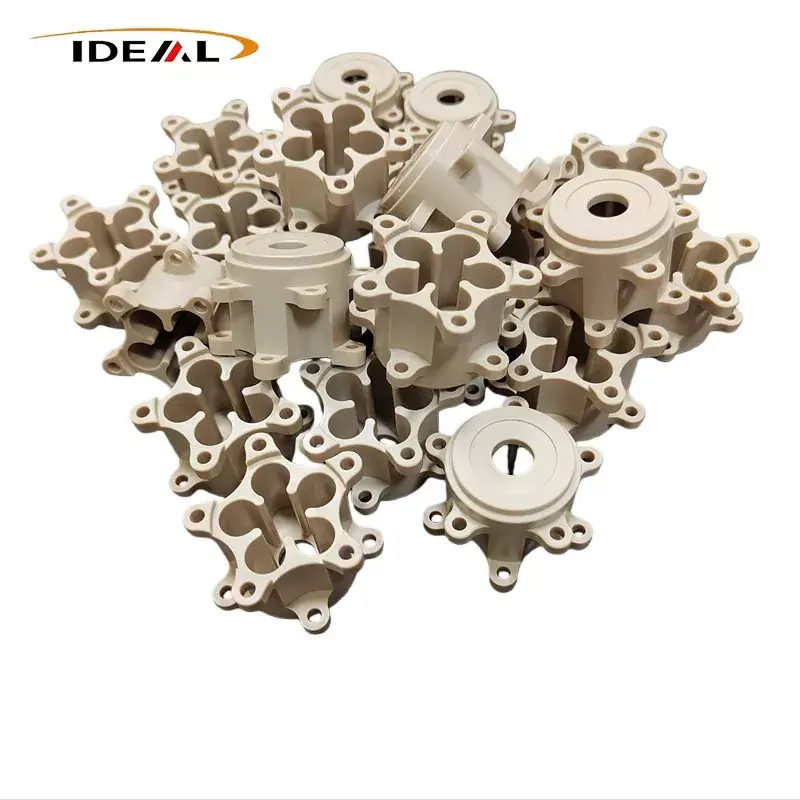
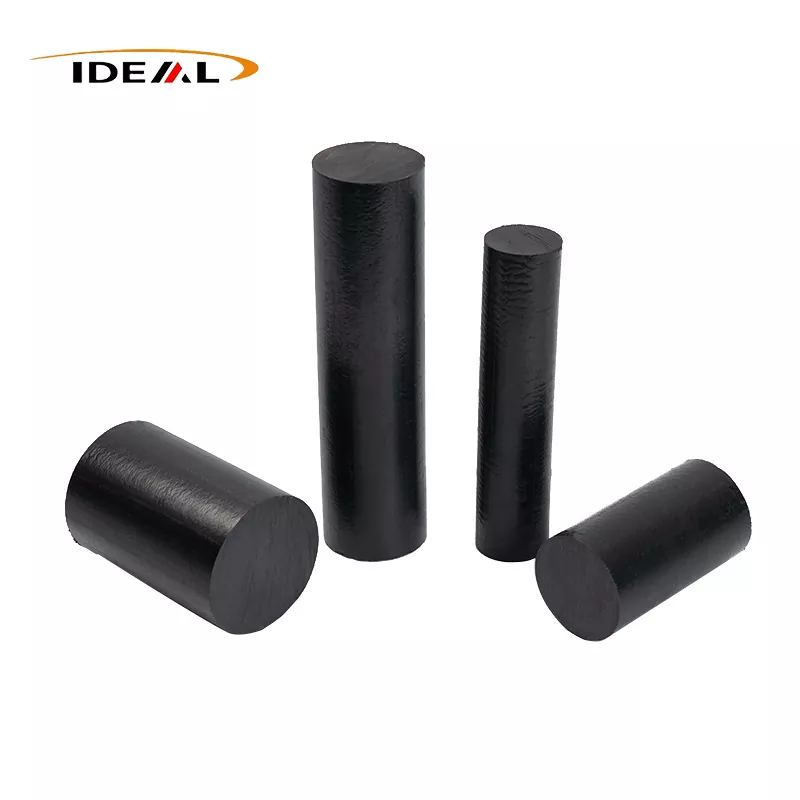
Ideal Plastic Factory offers fully customized PEEK gaskets in a wide range of specifications, including unfilled, carbon fiber-filled, and graphite-filled materials. We support diverse configurations—such as ultra-thin custom shapes, multi-hole flanges, and standard rings—utilizing a combination of precision CNC machining and high-temperature injection molding. Each component undergoes specialized stress-relief annealing to fundamentally eliminate issues related to deformation, misalignment, and leakage. Contact us today!
PEEK gaskets are precision sealing components fabricated from high-performance polyetheretherketone, categorized as premium special engineering plastic seals. Unlike gaskets made of rubber, PTFE or nylon, they strike a balanced mix of rigidity, consistent dimensional stability and reliable sealing performance. They are widely deployed for static sealing, spacing cushioning and electrical insulation under demanding working conditions including high temperatures, intense chemical corrosion, vacuum environments and frequent reciprocating motion.
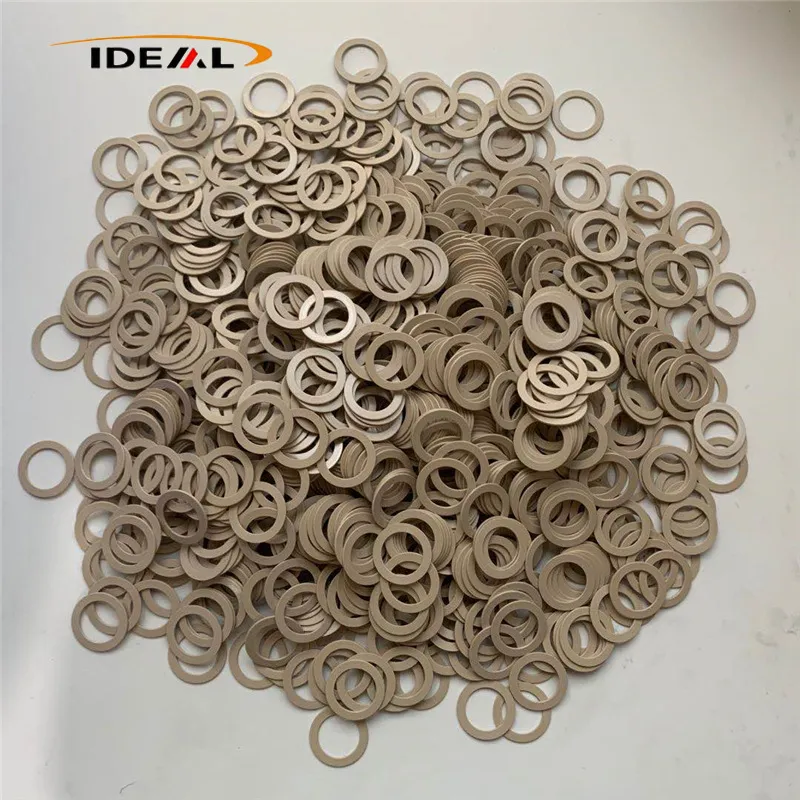
Classified as flat static sealing parts, Polyetheretherketone (PEEK) gaskets serve one primary purpose: interface sealing to block liquid and gas leakage. Their function differs distinctly from PEEK washers, which are designed for spacing, load bearing, friction reduction, insulation and even bolt pressure dispersion. Most come in thin sheet forms. Tight contact between their top and bottom planes and flange faces creates the sealing effect.
Contrary to elastic seals such as O-rings, these are rigid and semi-rigid components with no inherent rebound capacity. Sealing is achieved entirely through assembly preload force.
|
Item
|
Details
|
|---|---|
|
Applicable Scenarios
|
Vacuum chamber accessories, semiconductor equipment parts, high-precision sealing components, custom ultra-thin special-shaped gaskets and complex multi-hole workpieces; delivers ultra-precise dimensions, ultra-tight tolerance control and excellent flatness consistency
|
|
Processing Risks & Failure Causes
|
Residual internal stress is generated by cutting frictional heat, mechanical clamping pressure and unreasonable layered cutting. Accumulated stress causes post-processing warpage, flatness degradation and dimensional drift. Products may pass initial inspection but deform gradually after repeated thermal cycles, ultimately leading to seal leakage
|
|
Standard Optimization Solutions
|
1. Optimize cutting parameters with reduced feed speed and segmented milling to lower instantaneous cutting stress 2. Adopt room-temperature natural aging after rough machining before finish precision cutting 3. Deploy flexible clamping fixtures for ultra-thin gaskets to avoid rigid clamping deformation 4. Implement gradient heating and slow cooling annealing to fully release residual stress after finishing |
|
Ultra-Thin Gasket Solution (<0.5mm)
|
Ultra-thin workpieces feature low rigidity and are prone to vibration and cutting deformation. We adopt auxiliary support fixtures, reduced spindle speed and smaller single-layer cutting depth to stabilize cutting force and guarantee consistent thickness tolerance
|
|
Item
|
Details
|
|---|---|
|
Applicable Scenarios
|
Suitable for large-batch, medium-precision standard flat PEEK gaskets. Not applicable for ultra-thin and intricately structured precision gaskets, as uneven wall thickness easily causes internal stress concentration and post-operation dimensional offset
|
|
Key Technical Challenges
|
PEEK features high melt viscosity and unbalanced crystallization shrinkage. Traditional rapid demolding and fast cooling trap massive residual stress, causing warpage and size deviation under alternating temperature cycles. Poor melt fluidity also leads to incomplete filling, air bubbles, pinholes and sink marks
|
|
Complete Process Optimization System
|
1. Fully dry raw PEEK pellets to eliminate moisture-induced defects 2. Precisely calibrate mold temperature, injection pressure and holding time 3. Adopt natural slow cooling after demolding and ban rapid water quenching 4. Redesign gate layout to balance melt flow and unify shrinkage rate 5. Extend packing time and implement mandatory post-mold annealing 6. Optimize exhaust slots, moderately raise equipment temperature and fine-tune injection parameters to solve filling defects |
Product Name: Polyetheretherketone (PEEK) gaskets
Material: Unfilled PEEK, Carbon Filled PEEK, Graphite Filled PEEK
Color: Black, Beige
Standard Thickness Range: 0.15mm / 0.2mm / 0.3mm / 0.5mm / 1mm / 2mm / 3mm ~ 15mm
Ultra-thin Custom Sizes: Ultra-thin < 0.5mm is a high-precision machining category and requires prior communication of the process plan.
CNC machining accuracy: Outer diameter/inner diameter tolerance: ±0.02 ~ ±0.05 mm, thickness tolerance: ±0.03 ~ ±0.06 mm
Mold injection molding accuracy: Outer diameter/inner diameter tolerance: ±0.05 ~ ±0.10 mm, thickness tolerance: ±0.08 ~ ±0.15 mm
Sample: To be negotiated
Certificates: ISO9001, RoHS, REACH
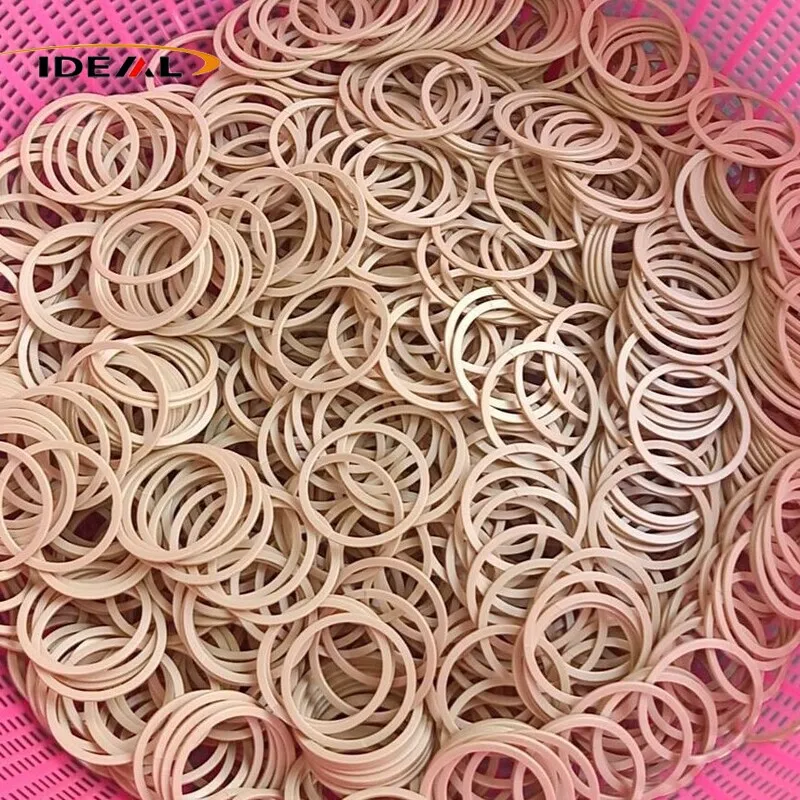
Gasket types: Annular flat Polyetheretherketone (PEEK) gaskets, multi-hole flange gaskets, irregular shaped gaskets, ultra-thin PEEK sealing gaskets
Owing to the unique molecular structure of polyetheretherketone, Polyetheretherketone (PEEK) gaskets outperform nylon, POM, PTFE, rubber and metal shims in comprehensive performance. Designed for sealing and spacing tasks, they sustain stable performance under extreme operating conditions including high heat, chemical exposure, vacuum environments and repeated cyclic compression.
Unfilled virgin Polyetheretherketone (PEEK) gaskets create effective electrical separation between paired metal components. They block electric conduction, suppress electrochemical corrosion and lower short-circuit risks, frequently adopted within new energy battery packs, electric control units and precision electronic hardware.
Classified among top-tier heat-resistant engineering plastics, PEEK offers continuous service temperature up to 260°C and short-term peak resistance reaching 330°C. It remains tough at -60°C without cold embrittlement. Subjected to persistent flange pressure at high temperatures, PEEK suppresses creep and retains compression preload steadily rather than thinning over time.
Outstanding anti-creep characteristics help PEEK maintain uniform thickness under recurring flange compression and thermal loads. As sealing shims, they control assembly clearances, dampen vibration and mitigate surface abrasion inside automated transmission systems and robotic assemblies.
Most organic solvents cannot dissolve PEEK. It remains stable in weak acids, weak alkalis, lubricants and refrigerants, shielding equipment from chemical erosion. This makes PEEK gaskets a preferred solution for chemical fluid processing lines and laboratory analytical apparatus.
- 15-year specialization in PEEK gaskets & sealing components
- Dual manufacturing expertise: precision CNC machining + mold injection molding
- Equipped with high-precision CNC lathes, mills, machining centers, 5-axis machines
- In-house dust-free injection workshop and full mold development capability
- 100% virgin PEEK resin only; no recycled or blended materials
- Full batch traceability with material datasheets and official COA provided
- Custom material grades available per customer technical requirements
- Manufactured 100% to customer drawings (thickness, ID, OD, hole positions)
- High-precision tolerance: ±0.005 mm – ±0.02 mm
- Strict flatness control; zero warpage for ultra-thin gaskets
- Accurate multi-hole positioning for easy flange assembly and bolt alignment
- Ultrasonic cleaning + dust-free drying for cleanroom and vacuum applications
- Low-outgassing, low-particle, low-volatile emission control
- Final vacuum packaging to avoid contamination
- Mandatory gradient annealing for all Polyetheretherketone (PEEK) gaskets
- Eliminates machining stress, molding stress, and internal material stress
- Prevents long-term warpage, leakage, and deformation under heat cycling
- Superior to competitors who skip annealing and cleaning to cut cost
- Tiered QC for general industrial and high-end vacuum/cleanroom grades
- Full inspection equipment for flatness, hardness, and dimensional tolerance
- Process matched to real working conditions to avoid field failure
- Focus: PEEK & high-performance fluoroplastics
- Products: sealing gaskets, wear rings, buffer parts, precision structural components
- One-stop solution: material selection → design → machining → finished parts
- Chemical fluid equipment
- New energy battery assembly
- Semiconductor and vacuum systems
- Laboratory instruments & precision devices
- Strict quality standards for long-term international partnerships
- Customized solutions and stable delivery
- Professional support for high-end sealing applications worldwide
A1: We do not recommend this replacement. Injection molding leaves higher residual internal stress and raises the chance of hidden pores inside the product. For low-outgassing and clean vacuum working scenarios, CNC machined PEEK gasket made from virgin resin with stress-relief annealing and dust-free cleaning treatment are always the preferred option.
A2: This is not the case. Sealing efficiency hinges on flat surface fitting tightness, assembly preload and the material’s anti-creep capability. The proper thickness must match the designed clearance of your equipment. Excessively thick or thin gaskets will alter bolt preloading values and undermine long-term sealing stability.
A3: Standard gradient annealing eliminates the vast majority of residual stress and drastically cuts the risk of dimensional shift. Tiny deformation may still occur under extreme loading, drastic temperature cycling, or if low-quality raw material is adopted. For ultra-precision equipment applications, we advise adding a finished product pre-aging inspection procedure for extra stability assurance.