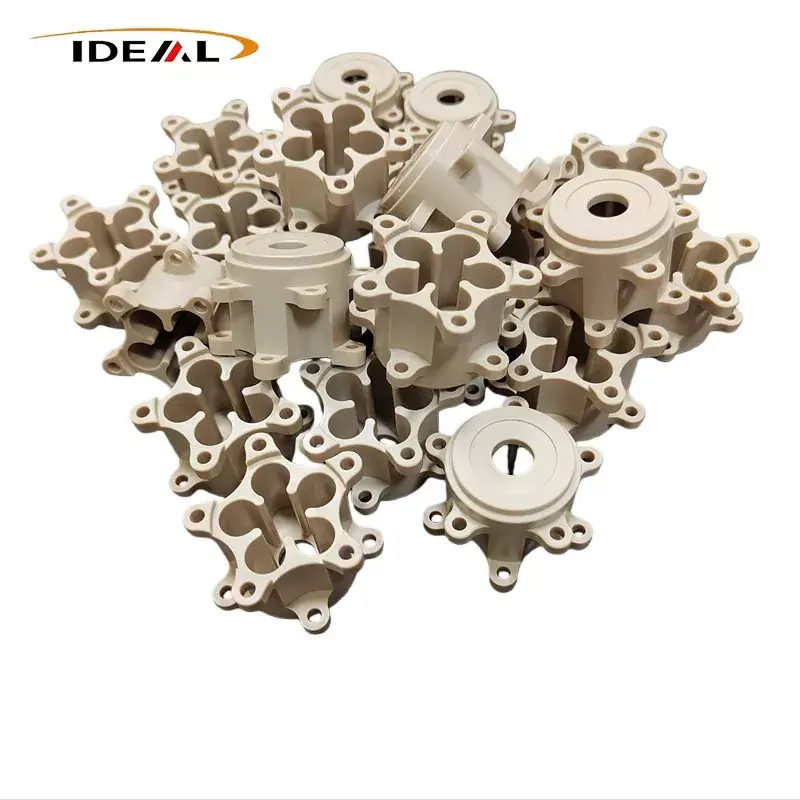
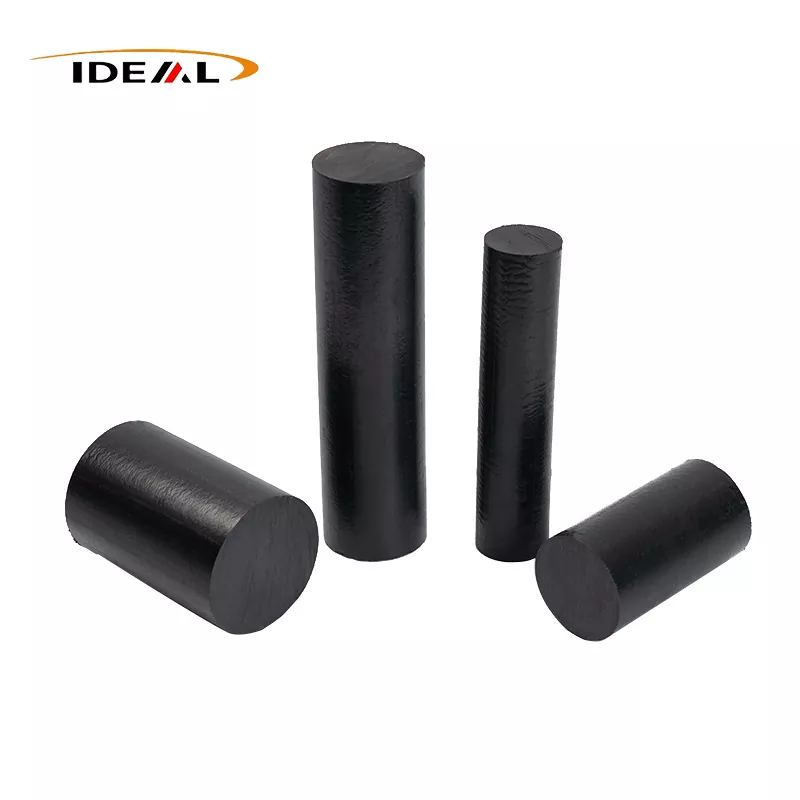
GuangZhou Ideal has been engaged in the PEEK machined parts and PEEK plastic-related products since 2011.So, what’s PEEK? It’s a high-performance specialty plastic with a special molecular structure—think of it like a chain made of benzene rings, ether bonds, and ketone bonds, all linked together. That structure is what makes it so tough: it can handle high temperatures, resist chemical corrosion, and has really strong mechanical properties. That’s why it’s used in areas where performance really matters—like in aircraft, medical devices, cars, and electronics.
PEEK machined parts is not the easiest product to machine. Because PEEK has a high melting point and high hardness, cutting tools wear out very easily. That means your equipment has to be up to the task—regular machines won’t cut it. You need high-power, high-precision tools, and you’ve got to keep a close eye on things like temperature and the cutting tools you’re using. And because the material is so hard, your tools wear out faster—so you have to check them regularly and replace them before they cause issues. All of this makes the process slower, and of course, that drives up the cost.
If you don’t have much experience machining PEEK machining part, you’ll probably run into some common problems that can lead to defective parts:
Surface burning or discoloration: PEEK doesn’t like getting too hot. If the cutting process overheats the material, the surface can get burned or change color. Not only does that look bad, but it can also mess with the part’s performance. The fix? Control your cutting settings and make sure cooling is on point.
Size inaccuracy: PEEK is sensitive to temperature—it expands and contracts quite a bit. If the temperature isn’t steady during machining, you can end up with parts that aren’t the right size. To hit the right dimensions, you need a stable environment and sometimes even heat treatment afterward.
Cracking: Since PEEK is pretty rigid, if stress gets too concentrated during machining, it can crack. The trick here is to keep your cutting path smooth and avoid sharp moves. Watch your cutting depth and intensity so you don’t put too much pressure on the material.
At GuangZhou Ideal, we’ve tried all sorts of ways to improve how we machine PEEK. For example, we pick tough carbide cutting tools, use the right cutting fluid, and keep a tight control over all the cutting parameters. We’ve learned that taking it slow and steady usually works best. We also use ultrasonic-assisted technology, which helps reduce burrs and makes the tools last longer.Our engineering team knows their stuff. Before we start any PEEK machined product production, we map out the whole process to steer clear of common pitfalls. That way, we not only deliver good quality—we also keep unnecessary costs down.
|
Product name |
PEEK machined parts |
|
Material |
Pure PEEK, fiber-reinforced PEEK, abrasion-resistant PEEK |
|
Color |
Nature,black and custom color |
|
Size |
ODM/OEM/Drawing |
|
Tolerance |
According to customer requirements |
|
Forming method |
according to product shape and order quantity |
|
Minimum order quantity |
negotiation |
|
Lead time |
7-15 days |
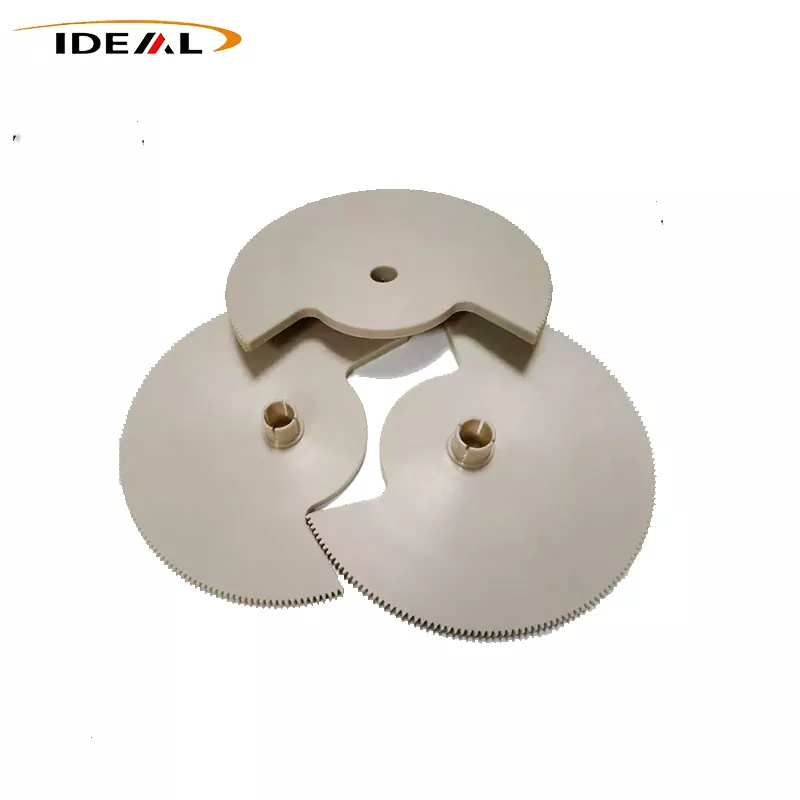
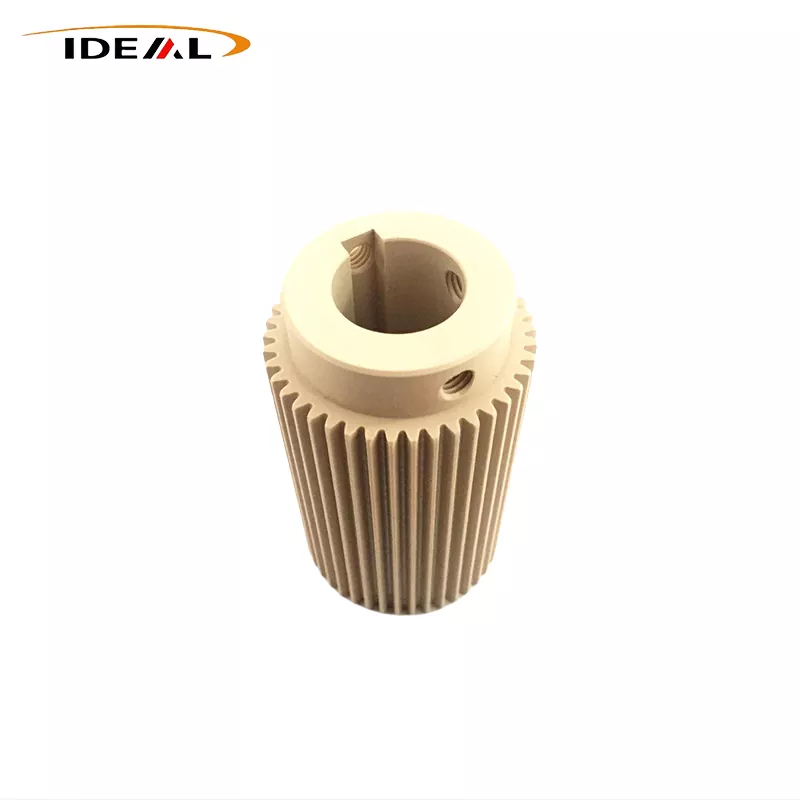
1.Great Mechanical Performance
PEEK machining part is seriously strong and doesn’t wear down easily. Even when it’s under a lot of pressure or friction, it can handle the stress without getting damaged. And if you mix in stuff like carbon fiber or PTFE, it gets even harder and slicker—so it lasts a long time, even in fast-moving parts.
2.It Lubricates Itself
One cool thing about PEEK is that it’s naturally slippery. That means you don’t need to keep adding oil to keep things running smooth. Because of that, it runs quieter and the parts tend to last longer.
3.Handles Acids and Alkalis Like a Pro
PEEK isn’t bothered by common chemicals like hydrochloric acid, sulfuric acid, nitric acid, or strong bases. Even if it sits in that kind of liquid for a long time, it stays strong. That makes it perfect for things like valves or pipes in chemical plants.
4.Top-Notch Fatigue Resistance
PEEK machined productis one of the best thermoplastics when it comes to handling repeated stress. It doesn’t get tired or worn out easily, even after being used again and again.
5.Takes the Heat
PEEK is really good with high temperatures—it melts only at 343°C. According to U.S. UL standards, it can be used non-stop at 260°C, and even at 300°C it still holds up well. Normally, PEEK starts to deform between 135–160°C, but if you add 20% glass fiber, that jumps to 286°C. Go up to 30%, and it can handle 300°C.
6.Radiation Doesn’t Faze It Much
PEEK machined parts stands up well to radiation, too. In fact, among engineering plastics, it’s one of the best at dealing with gamma rays. It only starts getting brittle when the gamma exposure goes past around 10–12 million Gy. Beta rays? They hardly affect it up to pretty high doses.
1.Precision Machinery: PEEK plastic really holds its shape—it doesn't warp or bend easily. That makes it perfect for all kinds of tiny parts inside sensitive equipment. Think sensor mounts, seals, casings, and more. If your gadget needs to stay accurate and steady over time, PEEK’s got your back.
2.Industrial Building Materials: PEEK machining part stands up to wear and tear like a champ. It resists scratches and doesn’t wear down easily, which is why it's a go-to for high-friction parts in factories. You’ll find it in conveyor belt pieces, sliders, and scrapers—stuff that gets used day in and day out without giving up.
3.Medical Equipment: PEEK is tough. You can sterilize it again and again—like, thousands of times—in an autoclave, and it won’t bat an eye. That’s why surgeons rely on PEEK for tools like handles, forceps, and hooks. From everyday procedures to delicate brain surgery, it’s a lifesaver.
4.Electronics & Semiconductors: PEEK machined productis super clean, chemically resistant, and doesn’t change size when things heat up. That makes it a smart pick for protecting sensitive electronics—like semiconductor casings and heat sinks. It keeps the inner parts safe from outside mess and stress.
5.Auto Manufacturing: PEEK really shines in car seat adjusters, especially in parts like turbines and vortex rods. It can take the heat—up to 260°C—and it’s super slick, with a friction coefficient as low as 0.15. Best of all? It outlasts metal parts by a long shot, tripling the lifespan in many cases.
Over the years, GuangZhou Ideal has worked with thousands of customers, both locally and around the world. Along the way, we’ve built up real know-how in everything related to PEEK machined parts—from research and design to manufacturing. We’ve got modern equipment, experienced technicians, and a solid team for sales and support. Whether it’s answering questions before you buy, handling your order, or helping after the sale—we stay in touch every step of the way. That way, you always get reliable tech support and service you can count on.
1.How does customization work?
We can work with all the common file types you probably use—like STEP, STP, STL, and others. If it’s easier, just send us a physical sample and we’ll take it from there. Have your own ideas or want to tweak the design? No problem—we can help design or adjust the product to fit your needs.
2.What’s the minimum order quantity?
For semi-finished profiles, we can start with a small order. If you’re looking for custom parts, let’s talk details—like how they’ll be made and the size—so we can figure out what works.
3.Can I get samples?
Yes! If we have the semi-finished profiles in stock, we’ll send samples free of charge. You’ll just cover the shipping. And don’t worry—the samples will be exactly the same as what you receive in your full order.
4.How long until delivery?
If it’s something we have in stock, we can ship it out as soon as payment comes through. For custom orders, timing depends on the quantity and process—so let’s talk specifics and we’ll give you a clear idea.
5.What’s your return or exchange policy?
If there’s a quality issue, a mistake on our end, or anything that keeps you from using the product, contact us right away. Once we confirm the situation, we’ll handle the return or exchange and cover the shipping. If you just ordered the wrong thing or changed your mind (especially with raw profiles), as long as it’s still in sellable condition, we can still help—but you’d need to cover the return shipping.