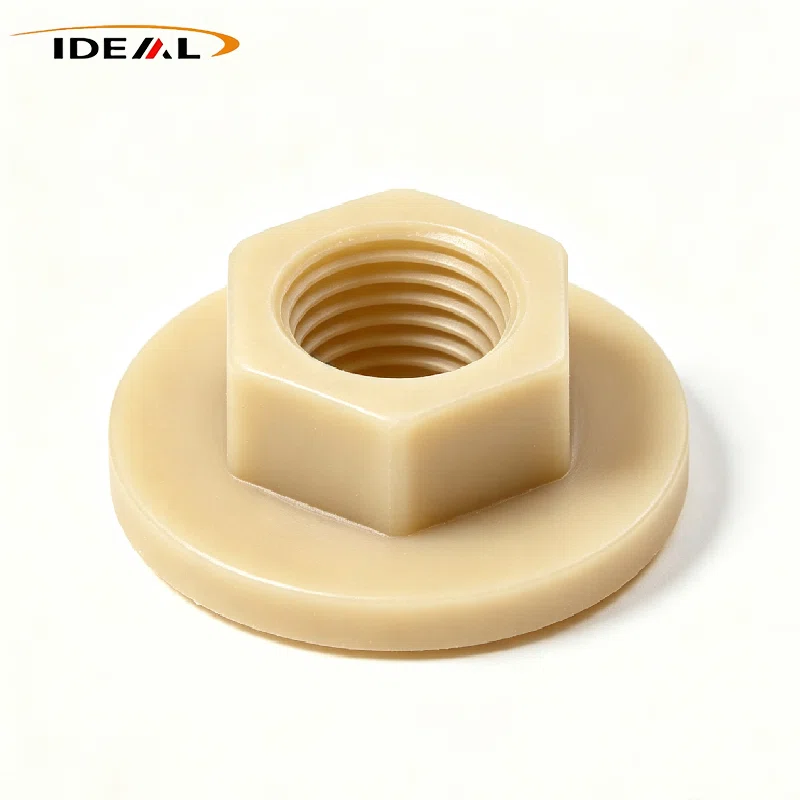
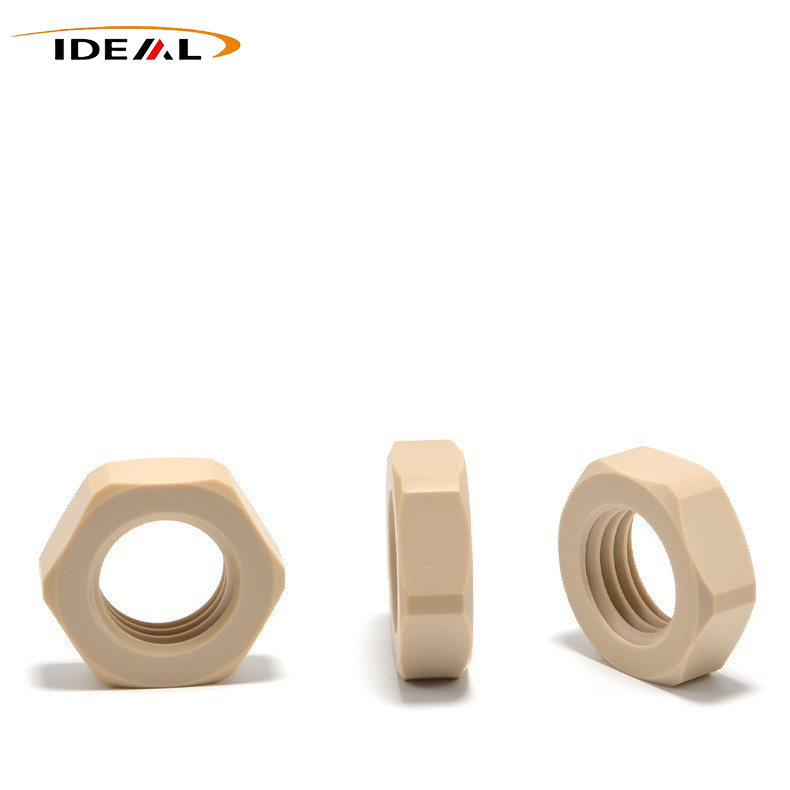
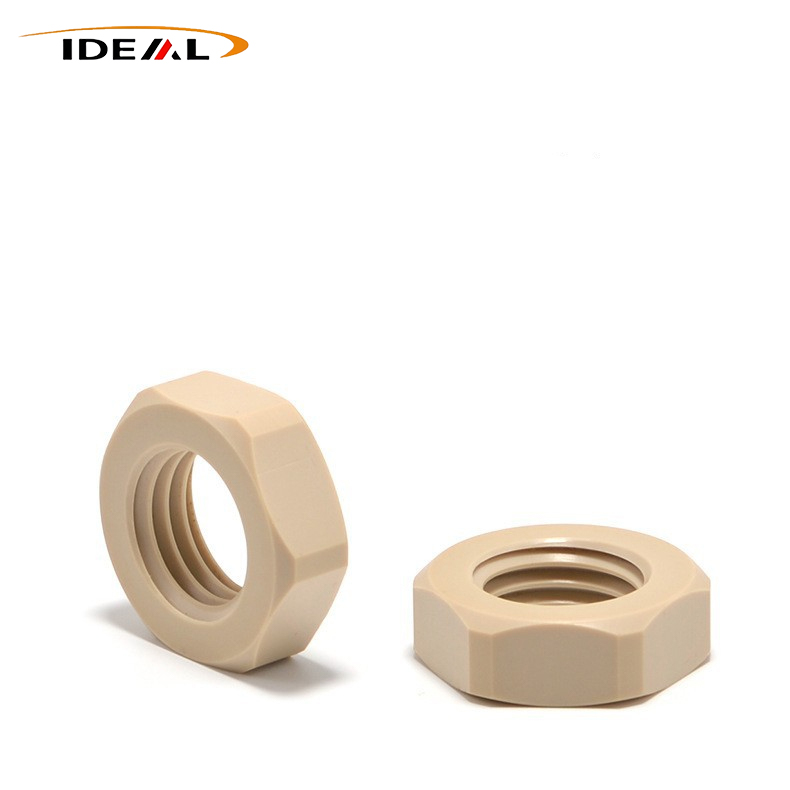
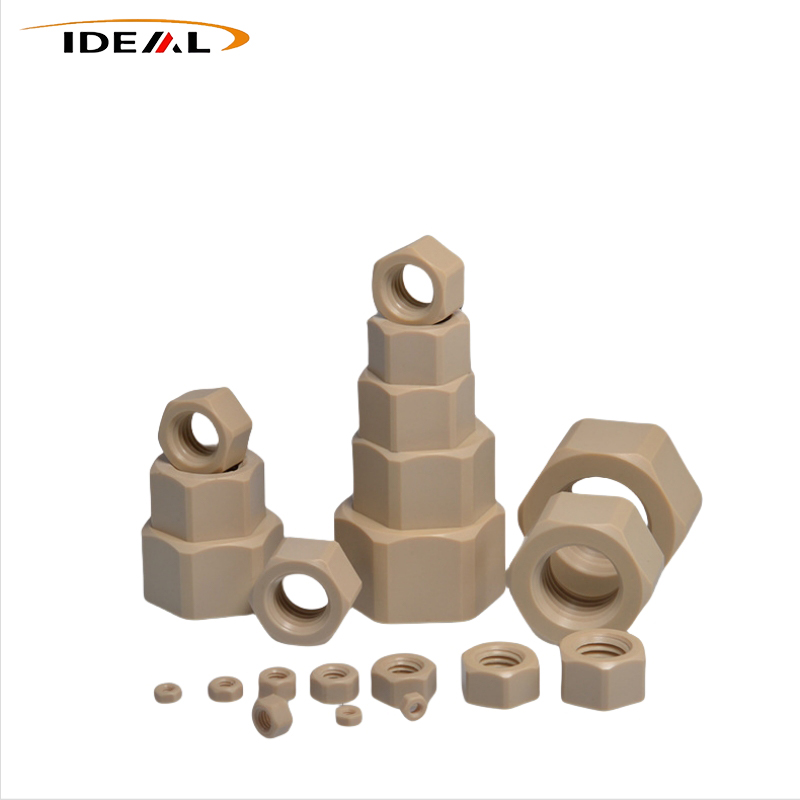
GuangZhou Ideal supplies hex nut and flange nut in virgin, CF30 or GF30 PEEK. Non-serrated, non-magnetic, insulating, chemically resistant, low outgassing. Withstands -196°C to 260°C, resists creep, replaces metal nuts in PCB, ceramic, semiconductor and medical assemblies. Custom sizes to drawing.
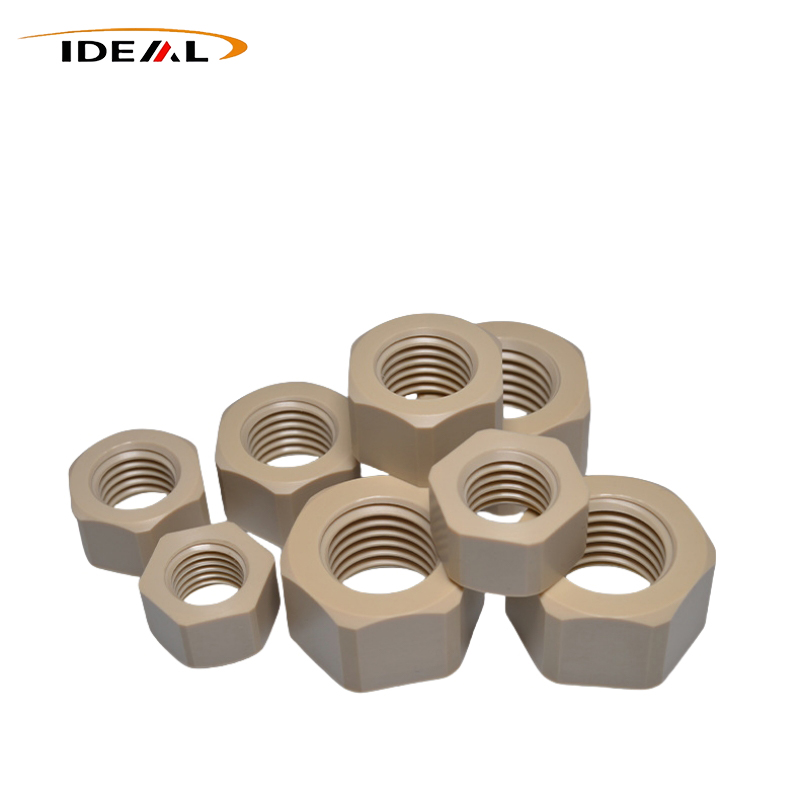
GuangZhou Ideal supply Industrial PEEK Nut: non-serrated flange nut and hex nut. Anti-creep high-temperature plastic nut for PCB, ceramic assemblies. Precision CNC & injection-molded custom parts. This high-performance polymer fastener is manufactured from polyetheretherketone (PEEK), combining high-temperature resistance, chemical corrosion resistance, low outgassing, insulating/antistatic properties and non-magnetic characteristics.
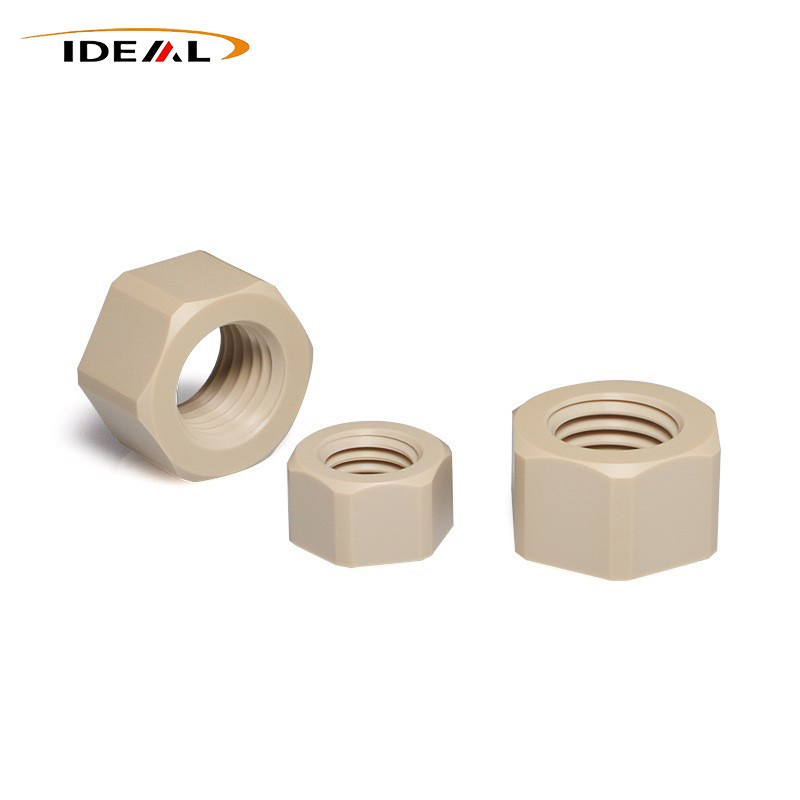
PEEK Nut is most widely used in the hex nut style. Its fundamental function is to mate with bolts, studs and screws to clamp two or more components together. It secures equipment parts, stabilizes assemblies and prevents loosening, forming reliable joints while reducing reliance on metallic fasteners. PEEK or PTFE washer is normally recommended. Hex nut features a small bearing area, and its load-bearing capacity depends largely on the outer PEEK flat washer. This design allows flexible swapping of washers with varying outer diameters and thicknesses to adjust bearing area and compensate for assembly clearances. The maximum outer profile corresponds to the hex across-flat dimension, making it suitable for compact installations with limited radial clearance and tightly packed adjacent components.
The default bearing area is small, so creep-induced loosening occurs more readily under high-temperature conditions. To achieve the contact pressure performance of flange nut, extra washers must be added, increasing the total part count. There is no integrated stop feature, so tightening travel is not limited by the nut body itself.
Metal flange nut commonly features serrated anti-slip teeth (also known as flange teeth, radial teeth or anti-loosening teeth) machined on the flange’s workpiece-contacting face. When tightened, the hard metallic tooth tips slightly dig into the mating surface to create a mechanical interlock. This stops reverse rotation and loosening under vibration, removing the need for spring lock washers.
PEEK Nut is manufactured with smooth, toothless flanges. Serrated anti-slip teeth cannot be implemented on this product. PEEK is an engineering polymer with far lower hardness than metals. Any serrations would crush, chip or wear flat during tightening, losing anti-loosening function entirely and generating plastic debris that contaminates chambers, PCBs and fluid flow paths. Furthermore, PEEK is highly susceptible to stress concentration at sharp corners. Molded serrations easily develop microcracks at tooth roots; CNC-machined serrations will fracture instantly under assembly load and offer no practical benefit.
Selecting the correct PEEK Nut style depends on your assembly.
Prefer flange nut when:
Prefer hex nut when:
Flange nut is not fully equivalent in performance to a hex nut plus washer combination:
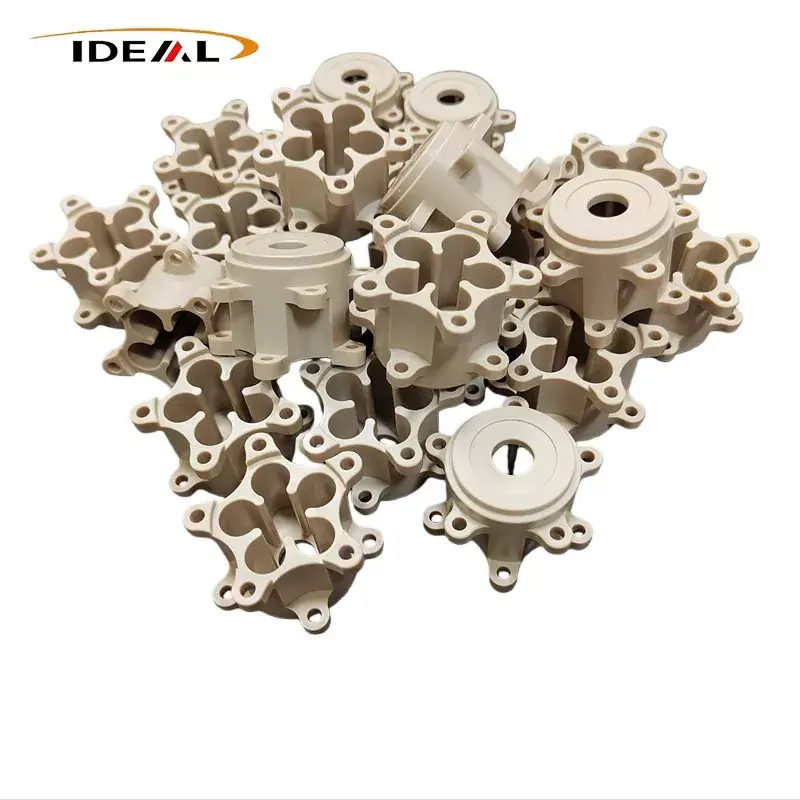
Direct mold conversion is not recommended. PEEK-specific DFM optimization is required to adjust radii, wall thickness and gate placement. Without modification, mass production risks include sink marks, warpage and weld lines forming in high-stress regions.
CF30 contains carbon fiber and has conductive potential, yet surface resistance depends heavily on fiber dispersion uniformity, manufacturing process and molding temperature. Resistance can vary widely between parts within the same batch. Surface resistance must be tested batch-by-batch for ESD applications; never rely solely on material grade for installation.
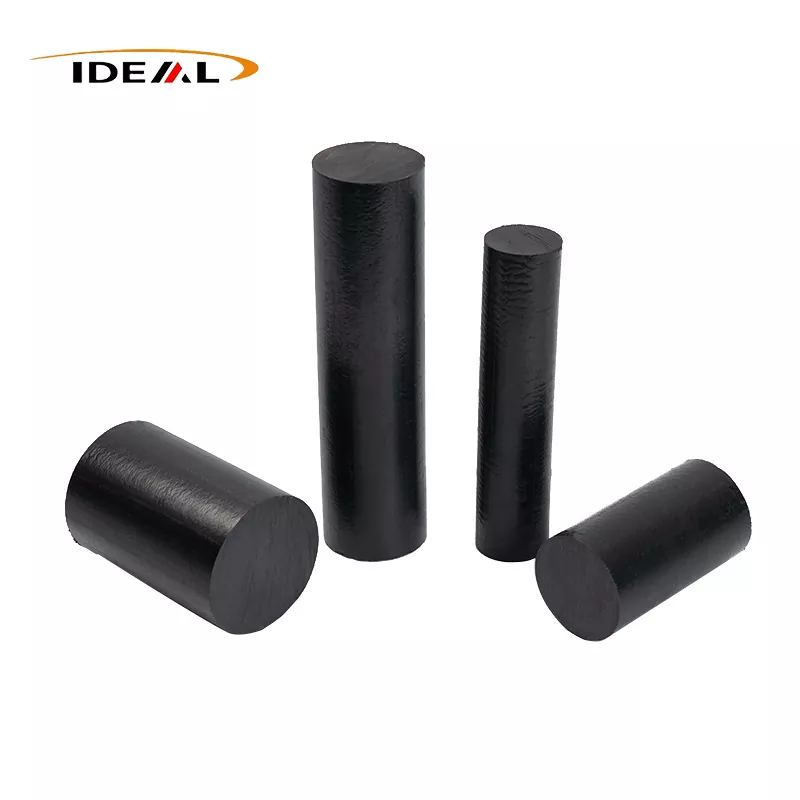
No. If bar pre-annealing and post-roughing annealing are skipped, dimensional and geometric tolerances will drift and fail in service due to later stress release, even with high-precision machine tools.
Not necessarily. Good raw material does not rule out cracking caused by residual stress, weld lines or excessive assembly torque. Prioritize checking annealing process, manufacturing method and assembly torque.
Visual inspection only catches obvious defects. Reliable quality verification relies on raw material certificates, thread go/no-go gauges, batch destructive torque testing and validated annealing processes. Many low-quality parts look intact externally but carry high residual stress and suffer delayed cracking after service.
Higher temperature resistance, superior creep resistance, negligible water absorption, minimal deformation and far superior long-term fastening stability.
Send us your PEEK Nut thread size, nut style, material grade and target application environment. We will reply with a technical recommendation, sample lead time and quotation — typically within 24 hours.