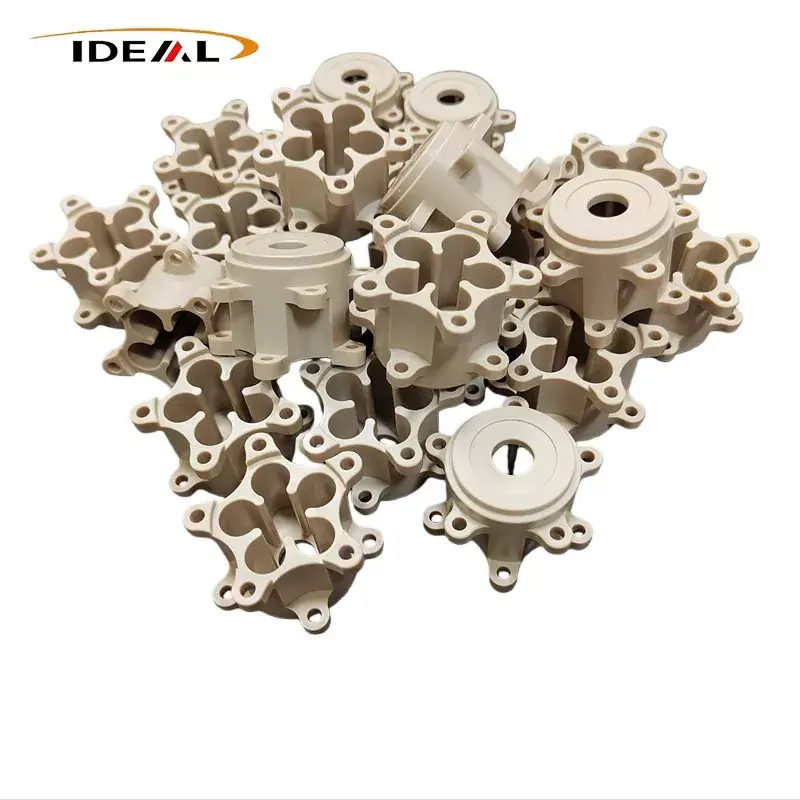
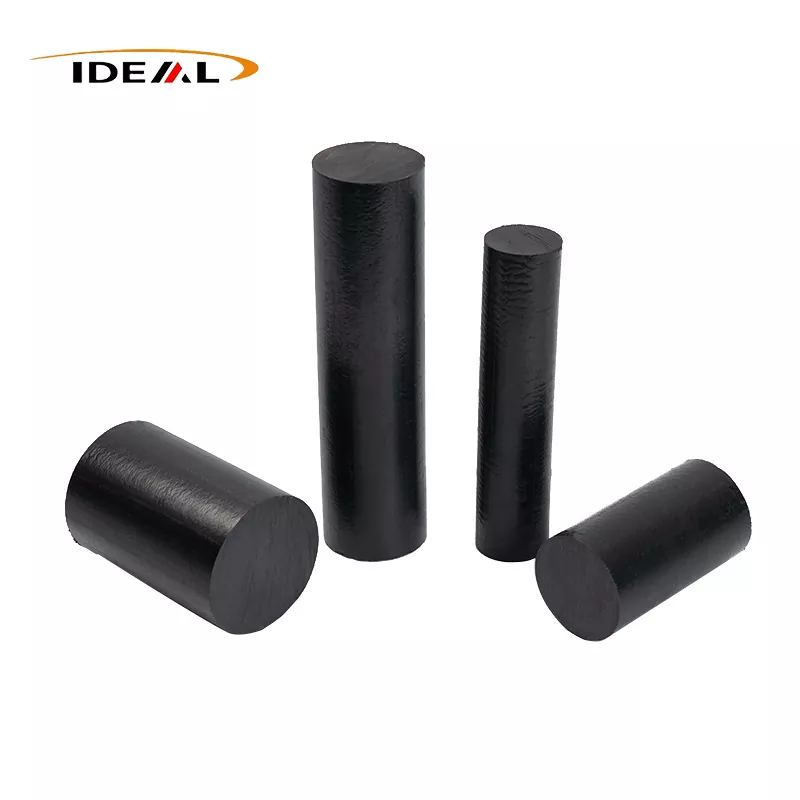
Ideal Plastic high-performance PEEK Pinion Gears are small‑module driving gear for high‑end precision transmission systems. As the core power‑input component of gear assemblies, it commonly mates with larger gears, worm gears and helical gears for speed reduction, speed increase and precision positioning. Mini‑size pinion gears face frequent meshing cycles, demanding superior wear resistance, fatigue resistance and dimensional stability.
PEEK Pinion Gears offered by Ideal Plastic manufacturer act as the driving small‑gear inside precision transmission sets. It cooperates with big gears, worm gears or helical gears to realize deceleration, acceleration and precise positioning transmission.
Different from large‑size standard gears, pinion gears feature small modules and fine tooth profiles while undergoing far more meshing cycles. Thus they set high requirements for material wear resistance, fatigue resistance and dimensional stability.
1. Traditional metal pinion gears: loud running noise, easy rusting and high rotational inertia
2. Nylon / POM pinion gears: poor high‑temperature resistance, fast wear and quick precision loss
Thanks to outstanding comprehensive properties of PEEK polymer, PEEK Pinion Gear solves major pain‑points of miniature high‑frequency transmission. It supports long‑quiet, maintenance‑free service with stable precision, and becomes a critical upgrade part for precision automation, robot systems and medical devices.
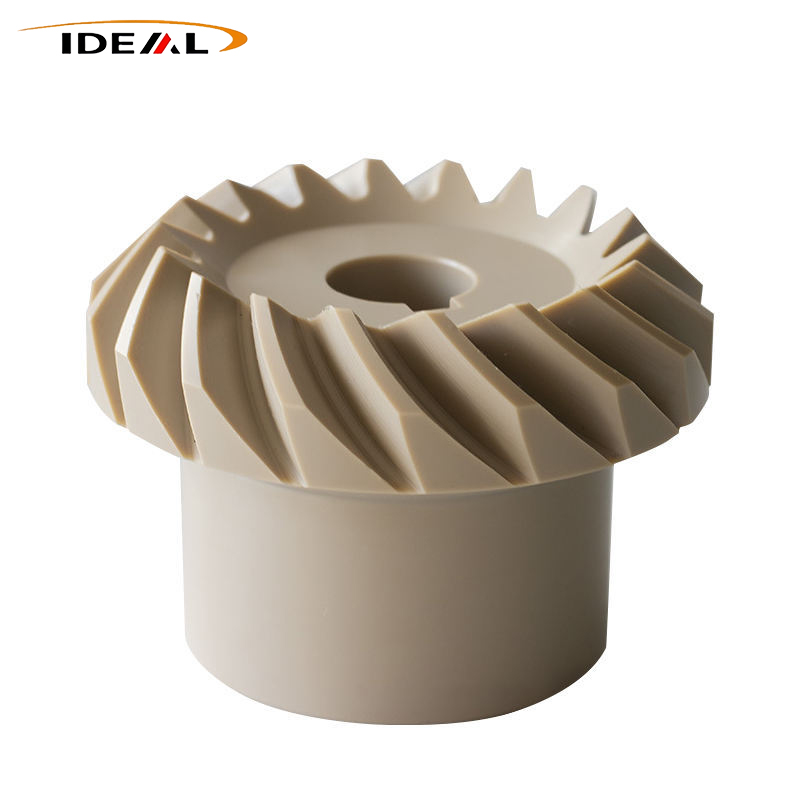
Manufacturing small‑module PEEK pinion gear is technically difficult. Common production defects include incomplete cavity filling, shape distortion, residual stress and tooth‑root cracks. We adopt two independent mature processes to match different precision requirements and order volumes.
The product overcomes typical defects of metal, nylon and POM miniature gears. Supported by 5‑axis CNC hobbing and high‑temperature high‑pressure injection molding, they deliver long‑term quiet, maintenance‑free and stable‑precision operation for automation, robot and medical machinery under harsh working conditions.
This process is oriented toward high‑precision custom orders, especially for small‑module non‑standard gears used in medical instruments and precision research‑grade equipment.
1. Special miniature hobbing cutters perform fine cutting; reserved machining allowance for secondary finishing strictly controls tooth‑profile error and concentricity.
Optimized for mass production of standard‑spec PEEK pinion gear.
Against PEEK’s high viscosity and poor melt flowability, we adopt 360‑400 ℃ precise plasticization, 160‑180 ℃ high‑mold‑temperature forming, segmented pressure‑holding and controlled cooling. This process effectively solves typical molding troubles: insufficient filling in tiny tooth cavities, shrinkage cavities, weld lines and dimensional deviation. Output pinion gears have uniform density, full tooth profiles and excellent batch consistency.
All finished PEEK pinion gears go through tooth‑surface fine polishing, circularity calibration, stress stabilization and full‑dimension inspection. Strict quality procedures ensure smooth meshing, unified tolerances and reliable long‑term running performance. GuangZhou IDEAL owns over 15‑year experience in PEEK component manufacturing. Our workshop is equipped with multiple 5‑axis machining centers and CNC machine tools, covering custom CNC processing and mold development.
We have optimized both production workflows:
1. Injection molding side: high‑temp hot‑runner design, slow segmented filling and gradient high‑pressure holding, solving poor melt fluidity, micro‑tooth under‑filling, uneven shrinkage, pinion eccentricity, warpage and bad concentricity.
2. CNC machining side: special coated miniature hobbing cutters, low‑speed temperature‑controlled cutting plus 100 % gradient annealing. Prevent cutter thermal adhesion, tooth‑profile spring‑back, burrs, root scratches and stress‑caused bore enlargement, pitch shift, clearance rise and transmission slipping.
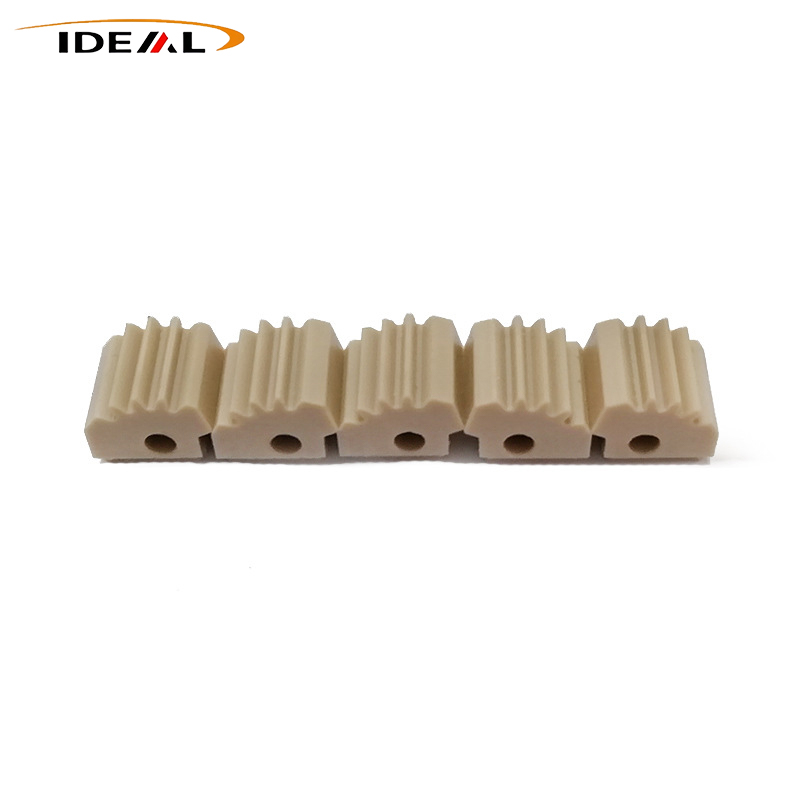
|
Item |
Details |
|---|---|
| Product Name | PEEK Pinion Gear |
| Material | Pure PEEK, Glass Fiber Reinforced PEEK, Carbon Fiber Reinforced PEEK, Medical / Food Grade PEEK |
| Color | Black, Beige |
| Standard Modules | 0.3, 0.5, 0.8, 1.0, 1.25, 1.5, 2.0 |
| Tooth Count Range | 10T‑80T; extra small / large tooth‑count customizable |
| Pressure Angle | Standard 20°; 14.5°, 25° special angles available on request |
| Inner Hole Types | Round hole, D‑type hole, keyway hole, stepped hole; customizable |
| Outer Diameter Range | 3mm‑80mm |
| Machining Accuracy | ±0.01mm; ultra‑high precision up to ±0.005mm |
| Sample Policy | To be negotiated |
| Custom Service | Non‑standard module, special tooth count, thickness, eccentric structure, irregular size supported |
PEEK Pinion Gear works under harsh operating conditions: high‑speed rotation, frequent meshing and high‑unit friction pressure. The overall accuracy, service life, noise level and stability of whole machinery heavily rely on pinion gear performance.
PEEK features outstanding high‑temperature anti‑creep capability. Under long‑term high‑speed meshing or confined hot environments such as engine cabins and heating production equipment, pinion gears keep intact tooth profiles, stable bore dimension and even tooth spacing. No precision offset or structural loosening occurs under prolonged high‑temperature‑loaded operation.
With intrinsic solid self‑lubrication and low friction coefficient, PEEK pinion gears support long‑cycle dry operation without oil supply, removing routine grease maintenance. Under repeated start‑stop and continuous meshing, they generate minimal abrasive dust, lower stall and gradual‑wear risks and cut mechanical‑failure & after‑sales maintenance costs.
Compared with metal pinions, PEEK pinion gear achieves more than 70 % weight reduction. Ultra‑low rotational inertia greatly reduces start‑stop response delay and delivers sensitive dynamic movement. It meets high‑precision dynamic‑control requirements of robots, miniature servo parts and fine‑tuning devices, fixing metal‑gear drawbacks including big inertia, jerky start‑stop, inaccurate micro‑adjustment and high energy consumption.
PEEK owns high chemical inertness. It resists long‑time erosion from engine oil, coolant, acid‑alkali solvents, humid air and marine salt‑spray. Different from rust‑prone metal gears and moisture‑sensitive ordinary plastic gears, PEEK pinion gear maintains stable performance in chemical‑processing, environmental‑protection, marine and vehicle‑borne working scenarios.
Water absorption rate is below 0.05 %, barely influenced by ambient humidity changes. Under hot‑cold alternation, humid conditions and long‑time fatigue operation, it avoids tooth swelling, gear jamming and meshing‑gap enlargement. Transmission precision stays consistent throughout the full service cycle.
Optimized tooth‑root arc design plus professional annealing stabilization eliminate internal‑stress concentration and form dense uniform inner structure. When facing frequent start‑stop, high‑speed reciprocating motion and instant mechanical impact, PEEK pinion gear shows high structural toughness and anti‑fatigue performance. Tooth cracking & breakage seldom appear, extending total service life of transmission assemblies.
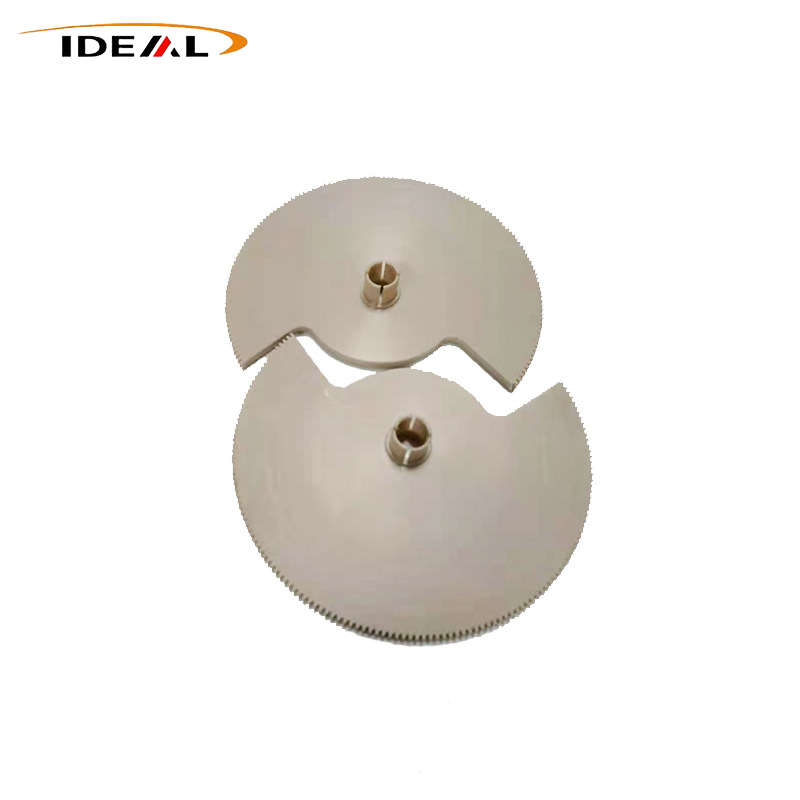
Combining high‑temperature resistance, high wear‑resistance for frequent meshing, maintenance‑free self‑lubrication, low‑inertia lightweight design, low‑noise running and stable dimensional accuracy, PEEK Pinion Gears apply widely in compact, lightweight, continuously‑running high‑precision mechanical devices. They are ideal replacements for fast‑wearing, deform‑prone, noisy miniature metal / nylon / POM gears.
· Industrial automation equipment & precision motion‑control devices
· Intelligent robots & automated mechanical systems
· High‑grade precision medical equipment
· Automotive & new‑energy vehicle onboard units
· Precision electronics & semiconductor production facilities
· High‑temperature drying, chemical processing & anti‑corrosion environmental‑protection installations
GuangZhou IDEAL focuses on R&D and manufacturing of high‑precision transmission components made of high‑performance engineering plastics. We solve common miniature‑gear industry pain‑points: incomplete molding filling, stress‑triggered deformation, precision attenuation, rapid wear under frequent meshing and unstable batch consistency.
· Full‑range PEEK material selection: pure PEEK, glass‑fiber reinforced, carbon‑fiber reinforced, medical‑grade and food‑grade grades, adapting to diverse harsh conditions (high‑temp, frequent meshing, low‑noise, anti‑corrosion, clean‑room, lightweight‑demanding projects).
· ISO‑standardized production, complete export‑oriented certifications and stable delivery cycles.
· Serve global B2B industrial buyers with durable, cost‑effective custom & bulk‑order PEEK pinion gears.
· Customers can provide design drawings, physical samples or working‑condition parameters for tailor‑made solutions and accurate quotations.
Available cooperation modes: drawing‑based customization, sample development, 5‑axis CNC small‑batch production, injection mass production, OEM & ODM export orders.
A1: Traditional nylon and POM pinion gears have limited heat resistance. Above 100 °C, they gradually soften and wear heavily. Frequent operation may cause tooth fracture and meshing‑gap expansion, resulting in precision failure.
By contrast, PEEK Pinion Gear runs stably under continuous 260 °C high‑temperature environment. Its anti‑creep, anti‑fatigue and wear‑resistant properties greatly outperform ordinary plastics, delivering higher precision stability and longer service life for miniature high‑frequency transmission systems.
A2: We support full‑scope non‑standard customization services. According to customers’ CAD drawings, physical samples and actual working‑condition parameters, we can develop pinion gears of various non‑standard modules, special tooth‑counts, eccentric structures and irregular dimensions. We support small‑batch prototype processing as well as large‑volume mass production and OEM/ODM cooperation.