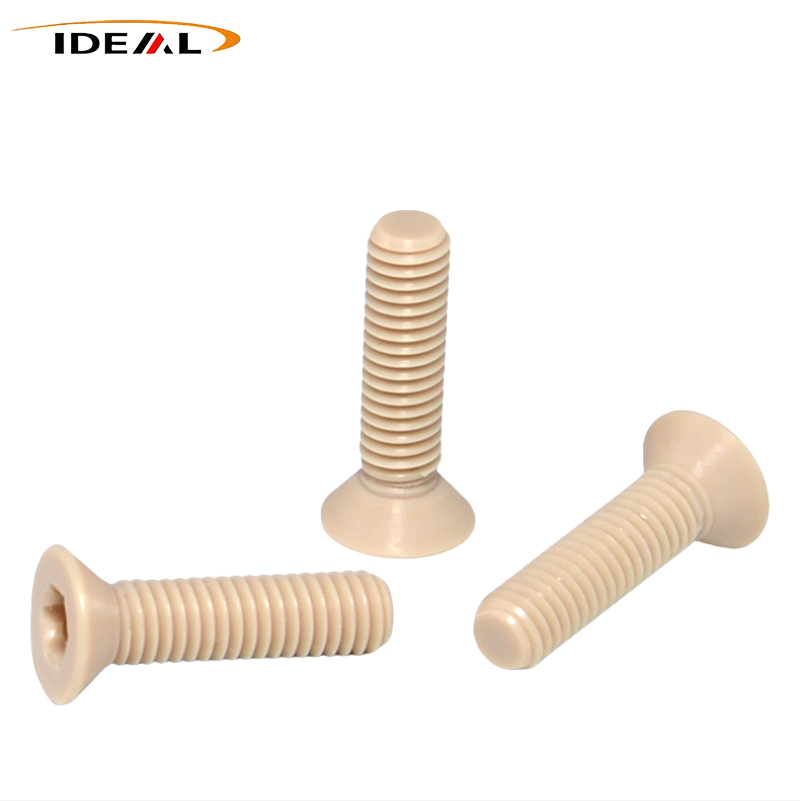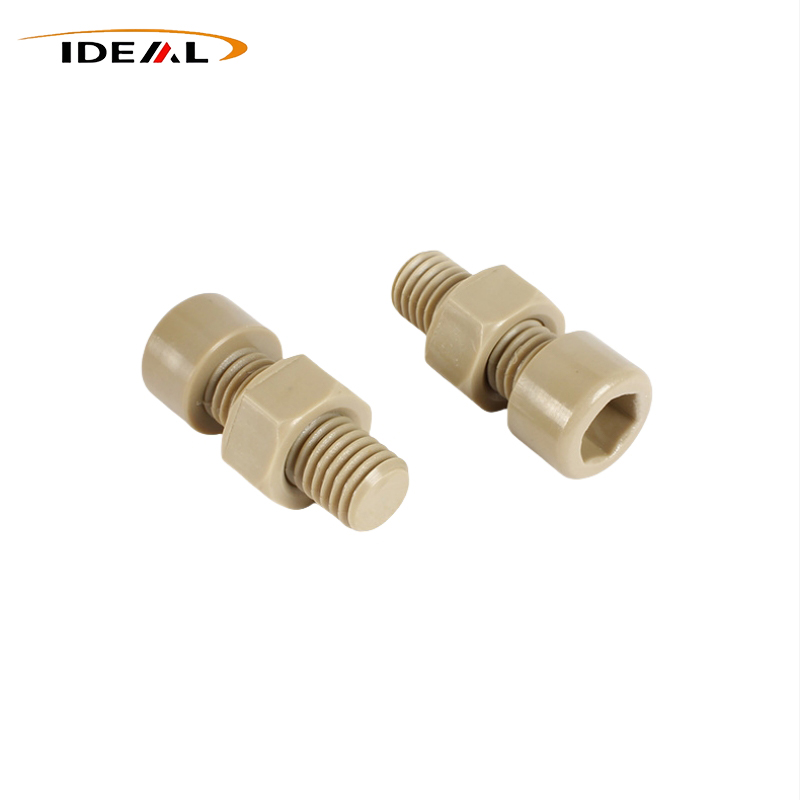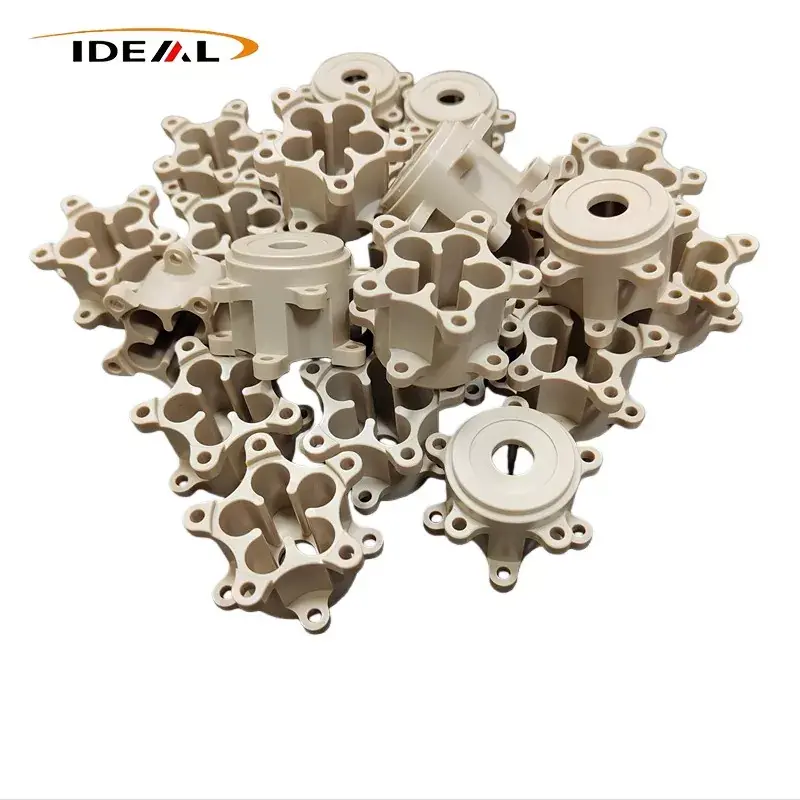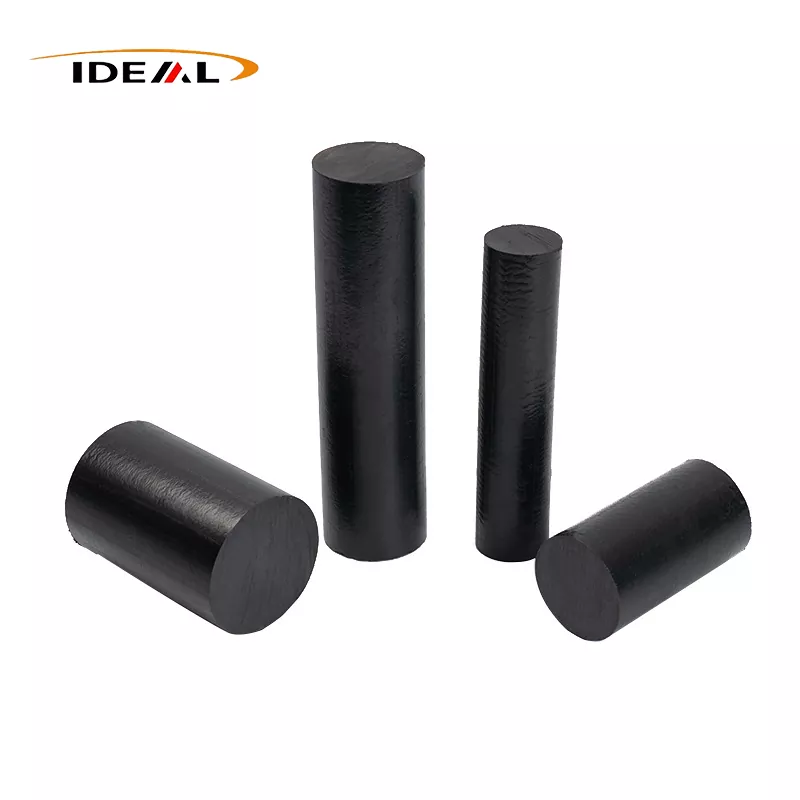
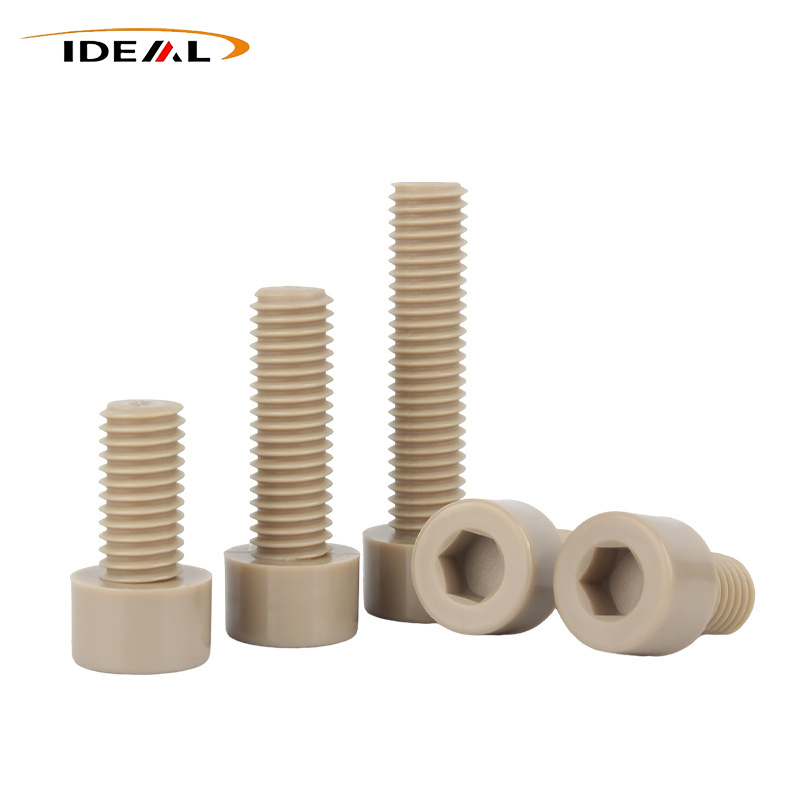
PEEK Screws from Ideal Plastic are high-temperature engineering plastic fasteners manufactured in China, offering chemical resistance, electrical insulation and non-magnetic performance. Neat PEEK supports continuous service temperatures up to 250°C. Available in pure, carbon-fiber, glass-fiber, antistatic and graphite/PTFE modified grades, with injection molding and CNC machining for standard and customized sizes. Suitable for semiconductor, medical, chemical, electronics and aerospace applications.
PEEK Screws are high-performance engineering plastic fasteners for applications requiring high-temperature stability, chemical resistance, electrical insulation and non-magnetic properties. Ideal Plastic manufactures specialty engineering plastic components in China and provides PEEK fasteners through precision injection molding and CNC machining. Neat PEEK offers continuous service temperatures up to 250°C, while different reinforced grades can be selected according to mechanical, wear and electrical requirements.
| Product Name | Polyetheretherketone (PEEK) Screws |
| Material | Pure PEEK1000, Glass Fiber Reinforced PEEK, Carbon Fiber Reinforced PEEK, Antistatic PEEK, Graphite/PTFE Modified PEEK |
| Color | Black, Beige (Custom colors available) |
| High-Temperature Precision Injection Molding Dimensions | Suitable diameter range: M2.5, M10; Length limit: 4-50mm |
| CNC Precision Machining Dimensions | Suitable diameter range: M1.4, M20; Length limit: 3-150mm |
| Thread Standards | Metric standard threads, Imperial threads, Non-standard special thread pitch |
| Thread Accuracy | Metric threads conform to ISO/DIN metric thread standards. |
| Screw straightness | Industrial grade: ≤0.10mm (overall length); Precision/semiconductor grade: ≤0.05mm (overall length) |
| Head perpendicularity to screw | Industrial grade: ≤0.08mm; Precision/semiconductor grade: ≤0.04mm |
| Surface roughness | Injection molded screws: Ra 1.6 ≤ 3.2μm; CNC machining: Ra 0.8 ≤ 1.6μm; Semiconductor cleanroom grade: Thread and mating surfaces Ra ≤0.8μm |
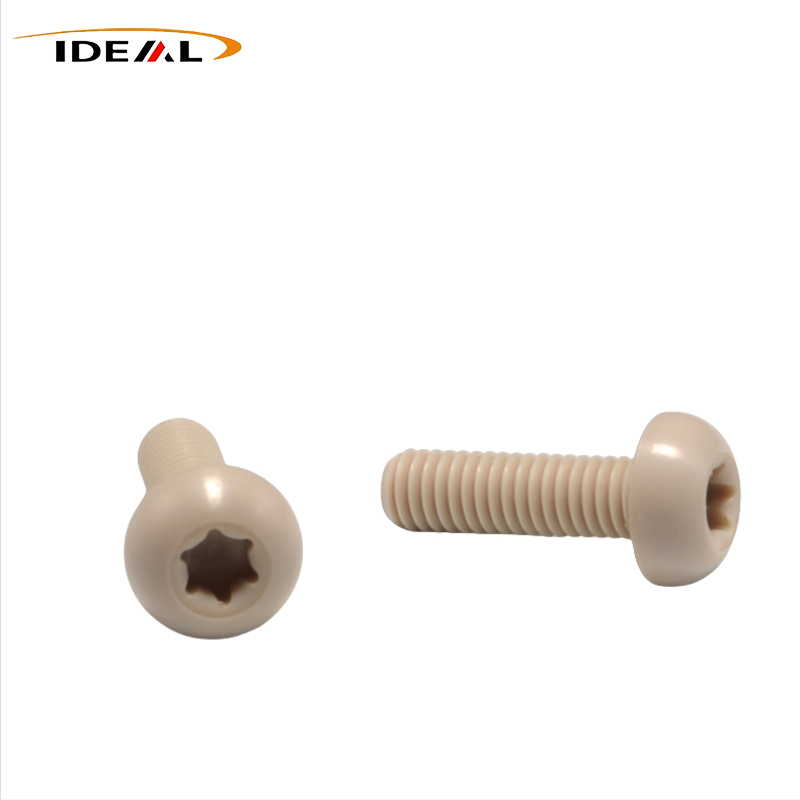
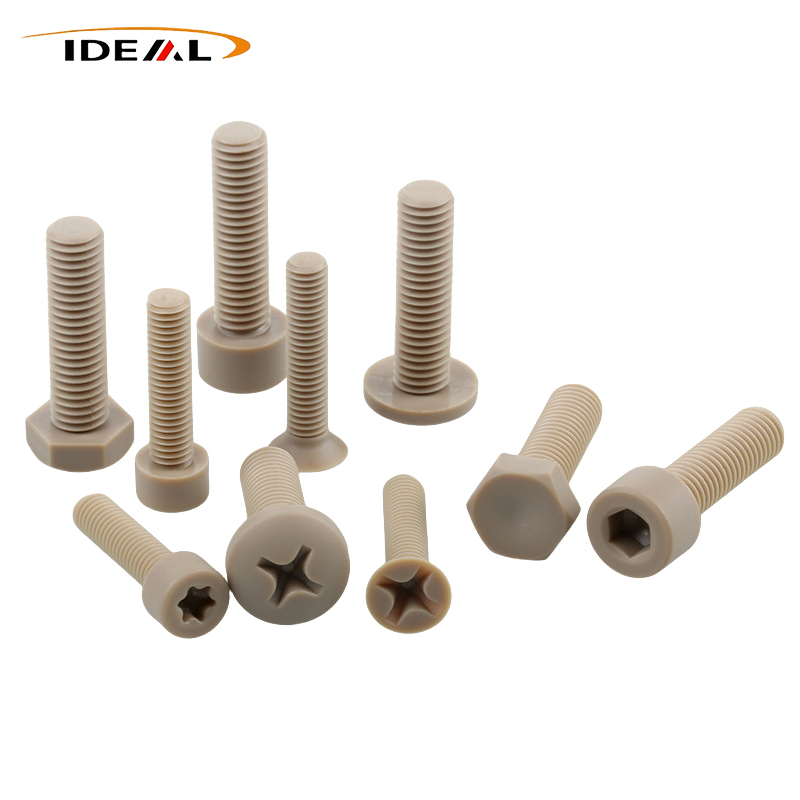
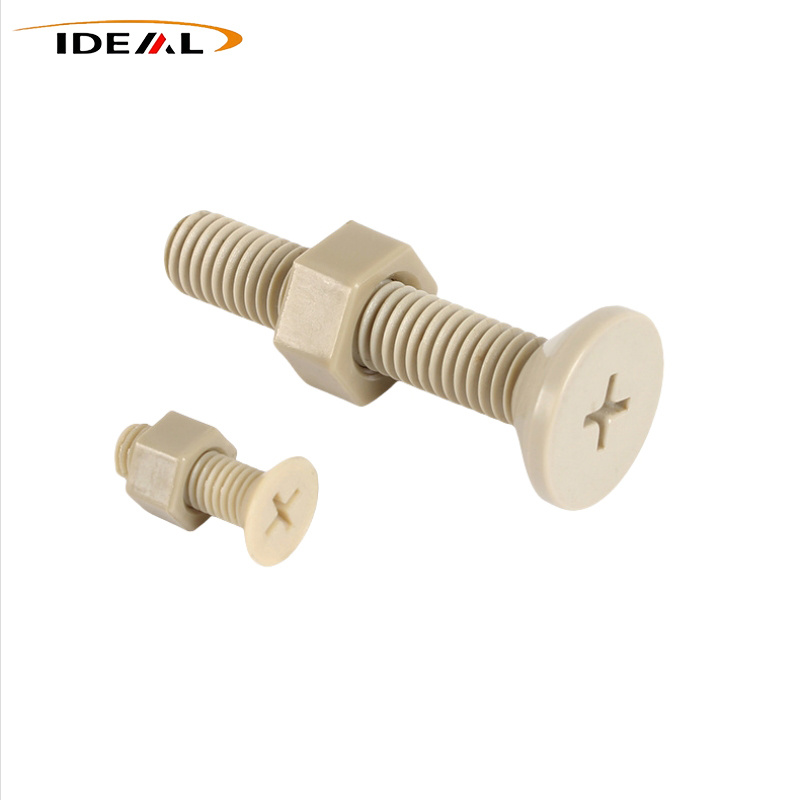
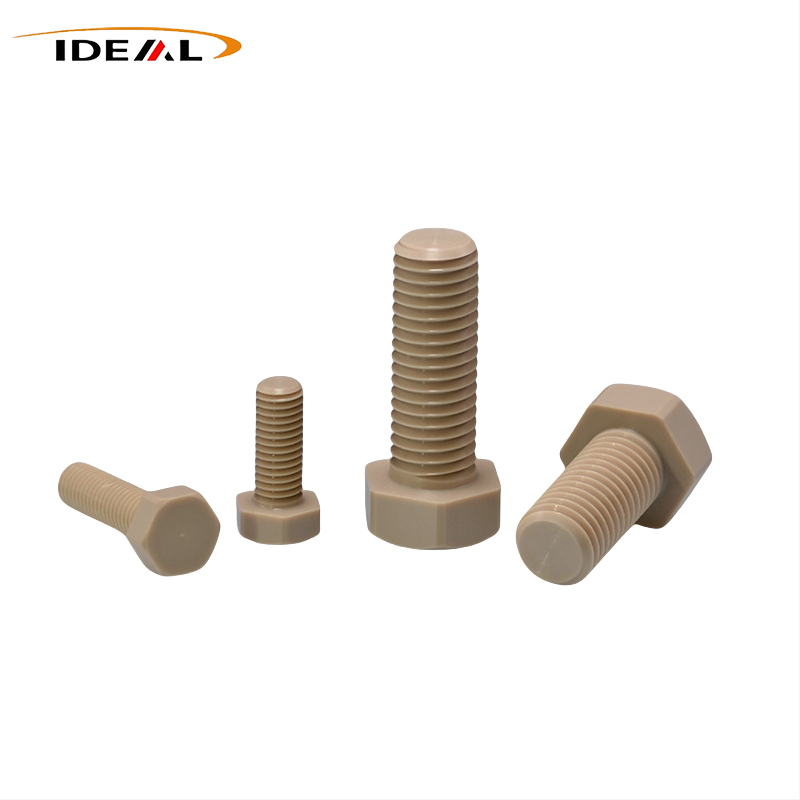
| Screw types | PEEK Hex Head Cap Screws, Socket Head Cap Screws, PEEK Plastic Phillips Cross Pan Head Screws, PEEK Set Screws, PEEK Torx screws, Hex Socket Set Screws, PEEK Plastic Slotted Set Screws |
Different PEEK formulations provide different combinations of toughness, rigidity, wear resistance, creep resistance and electrical performance. The correct grade depends on the working conditions.
1. Neat PEEK: Provides balanced toughness, impact resistance, electrical insulation and non-magnetic performance. It has lower rigidity and creep resistance than reinforced grades.
2. Carbon-fiber reinforced PEEK: Improves rigidity, tensile strength, creep resistance, wear resistance and heat-deflection performance. Its increased stiffness also makes it more susceptible to cracking if over-tightened.
3. Glass-fiber reinforced PEEK: Improves rigidity and high-temperature creep resistance but reduces toughness. Threads may be more susceptible to chipping.
4. Graphite/PTFE modified PEEK: Reduces friction and improves self-lubrication for applications involving sliding or repeated disassembly.
5. Antistatic PEEK: Provides controlled surface electrical behavior for applications requiring static-charge dissipation.
PEEK screws are suitable for selected high-temperature fastening applications because PEEK maintains useful mechanical and dimensional properties at temperatures where many conventional plastics cannot be used.
1. Continuous service: Neat PEEK has a continuous service temperature of 250°C.
2. Short-term peak: The supplied material data specifies short-term peak temperatures up to 315°C.
3. Reinforced grades: Glass-fiber grades provide improved heat-deflection temperature and high-temperature creep resistance.
4. Mechanical limitation: Mechanical properties decrease above 250°C, so high clamping loads cannot be maintained indefinitely.
5. Thermal expansion: PEEK expands more than metals as temperature changes. Assembly clearance should therefore be considered for applications with large temperature fluctuations.
The material provides resistance to many chemicals used in industrial processing and fluid-handling equipment.
1. Compatible media: PEEK has resistance to most organic acids, weak alkalis, salt solutions, oils and organic solvents.
2. Wet environments: Unlike metal fasteners, PEEK does not rust or undergo electrochemical corrosion in wet chemical-processing or electroplating environments.
3. Steam sterilization: The material remains stable under high-temperature steam and repeated autoclave sterilization.
4. Chemical limitations: Concentrated nitric acid, concentrated sulfuric acid and high-strength hypochlorite can cause degradation.
Fiber reinforcement does not automatically improve chemical resistance. Filler-matrix interfaces may become more vulnerable under certain aggressive chemical conditions.
PEEK screws are manufactured mainly through precision injection molding and CNC machining. The appropriate process depends on size, geometry, material formulation and production requirements.
Injection molding is suitable for standard-size fasteners and higher-volume production. The supplied dimensional range is M2.5 to M10 in diameter and 4-50mm in length.
1. Thread formation: The thread profile is formed directly in the mold, so mold precision affects thread quality.
2. Process control: Barrel temperature, mold temperature, injection pressure and holding pressure influence filling and dimensional stability.
3. Common defects: Incomplete thread filling, short shots, damaged thread profiles and dimensional variation may occur when processing conditions are unsuitable.
4. Fiber-filled materials: Glass and carbon fiber compounds can increase mold wear because of their abrasive characteristics.
CNC machining uses PEEK rod or sheet stock and is suitable for customized dimensions, special head designs, large diameters and modified materials.
1. Dimensional range: The supplied CNC range covers M1.4 to M20 diameters and 3-150mm lengths.
2. Thread flexibility: Metric, imperial and non-standard thread pitches can be produced.
3. Special geometries: Shoulder screws, customized heads and other non-standard configurations can be machined.
4. Heat control: Spindle speed and feed parameters need to be controlled to reduce cutting heat, melting and dimensional spring-back.
CNC machining is particularly suitable for lower-volume customized components and precision semiconductor-grade fasteners.
Dimensional control is important for proper thread engagement and assembly alignment, particularly when fasteners are used in precision equipment.
1. Straightness: Industrial grade ≤0.10mm over the overall length; precision and semiconductor grade ≤0.05mm.
2. Head perpendicularity: Industrial grade ≤0.08mm; precision and semiconductor grade ≤0.04mm.
3. Thread accuracy: Metric threads conform to ISO/DIN metric thread standards.
4. Injection molded surface: Ra 1.6 ≤3.2μm.
5. CNC surface: Ra 0.8 ≤1.6μm.
6. Semiconductor surface: Thread and mating surfaces Ra ≤0.8μm.
| Control Item | Industrial Grade | Precision/Semiconductor Grade |
| Screw Straightness | ≤0.10mm overall length | ≤0.05mm overall length |
| Head Perpendicularity | ≤0.08mm | ≤0.04mm |
| Thread Accuracy | ISO/DIN metric thread standards | ISO/DIN metric thread standards |
PEEK screws can be used where temperature, chemical exposure, insulation, weight or cleanliness requirements affect the selection of fastening materials.
1. Semiconductor equipment: Suitable for selected vacuum and cleanroom assemblies requiring low outgassing and controlled particle levels.
2. Medical equipment: Suitable for selected components exposed to steam and repeated autoclave sterilization.
3. Chemical equipment: Used in compatible chemical-processing and fluid-handling environments.
4. Electronics: Used where electrical insulation, non-magnetic behavior or static dissipation is required.
5. Aerospace: Used in selected assemblies where weight, temperature and chemical resistance are important considerations.
6. Food and pharmaceutical equipment: Used for selected processing applications involving steam and sterilization.
| Requirement | Recommended Grade | Main Reason |
| Electrical insulation | Neat PEEK | High volume resistivity and non-magnetic properties |
| High-temperature creep | Glass-fiber reinforced PEEK | Improved rigidity and high-temperature creep resistance |
| Higher mechanical rigidity | Carbon-fiber reinforced PEEK | Improved rigidity, strength and creep resistance |
| Low friction | Graphite/PTFE modified PEEK | Improved self-lubrication and wear behavior |
| Static dissipation | Antistatic PEEK | Controlled surface electrical behavior |
| Semiconductor cleanroom | Unfilled PEEK | Low particle shedding and low volatile emissions |
PEEK screws require control of material, processing, dimensions and residual stress. Annealing is an important step for reducing internal stress created during molding or machining.
1. Material control: The specified PEEK formulation should match the required mechanical, chemical and electrical properties.
2. Annealing: Stress relief reduces the risk of cracking and fracture caused by residual internal stress.
3. Dimensional inspection: Straightness, perpendicularity, thread accuracy and surface finish are checked according to the selected grade.
4. Thread inspection: Thread profile and engagement are important for consistent installation.
5. Cleanliness: Semiconductor applications require additional control of machining debris and surface contamination.
The material provides advantages over conventional plastics in demanding environments, but it should not be treated as a direct replacement for metal in every fastening application.
1. Mechanical load: PEEK has lower mechanical strength than metal and is not intended for every high-torque or heavy-load application.
2. Tightening torque: Excessive torque can cause fracture. Metal fastener torque values should not be transferred directly.
3. Creep: Sustained compression at elevated temperatures can reduce preload over time.
4. Chemical exposure: Strong oxidizing concentrated acids can degrade the material.
5. Thermal movement: Different expansion rates between PEEK and metal components should be considered in assemblies exposed to large temperature changes.
Ideal Plastic specializes in specialty engineering plastics and customized components, with processing capabilities covering CNC machining, injection molding and precision polymer processing.
1. Engineering plastics: The product range includes PEEK and other specialty engineering plastic materials.
2. CNC machining: CNC machine tools and machining centers support customized component production.
3. Multi-axis processing: Four-axis and five-axis machining equipment supports complex component geometries.
4. Injection molding: A dust-free injection molding workshop is available for selected engineering plastic components.
5. Quality inspection: Professional inspection equipment is used for production and dimensional control.
For customized PEEK fasteners, specifications such as material grade, diameter, length, thread type, pitch, head design, tolerance and operating conditions should be provided for technical evaluation.
A1: Not in every application. Metal remains preferable for high-torque and heavy-load fastening.
A2: Yes. Sustained high-temperature compression can gradually reduce preload.
A3: Unfilled PEEK is suitable for applications requiring insulation, low particle contamination and low outgassing.
A4: Fiber fillers can accelerate mold wear, making CNC machining suitable for many modified grades.
A5: No. Reinforced grades can improve creep resistance, but sustained high-temperature loading still requires appropriate design.
A6: Material, diameter, length, thread standard, pitch, head type, tolerance and application conditions are required.