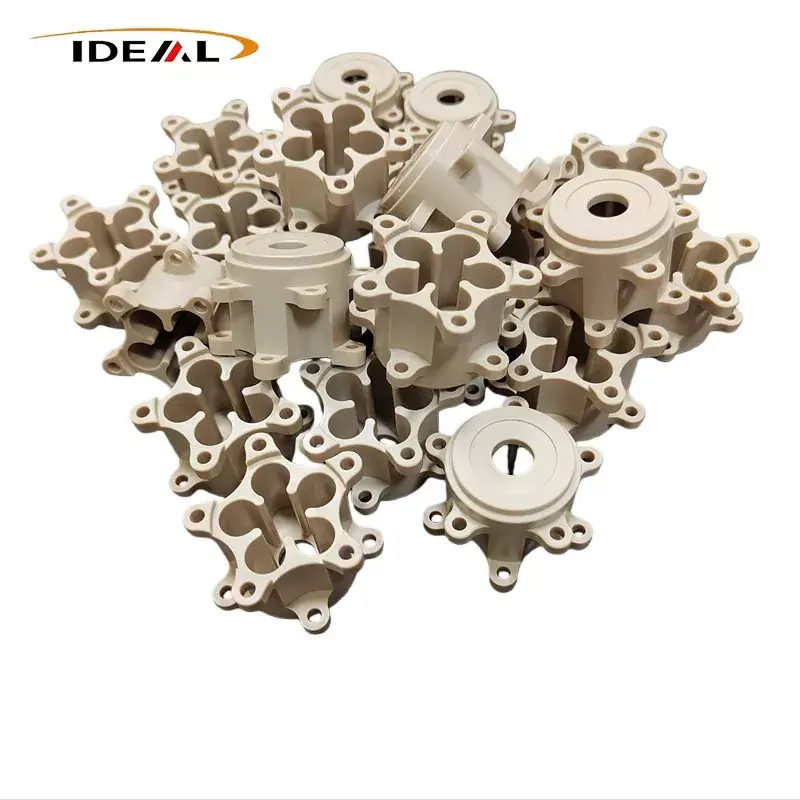
Ideal Plastic Factory's PEEK sealing rings are high-performance engineering plastic components designed for sealing and support, characterized by high rigidity and creep resistance. Manufactured using precision CNC machining and high-temperature injection molding—complemented by stress-relief annealing—these products offer high dimensional accuracy and consistent batch-to-batch quality. We support custom production based on non-standard drawings, small-batch sampling, and large-scale export orders.
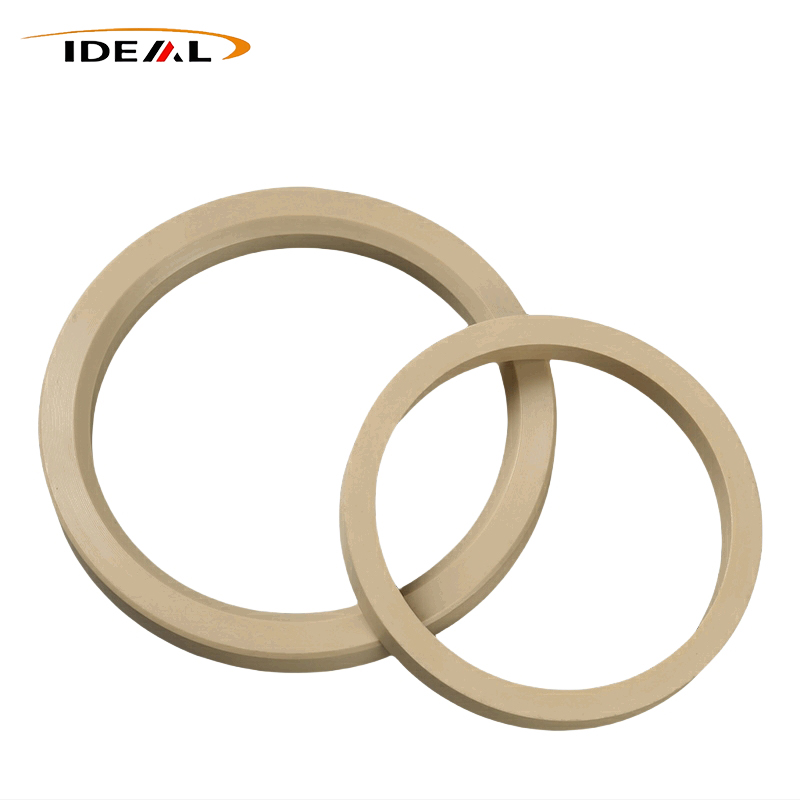
PEEK sealing rings offered by Ideal Plastic factory are high-performance annular sealing and support components manufactured from polyetheretherketone base material. Customers commonly deploy them as guide rings, support rings and anti-extrusion back-up rings, which fit perfectly inside both dynamic and static sealing grooves.
These annular components serve multiple practical purposes at once: guiding motion, resisting abrasive wear, bearing structural loads and preventing seal extrusion. One key detail worth noting: nearly all standalone Polyetheretherketone sealing rings lack the elastic properties inherent to rubber. For proper sealing performance, they must be matched with auxiliary elastic parts.
When set against PTFE and nylon sealing rings, PEEK alternatives deliver far stronger resistance to creep under extreme working conditions: high heat, elevated pressure and corrosive chemical fluids. They effectively resolve recurring industrial pain points seen with conventional seals, including cold flow deformation, dimensional shift and premature breakdown. Thanks to these reliable traits, they are widely integrated into sealing assemblies for premium industrial equipment across numerous sectors.
In real-world operation, Polyetheretherketone sealing rings solely act as rigid sliding surfaces that withstand heat, friction and creep deformation. All compressive preload needed for effective sealing comes from external elastic hardware, such as O-rings and metal energised springs. This core difference sets Polyetheretherketone sealing rings apart fundamentally from solid rubber sealing rings.
In high-pressure environments, elastic sealing rings are easily forced by fluid media into tiny assembly gaps within sealing grooves. This continuous squeezing will eventually cause shear rupture of the elastomer.
Installed as a rigid barrier, PEEK back-up rings block O-rings from being extruded into clearances. This setup raises the overall pressure rating of the entire sealing system and greatly extends the service life of paired O-rings.
Fitted onto pistons and piston rods for reciprocating or rotary movement, these rings absorb lateral loads and maintain accurate axial alignment. They stop direct metal-to-metal contact between mechanical components, offset radial deflection generated during equipment operation, and shield internal sealing elements from damage triggered by uneven side loads.
|
Item
|
Specification Details
|
|---|---|
|
Product Name
|
PEEK (Polyether Ether Ketone) Sealing Rings
|
|
Available Materials
|
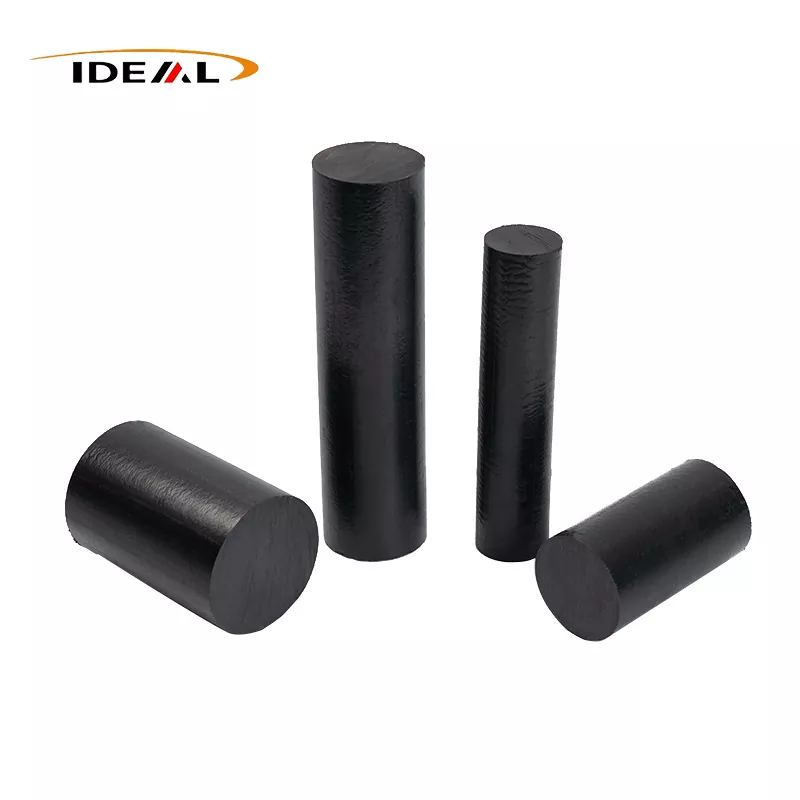
Unfilled pure PEEK, Carbon Fiber Filled PEEK, Carbon Fiber + Graphite + PTFE composite lubricated modified PEEK
|
|
Color Options
|
Beige (natural PEEK), Black (filled modified grades)
|
|
Manufacturing Process
|
CNC Precision Machining / High-Temperature Precision Injection Molding
|
|
Dimensional Tolerance
|
CNC Machining: ±0.02~±0.05 mmInjection Molding: ±0.08~±0.10 mm
|
|
Surface Roughness
|
CNC Machining: Ra 1.6 – Ra 3.2Injection Molding: Ra 3.2 – Ra 6.3
|
|
Certifications
|
ISO9001, RoHS, REACH
|
|
Product Types
|
PEEK guide rings, wear-resistant support rings, PEEK back-up rings
|
Engineered for dynamic rotary and reciprocating sealing points, Polyetheretherketone sealing rings maintain stable dimensions amid fluctuating pressure and temperature. Built-in anti-creep and anti-cold-flow properties prevent permanent shape distortion during cyclic movement. With inherent low-friction traits, they withstand repeated mechanical impact and deliver consistent wear resistance.
Unlike flexible rubber seals that rely on elastic rebound, PEEK sealing rings feature high structural rigidity, supporting precise positioning for dynamic mechanical sealing structures.
Under continuous alternating loads and temperature swings, the material avoids permanent deformation. It keeps sealing interfaces well fitted throughout long operating cycles, ideal for rotating shafts and linear motion sealing assemblies.
Natural low-friction characteristics minimize wear on mating hardware. For equipment with frequent relative movement, these sealing rings cut particle generation and accommodate oil-free working conditions common in automation and medical devices.
PEEK maintains stable physical form when contacting hydraulic media, cutting fluids and mild corrosive solutions. Degradation and swelling are rarely triggered by non-oxidizing chemical agents, fitting fluid control equipment operating in moderately aggressive environments.
These sliding elements are engineered for combined sealing configurations including Stepseals and Glyd Rings, and always work paired with O-ring elastomers.
O-rings supply consistent pre-tension force, while PEEK sliding surfaces directly contact process fluids and friction counterparts. They take charge of sliding wear resistance and fluid containment. Such products are extensively applied to high-pressure reciprocating hydraulic cylinders and rotary sealing assemblies.
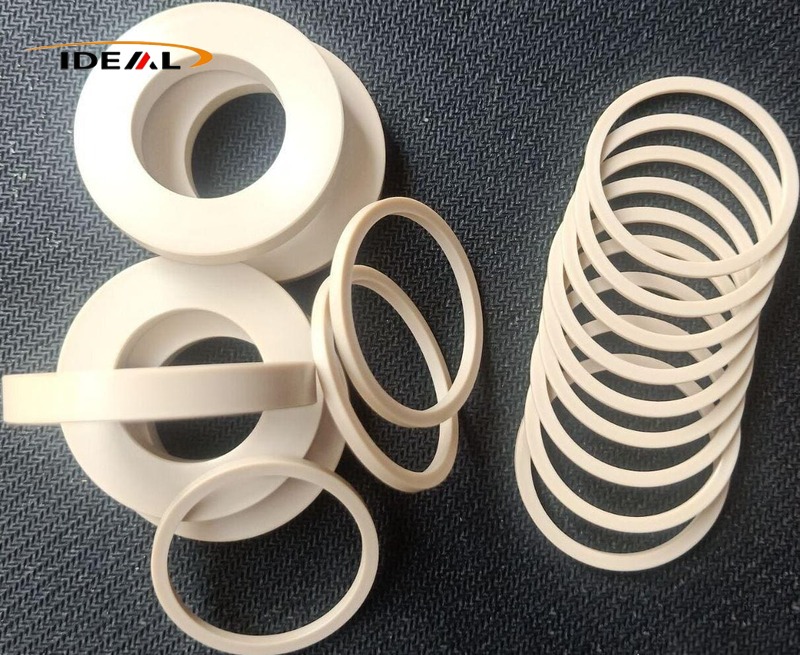
Once fitted inside designated grooves, elastic components (O-rings in most cases) get compressed and produce radial preload force. This steady force presses the PEEK sealing ring firmly against the mating sealing surface, either the outer shaft surface or inner cylinder wall.
With precisely machined end faces, PEEK rings fit closely to fill microscopic gaps and block fluid leakage. As internal medium pressure rises, greater compression is exerted on the seal ring. Contact pressure between matching surfaces increases accordingly, enabling pressure-activated self-tightening sealing performance.
Elastic parts continuously output stable preload pressure, keeping the PEEK sealing ring tightly adhered to moving mating surfaces all the time.
System fluid pressure acts upon the rear side of each PEEK ring. It pushes the sealing lip outward to boost contact specific pressure, thus forming a sustainable self-tightening sealing effect.
A U-shaped PEEK sliding shell encases a metal energised spring inside. Upon installation, the compressed spring expands outwards to prop the PEEK sliding ring open, building initial contact preload for sealing.
Temperature fluctuations and minor abrasive wear will occur after prolonged running. The internal spring rebounds gradually to compensate for dimensional variations, and stable sealing contact pressure can be maintained throughout the whole service cycle.
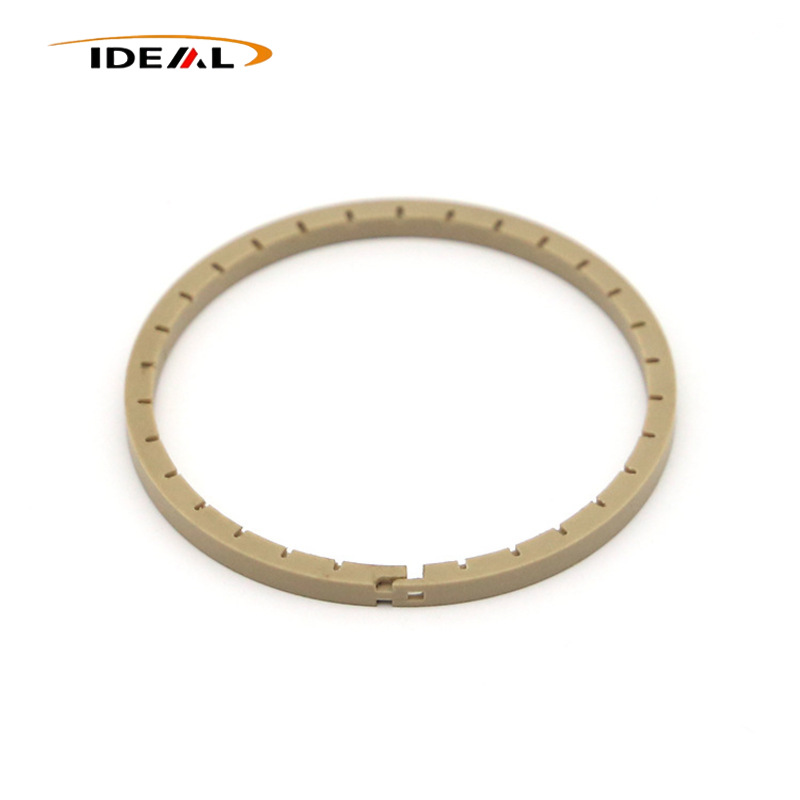
Split cuts are designed exclusively to simplify installation into sealing grooves.
Spiral notches: After assembly and compression, two sides of the spiral cut shift against each other and close completely. Leakage pathways are largely eliminated, making this design suitable for high-pressure scenarios requiring near-zero fluid leakage.
Straight cuts & simple angled cuts: Minute leakage gaps remain at the notch position post-installation. These styles are not applicable for high-pressure dynamic sealing demanding total zero leakage.
For this reason, spiral split rings or solid one-piece unslit rings remain the top choice for high-pressure dynamic sealing applications.
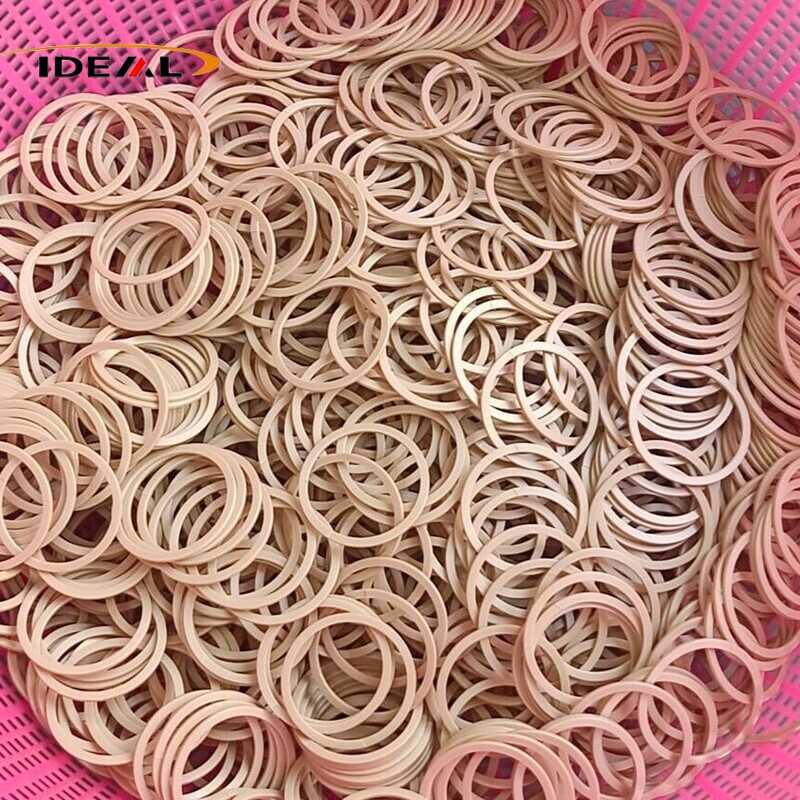
Thanks to the combined strengths of creep resistance, thermal stability, chemical inertness and abrasion resistance, Polyetheretherketone sealing rings are widely deployed for premium industrial machinery operating under high heat, intense pressure, corrosive surroundings and ultra-clean working environments.
Applied within sealing grooves of high-pressure hydraulic cylinders, servo valves and valve manifolds as support rings or back-up rings. They effectively block extrusion caused by high fluid pressure and lengthen the service cycle of matching sealing components. For bidirectional pressure conditions, these rings can be installed on both sides of the sealing assembly.
Commonly fitted to downhole tools and wellhead sealing assemblies. Confronted with extreme heat, high pressure and corrosive oil-gas media downhole, their strong anti-creep capability guarantees stable long-term operation. Solid non-split integrated rings are strongly recommended for ultra-high-pressure service conditions.
Used on vacuum chambers and process gas pipeline valves. Unfilled virgin PEEK grade is mandatory here for ultra-low outgassing, which safeguards FFKM/O-ring seals. Carbon-filled PEEK variants are prohibited for such applications entirely.
Installed on reactor connectors and high-pressure filter pipelines. These rings maintain stable performance when exposed to acids, alkalis and diverse organic solvents.
Suitable for high-pressure fluid sealing on hydrogen energy valves and energy storage testing equipment.
Ideal for fluid valve assemblies exposed to wide temperature ranges and repeated sterilization cycles that demand strict cleanliness standards.
- Focused on high-performance PEEK sealing rings for critical industrial equipment
- Specialized in custom design and stable mass production
- Target: solve sealing failures that standard products cannot resolve
- Seals extrude or break under high pressure
- Deform, warp or leak at elevated temperatures
- Corrode or swell in chemical fluids
- Wear out quickly in reciprocating / rotating motion
- Dimension inconsistency causing assembly failure
- Unplanned downtime and high maintenance cost
- We control residual stress, flatness and crystallization shrinkage — key factors ignored by most suppliers
- Our seals remain stable under high temperature and high pressure
- No rapid deformation, no leakage, no scratching on mating surfaces
- Longer service life and fewer maintenance interruptions
- Two reliable processes: precision CNC machining and precision injection molding
- Mandatory annealing for all PEEK seals to stabilize dimensions
- Full-process quality control from material to finished product
- 100% visual and dimensional inspection before delivery
- Customizable material formulations for:
- wear resistance
- corrosion resistance
- insulation performance
- Stable in dynamic working conditions (rotary / reciprocating)
- Excellent chemical compatibility and structural stability
- Hydraulic systems
- Automatic production equipment
- Medical fluid control machinery
- Precision instruments and industrial automation worldwide
- Professional engineering plastic sealing components manufacturer
- Mature PEEK processing experience
- Stable quality, reliable delivery, global service
- Long-term partner for industrial customers requiring high-performance seals
A1: No. PEEK boasts high rigidity with barely any elasticity. All compressive preload required for tight sealing is delivered by O-rings or metal energized springs. PEEK solely serves as a durable sliding surface that resists wear and chemical erosion.
A2: Within a reasonable pressure range, the self-tightening mechanism raises contact pressure and enhances sealing effects. Once pressure exceeds the rated threshold, seals will get extruded and damaged without properly fitted back-up rings, leading to total sealing failure immediately.
A3: In most operating conditions, they function as rigid supporting and protective components. Lacking intrinsic elasticity, they have to be assembled alongside elastic seals such as O-rings to form a complete sealing system.
A4: Not advised at all. Carbon fillers carry risks of outgassing and particulate contamination. Only pure unfilled PEEK material is permitted for semiconductor production environments.