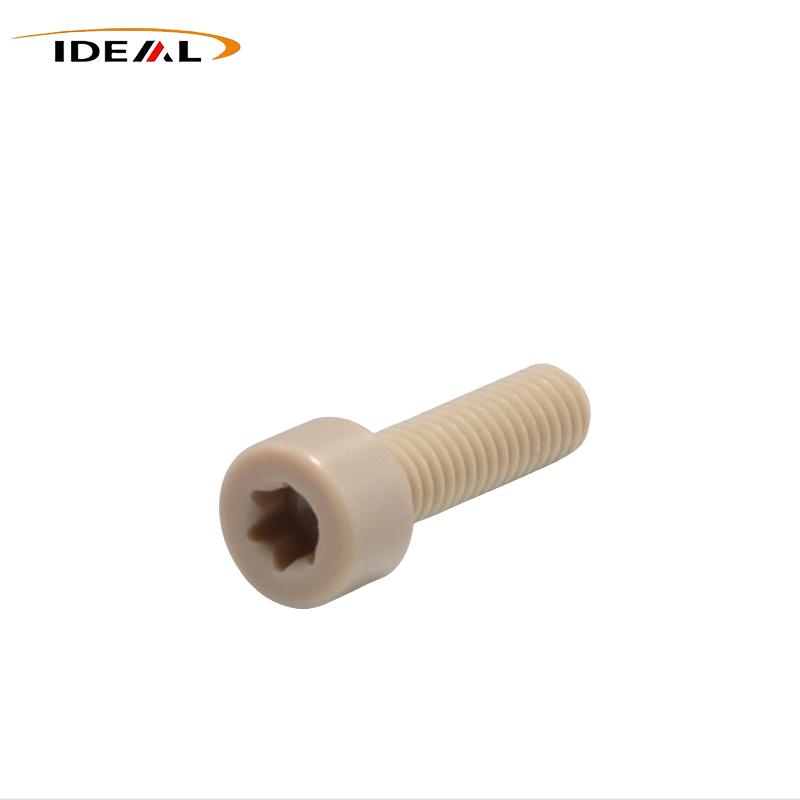
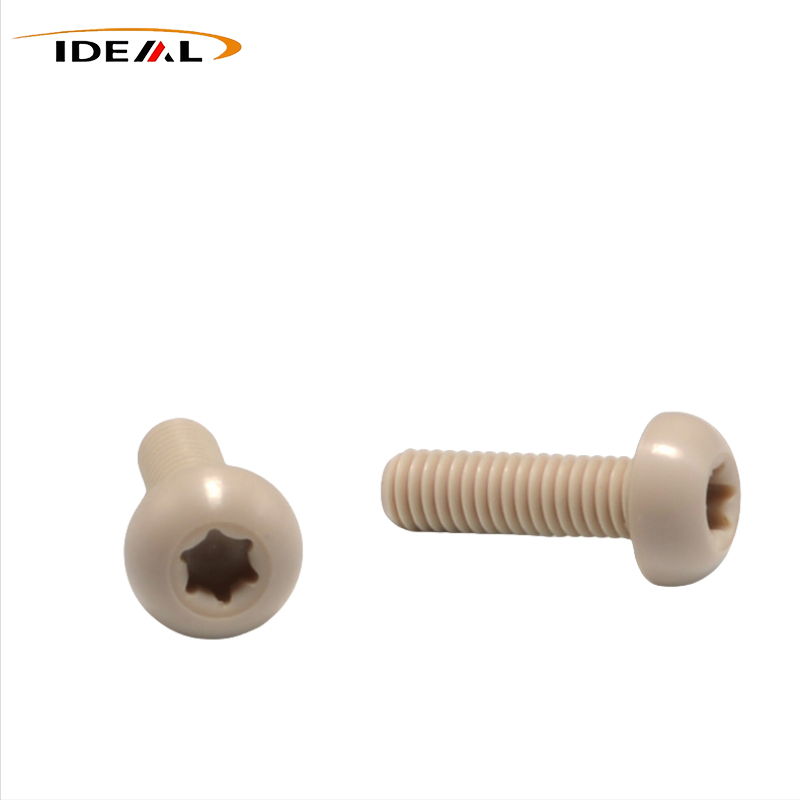
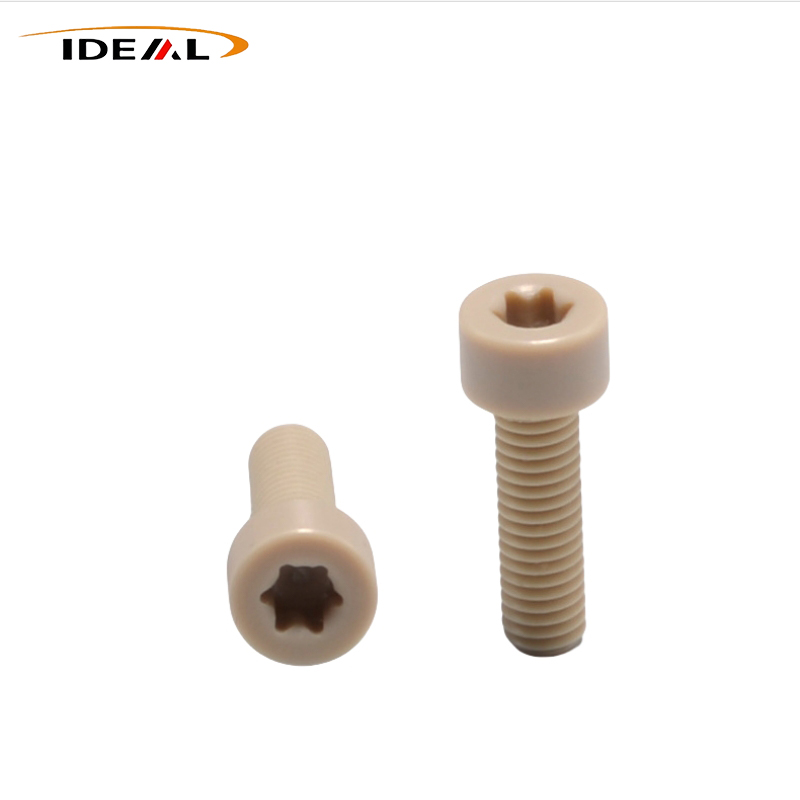
GuangZhou Ideal manufactures PEEK Torx Screw from virgin PEEK. The internal Torx drive resists cam-out and provides stable torque transmission. Properties include non-magnetic, electrically insulating, high-temperature resistance and chemical resistance. Available in M2 to M8 and custom sizes per drawing. Suitable for semiconductor, medical and electronics assembly.
GuangZhou Ideal supply high-performance PEEK Torx Screw . Non-magnetic, high temp resistant, acid and alkali resistant for semiconductor, medical & electronics. Custom sizes available.PEEK Torx Screw feature an internal Torx drive profile that delivers stable torque transmission and prevents cam-out. These fasteners combine high-temperature resistance, electrical insulation, non-magnetic performance and chemical resistance, and are widely used for component assembly under harsh operating conditions in precision equipment.
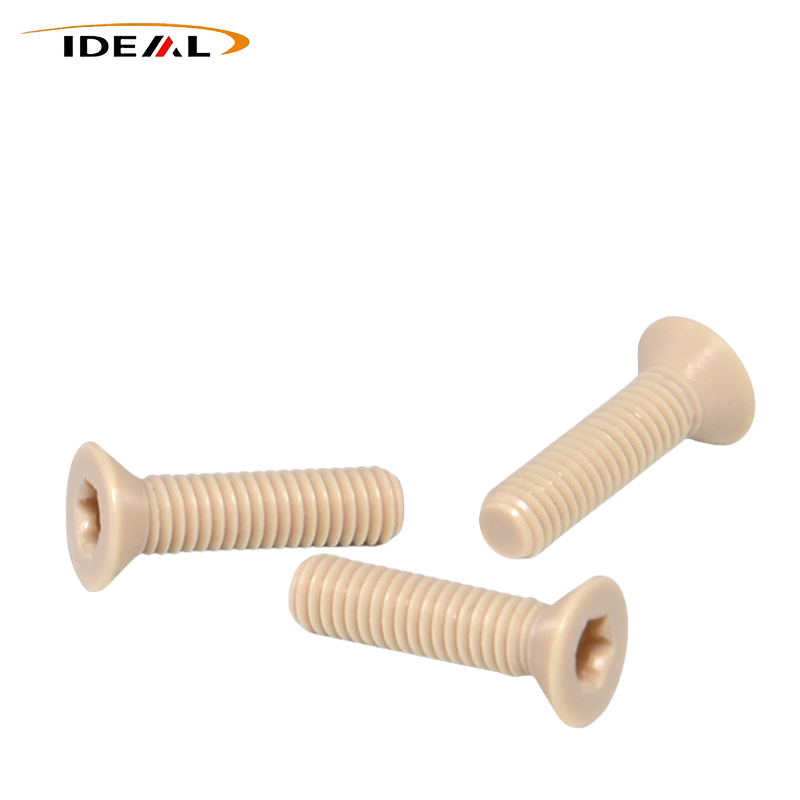
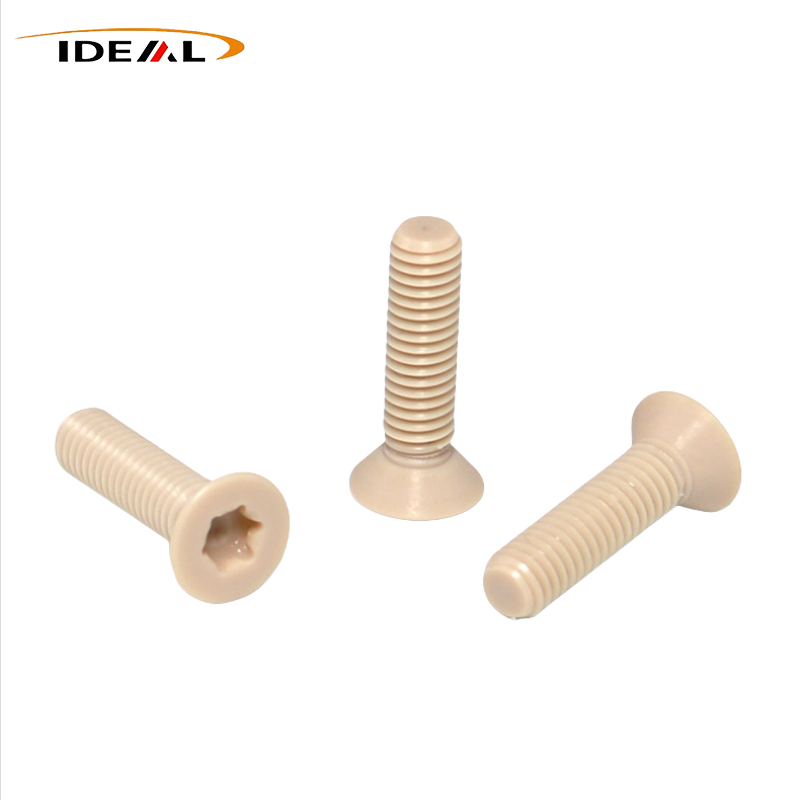
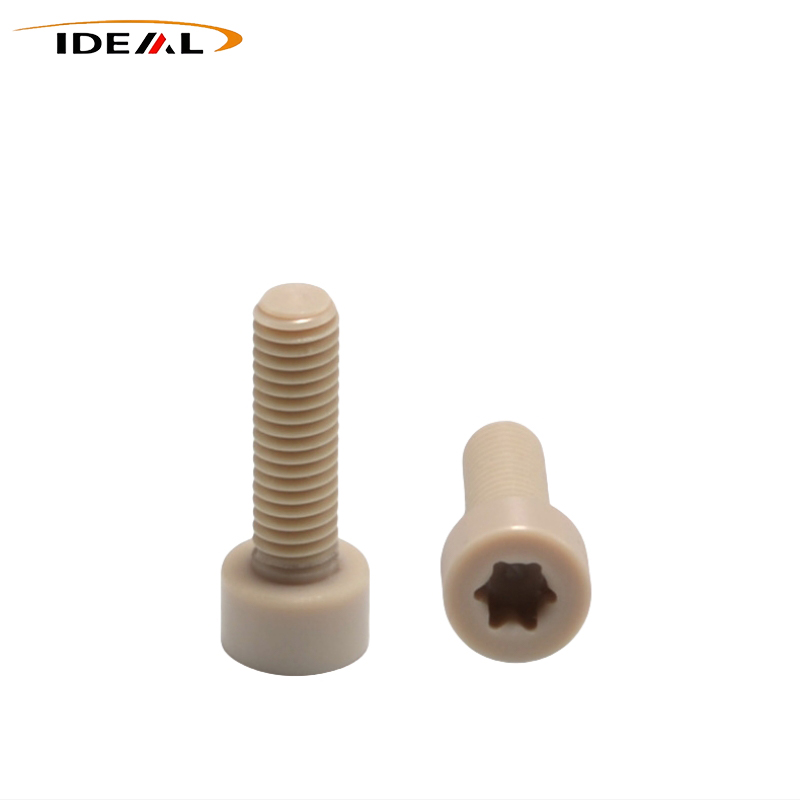
Like conventional fasteners, PEEK Torx Screw secure and join assembled components. Each screw consists of four sections: head, internal six-lobed Torx recess, shank and threads. The dominant style is the socket cap head; low-profile head, pan head and other custom geometries are also available. The recessed internal Torx profile eliminates protruding load-bearing edges, enabling countersunk installation. After assembly, the screw head sits fully below the workpiece surface without occupying external space, making it ideal for compact chamber installations.
The six-point star-shaped recess distributes torque evenly across all six lobes to minimize stress concentration. Compared with Phillips or slotted drives, Torx recesses transmit higher torque with far less risk of slipping or cam-out. They withstand greater tightening loads and resist damage even after repeated disassembly and reassembly.
The Torx recess is a delicate internal feature. Milling these recesses during CNC machining tends to generate burrs, while tool wear accelerates at lobe tip corners. Poor control over recess depth and lobe profile tolerances leads to slipping and cam-out during assembly. Excessively deep recesses reduce head strength, while overly shallow recesses deliver insufficient torque resistance.
Burr control and lobe tip tool wear are the main challenges. Recess depth and profile must be tightly toleranced to avoid slip and cam-out.
Gate placement, venting and packing parameters decide whether the six-lobed cavity fills completely; incomplete fill directly reduces torque capacity.
Mature production processes optimize mold geometry and molding parameters. Annealing is required for both CNC-machined and injection-molded parts to release internal residual stress and mitigate deformation risks under high-temperature service. CNC prototyping followed by injection molding mass production is available based on order volume: CNC samples validate drawings and assembly performance before mold opening for high-volume production, balancing prototyping speed and mass manufacturing costs.
PEEK exhibits notable elastic springback, so metal threading parameters cannot be directly applied when machining PEEK Torx Screw threads. Using metal cutting settings causes two assembly failure modes: tight thread seizure during engagement, or insufficient thread engagement after profile springback, resulting in thread stripping or fracture upon tightening.
Custom thread profile compensation tailored for PEEK accommodates material deformation and ensures reliable thread locking. Root fillet optimization is also implemented to reduce stress concentration and prevent cracking at thread roots. Consistent dimensional control is challenging due to PEEK’s high thermal expansion and contraction. Shrinkage variation in molded parts causes dimensional drift for threads and Torx recesses, while heat generated during CNC cutting induces minor workpiece distortion. Miniature sizes such as M2/M2.5 have tiny volumes with very low tolerance margin, further increasing the difficulty of dimensional control in mass production.
With fifteen years of PEEK processing expertise, GuangZhou Ideal, a Chinese manufacturer, produces PEEK Torx Screws using a hybrid process combining CNC machining and injection molding. We exclusively use virgin PEEK raw material. Bar stock undergoes pre-annealing, and finished parts receive secondary stress relief to minimize residual stress. Tooling and molds for Torx recesses are optimized to strictly control recess depth and cavity precision, with batch sampling for torque testing. Threads are produced using PEEK-specific profile compensation with enlarged root fillets to prevent stress cracking.
Metric go/no-go thread gauges confirm smooth engagement: go gauges thread in freely, no-go gauges meet rejection criteria, validating the PEEK thread springback compensation.
Standard Torx pin gauges verify recess depth and profile, identifying incomplete filling, cavity distortion and chipped lobe tips.
A 2D optical comparator checks head diameter, head height, shank length and effective thread length on sampled batches to control variation.
Magnifier-aided checks catch surface cracks, chipped threads, short shots, burn marks and sink marks, plus burrs and collapsed lobe corners inside the Torx recess.
Every batch shipped from this workflow meets the specified quality requirements. For related products, see our PEEK screws and PEEK nuts.
| Product Name | PEEK Torx Screw |
|---|---|
| Material | Unfilled PEEK, Glass Fiber Reinforced PEEK, Carbon Fiber Reinforced PEEK |
| Color | Black, Beige (Custom colors available) |
| Surface Roughness | Thread and Torx Groove Inner Wall Ra≤1.6μm |
| Tolerance | CNC Machining: ±0.02–0.05 mm; Injection Molding: ±0.05–0.10 mm |
| Screw and Head Coaxiality | ≤0.05 mm |
| Thread Accuracy | Basic accuracy grade 6g, suitable for standard 6H internal thread holes |
| Head Type | Cap head, Button head, Countersunk |
| Metric Stock Sizes | M2, M2.5, M3, M4, M5, M6, M8 |
| Industry Certifications | Compliant with RoHS and REACH environmental standards |
PEEK Torx Screw is a plastic fastener and cannot be selected using the same logic as metal screws. Besides dimensions, material grade, allowable tightening torque, assembly conditions and environmental medium are key factors determining service life. Prioritize confirming the operating conditions, then select the size and head type, and finally confirm the processing technology and assembly tools.
Excellent chemical resistance, high insulation, non-magnetic, low exudation, supports partial sterilization. Suitable for semiconductor cleanrooms, medical equipment, chemically corrosive environments and electrical insulation components. Not suitable for high continuous creep or long-term high-torque loads.
Improves rigidity and creep resistance while retaining insulation. Suitable for high-temperature, medium-load equipment and general industrial fasteners. Not suitable for high-level cleanrooms (risk of glass fiber shedding) or dynamic friction locations.
Highest strength, best creep resistance, antistatic properties. Suitable for high temperature, high load and antistatic conditions; not suitable for components requiring electrical insulation.
Low-exhaust PEEK for vacuum chambers; biocompatible medical-grade PEEK for medical applications. Mostly custom-made with limited stock.
CF PEEK improves torsional resistance and rigidity but loses insulation properties and has weak conductivity; it introduces the risk of carbon particle precipitation in semiconductor chambers. The material becomes more brittle, the Torx groove's impact resistance decreases, and it is more prone to chipping; repeated disassembly and reassembly actually reduces lifespan. In a vacuum environment, the filler increases the risk of gas escaping and particle shedding.
No. Carbon fiber mainly improves mechanical creep resistance; if only insulation and corrosion resistance are required for high-temperature applications, pure PEEK is sufficient, as carbon fiber will lose its insulation properties.
Torx is preferred for frequent disassembly and maintenance; hex socket screws are preferred for infrequent disassembly and situations with limited head height.
Standard-specification qualified injection-molded parts can; for ultra-high vacuum and high cleanliness levels, CNC machined versions are preferred to reduce the risk of porosity.
Performance remains stable under long-term use up to 260℃; however, exceeding the withstand temperature will gradually cause creep and a decrease in locking force, rather than instantaneous breakage, requiring adequate temperature margin design.
Compared to ordinary plastics, PEEK exhibits less insulation performance degradation at high temperatures, making it suitable for high-temperature electrical cavities; insulation verification is still necessary for ultra-high temperature applications.